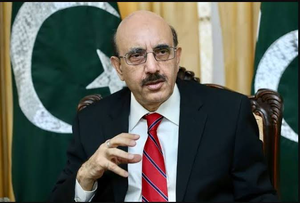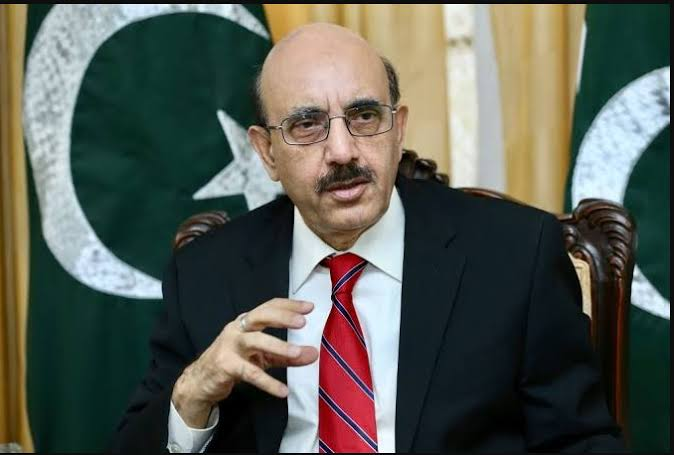
Islamabad (GNP): Pakistan needs broad economic reforms, stronger domestic resource generation and a business climate that welcomes investors if it is to end its repeated dependence on foreign loans, aid and short-term deposits, according to Sardar Masood Khan, a former Pakistani ambassador to the United States, China and the United Nations, and a former President of Azad Jammu and Kashmir. He was speaking in a television interview.
Khan welcomed Saudi Arabia’s rollover of its $3 billion deposit, calling it an important support for Pakistan’s foreign exchange position. He warned, however, that relying on assistance from friendly countries leaves Pakistan exposed, since even close friends may eventually tire of repeatedly extending help. Pakistan, he said, must build a firmer economic base of its own.
He said the country has considerable potential: a large population, fertile land, capable human resources and a strategic location. Turning to the Makkah Alliance, he said that Saudi financial resources, Türkiye’s defence production and Pakistan’s defence capabilities together could support regional peace and security while opening economic opportunities for Pakistan.
Khan noted that memoranda of understanding only express intent, and that turning them into projects needs further legal, technical and financial agreements. He pointed to opportunities in critical minerals, the second phase of the China-Pakistan Economic Corridor (CPEC 2.0), agriculture, renewable energy and industry, but said Pakistan must move faster in converting commitments into real projects.
He named the main obstacles to foreign direct investment as weak intellectual property protection, difficulty in doing business, bureaucratic hurdles and weaknesses in the tax system. He stressed the need to make it easier for overseas Pakistanis to invest, as many are willing but face administrative complications. A broader tax base and bringing the informal economy into the formal tax system, he added, are essential to raising domestic revenue.
On export competitiveness, Khan acknowledged concerns about high production costs, taxes and electricity prices. He called for reforms to tackle rent-seeking and subsidy-related distortions, and for encouraging private entrepreneurship and investment.
He identified agriculture and emerging technologies as two major opportunities, and described digital transformation, the growth of tech start-ups and expanding human capital as positive trends that deserve support through a coherent economic strategy.
Also read: Bangladesh Envoy Praises Sialkot Airport and Business Community
Khan recalled a 2019 World Bank report projecting that Pakistan could become the world’s tenth-largest economy by 2047 in nominal GDP terms. Reaching that goal, he said, will take sustained reform, hard work, stronger institutions and a decisive move toward economic self-reliance.

Sohail Majeed is a Special Correspondent at The Diplomatic Insight. He has twelve plus years of experience in journalism & reporting. He covers International Affairs, Diplomacy, UN, Sports, Climate Change, Economy, Technology, and Health.