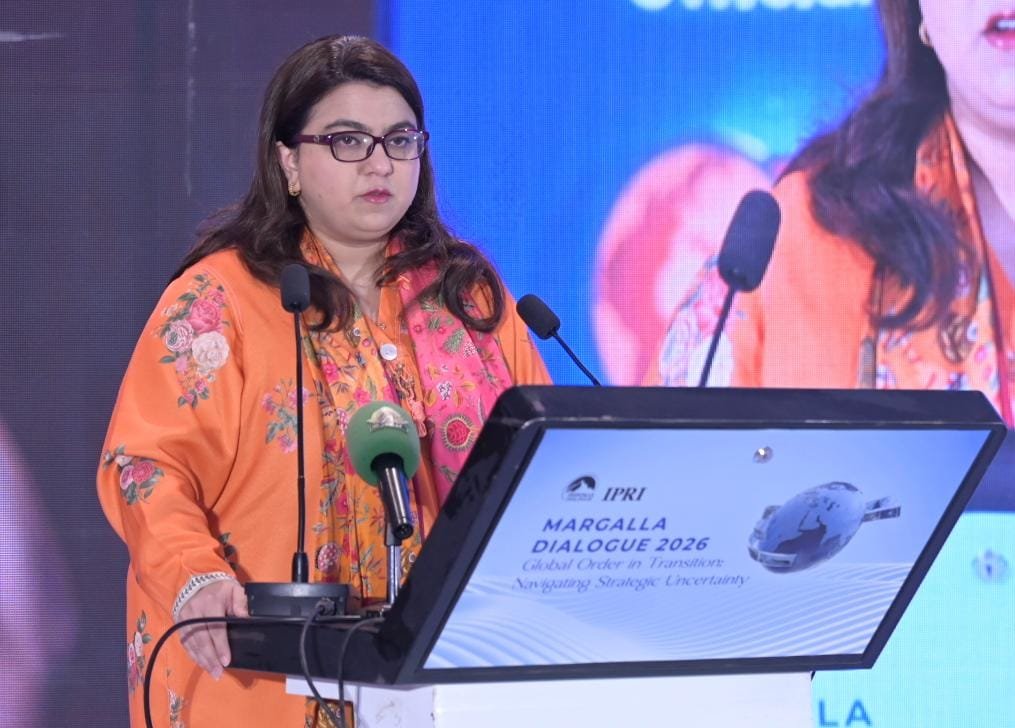
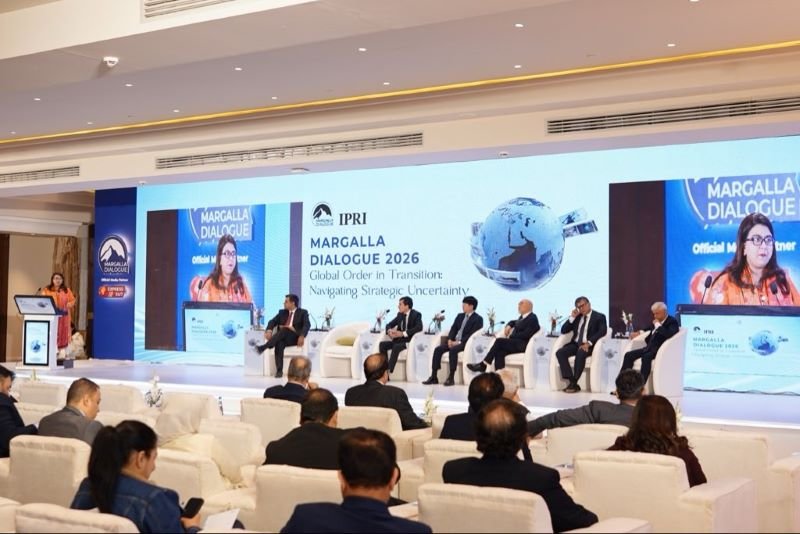
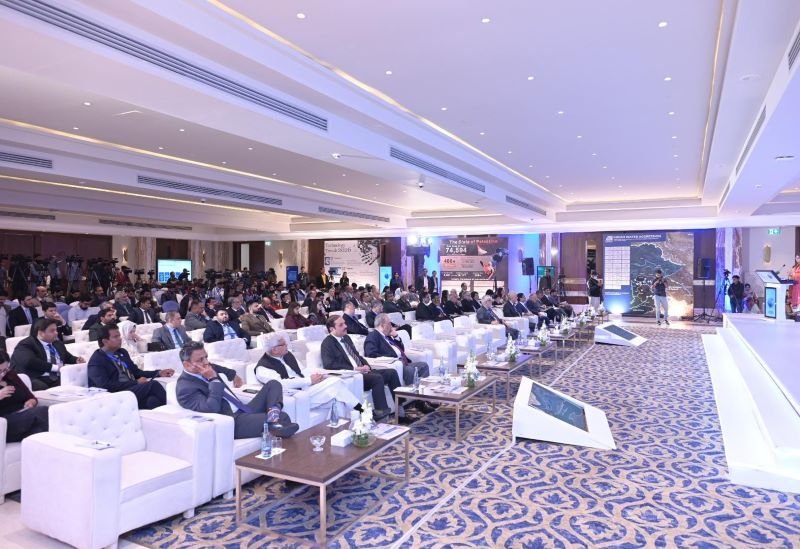
Islamabad (GNP): Federal Minister for Information Technology and Telecommunication Shaza Fatima Khawaja during Margalla Dialogue 2026 – on Technology and Transformation of State and Society, has said that Pakistan is determined to ensure that the global technological transformation, particularly the rapid advancement of Artificial Intelligence (AI), becomes an opportunity for national development, economic growth and technological sovereignty.
Addressing an international gathering the Federal Minister said that technology is fundamentally transforming every aspect of human life, from education, healthcare, finance and social security to national security. The rapid advancement of AI is further accelerating this global transition and changing the way states, societies and economies function.
She emphasized that the key question is no longer whether technology will change the world, but who will steer this transformation and determine the values, identities and realities shaping future societies. She said that for a country like Pakistan, where two-thirds of the population comprises young people, protecting national identity, languages, culture and social values in the digital age is equally important alongside economic and national security.
The Minister highlighted that AI is expected to become a $4.8 trillion economic sector by 2033 and impact approximately 40 percent of the global employment landscape. She noted that the nature of employment is changing, making future skills and the ability to effectively use AI increasingly important. The challenge is not simply a reduction in jobs but a growing gap between the skills available and the changing requirements of the job market.
She also highlighted the global AI governance divide, stating that according to international reports, most countries in the Global South have remained outside major AI governance initiatives, with only a limited number of developed countries shaping these frameworks. She stressed the need for inclusive international cooperation, open-source AI models and equitable access to AI infrastructure and digital transformation.
The Federal Minister said that over the past two and a half years, Pakistan has focused on strengthening the foundations of its digital economy. According to international speed-testing platform Ookla, internet speeds in Pakistan have increased by 60 percent during this period, while internet consumption has grown by two terabytes per second.
She highlighted the addition of international submarine cables, the expansion of spectrum capacity through the country’s largest spectrum auction, and the allocation of 180 MHz of spectrum. Pakistan’s spectrum capacity has increased from 274 MHz to more than 750 MHz. She also highlighted the introduction of 5G and the government’s aggressive focus on expanding fibre connectivity.
The Minister said that fibre-to-the-home coverage, measured through house passes, has increased from fewer than three million to more than six million. She appreciated the role of the Pakistan Telecommunication Authority (PTA), regulators and industry partners in achieving this progress.
She attributed these developments to the Digital Nation Pakistan vision of Prime Minister Muhammad Shehbaz Sharif, who is personally overseeing national digital transformation targets through a structured roadmap covering connectivity, AI infrastructure and digital transformation.
\ Shaza Fatima Khawaja said that the Digital Nation Pakistan Act is not merely a piece of legislation but a foundational framework for the country’s digital transformation. The Act established the Pakistan Digital Authority (PDA), which is developing a National Digital Master Plan along with sectoral plans covering agriculture, real estate, health technology and other sectors.
She said that data is the foundation of digital transformation, making data governance, security, privacy, trust and responsible access essential priorities. The federal government has also moved towards paperless operations, while the rollout of digital identity credentials through NADRA is underway. More than two million people have already obtained digital IDs, which are verifiable digital credentials rather than scanned copies of identity cards.
She further highlighted the development of digital payment infrastructure in collaboration with the State Bank of Pakistan and the RAAST payment system, adding that the integration of digital identity, financial services and government data creates significant opportunities as well as new responsibilities relating to cybersecurity, data protection, consent management and privacy.
The Minister said that Pakistan is developing a National Data Governance Policy and piloting its National Data Exchange Layer to ensure secure and responsible data interoperability. She emphasized that the National AI Policy and data governance framework are guided by the fundamental principle of keeping humans in the loop, ensuring that human beings remain accountable for decisions involving technology and data.
The Federal Minister recalled that the Prime Minister had announced an investment of $1 billion in Artificial Intelligence during the AI Week. She said the investment would focus on four key areas: infrastructure, skills, innovation and connectivity.
She explained that Pakistan is developing a structured, multi-layered AI infrastructure stack to ensure the availability of sovereign computing capacity for government institutions, industry and innovators. The proposed framework covers hardware, orchestration, software and marketplace layers, with the objective of bringing computing resources from different investments together and making shared compute accessible.
Highlighting private-sector participation, she mentioned the planned 8.5-megawatt Sky 47 data centre and investments being explored by major business groups, including the Porton Group and Sapphire Group. She said the government is encouraging multiple investments of different scales rather than relying solely on a single large infrastructure project.
The Minister stressed that sovereign AI computing capacity is essential but cannot be achieved without international collaboration. She called for greater openness in AI infrastructure, wider access to open-source models and partnerships that ensure developing countries are not left behind.
Shaza Fatima Khawaja said Pakistan is actively participating in international forums shaping AI governance and digital cooperation.
She highlighted Pakistan’s engagement with the UN AI Digital Compact, the Bletchley process and its presidency of the Digital Cooperation Organization (DCO), as well as the country’s participation in international ITU elections.
She stressed that access to AI should not become a source of global inequality and that international partnerships must ensure the benefits of technological progress are shared, particularly with countries in the Global South.
The Minister also emphasized that cybersecurity, trust and responsible AI must be incorporated into digital systems by design rather than treated as separate or ad hoc initiatives. She said that a data protection law is also nearing completion and reiterated the importance of consent, privacy and human accountability.
The Federal Minister announced the government’s commitment to train one million young people in AI-related skills and produce at least 10,000 AI PhDs over the next five years.
She said Pakistan is also working to strengthen its startup ecosystem by expanding access to capital, providing grants to young entrepreneurs and developing a Fund of Funds with the support of the World Bank and other development partners. These initiatives aim to revive innovation and ensure that a shortage of venture capital does not constrain the potential of young entrepreneurs.
She emphasized that Pakistan’s digital transformation strategy combines internet accessibility, institutional capacity, measurable targets, implementation roadmaps and a strong innovation ecosystem.
Referring to the security challenges faced by Pakistan, the Minister said that the conflict with the neighbouring country in May last year was not limited to conventional warfare but also involved a significant cyber dimension. She stated that Pakistan’s success in Marka-e-Haq demonstrated the importance of cyber capabilities alongside conventional defence.
She expressed confidence in Pakistan’s cybersecurity capabilities and said the government is pursuing a whole-of-government approach to strengthen national cyber defence.
She also highlighted Pakistan’s standing among the top 40 countries in the cybersecurity index, as mentioned in her address.
The Federal Minister said that under the leadership of Prime Minister Muhammad Shehbaz Sharif, and the Chief of Defence Forces and relevant national institutions, Pakistan is working to ensure that its sovereign cyber capabilities remain strong and capable of addressing emerging threats.
Also read: Pakistan Invites Global Investors at World Investment Conference
Concluding her address, Shaza Fatima Khawaja reaffirmed that Pakistan would continue working to harness the opportunities offered by technological advancement while effectively addressing its challenges. She expressed confidence that through strong institutions, international partnerships, digital infrastructure, responsible AI and investment in young people, Pakistan would emerge as a digitally empowered and technologically sovereign nation.

Sohail Majeed is a Special Correspondent at The Diplomatic Insight. He has twelve plus years of experience in journalism & reporting. He covers International Affairs, Diplomacy, UN, Sports, Climate Change, Economy, Technology, and Health.