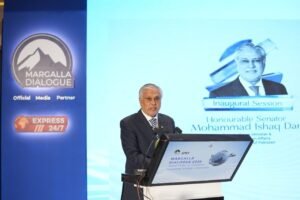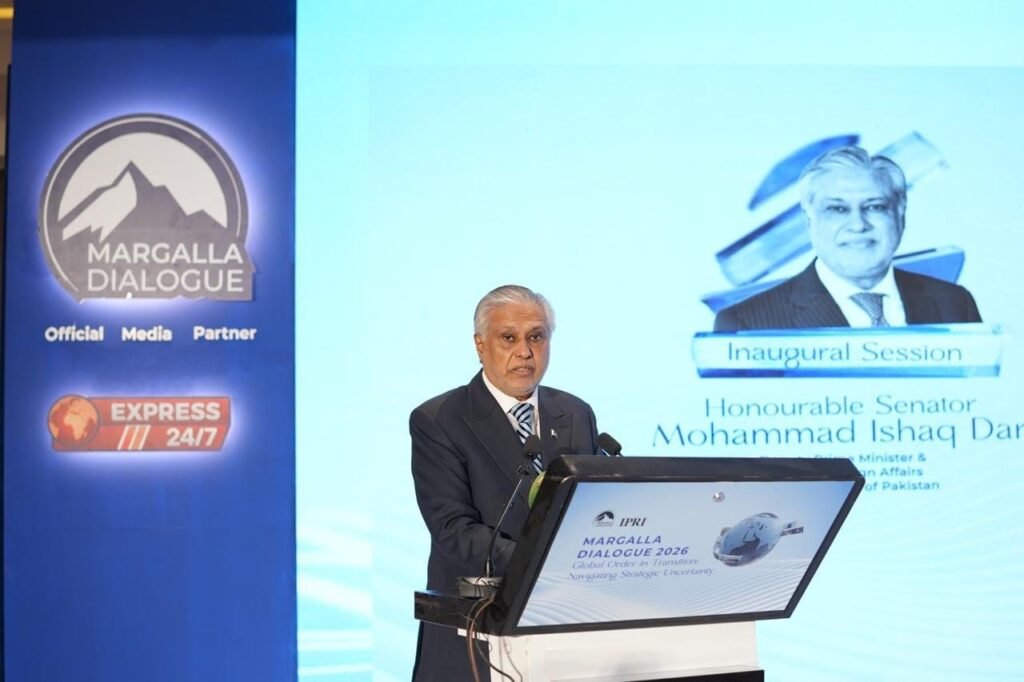
Islamabad (GNP): Deputy Prime Minister and Foreign Minister Senator Ishaq Dar said Pakistan will firmly protect its legitimate rights under the Indus Waters Treaty and oppose any attempt to turn water into a weapon. He was speaking at Margalla Dialogue 2026, a two-day event on 10-11 November hosted by the Islamabad Policy Research Institute (IPRI) in Islamabad.
Dar said regional stability depends on respect for treaty obligations. He described a just settlement of the Jammu and Kashmir dispute, in line with UN Security Council resolutions, as indispensable for lasting peace in South Asia, and said leaving it unresolved sustains mistrust and exposes the region to repeated crises.
As the global order goes through major changes, Dar said, the answer lies in domestic stability combined with effective diplomacy abroad. He asked whether these shifts will lead to progress or to deeper confrontation. Long-running conflicts and the erosion of arms control agreements, he noted, continue to threaten global stability, while multilateral bodies, above all the United Nations, are limited by political divisions and respect for international law is weakening.
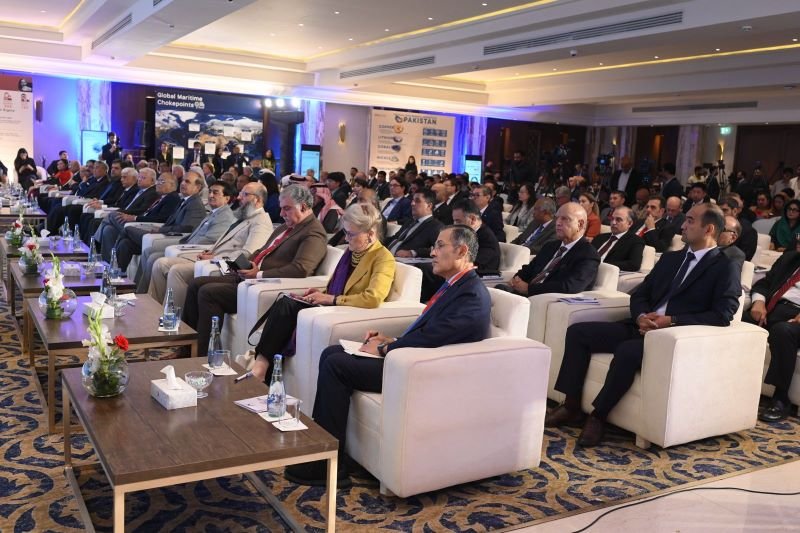
The open question, he said, is whether the emerging order will rest on multilateralism, agreed rules and shared principles or be shaped by strategic rivalry and fragmentation. He pointed out that the UN Charter treats sovereign territory and peaceful settlement of disputes as essential foundations of world peace.
Dar said Operation Bunyan-um-Marsoos sent a clear message that Pakistan will defend its territorial integrity and sovereignty at all costs, and that lasting peace measures in South Asia remain necessary. Pakistan continues diplomatic and collective efforts to ensure Afghan territory is not used for terrorism, an approach that also guides its wider international engagement.
He reaffirmed Pakistan’s commitment to an equitable international order anchored in the UN Charter, sovereign equality, territorial integrity and peaceful dispute settlement, and said Pakistan has used its UN Security Council membership to turn these principles into concrete action.
Dar called Pakistan’s strategic partnership with China a cornerstone of its foreign relations. He said Pakistan continues to engage with the US and is deepening cooperation with Saudi Arabia, Türkiye, Egypt, Iran, the Gulf, Europe, Central Asia and other partners.
The Makkah Joint Defence Agreement with Saudi Arabia and Türkiye, he said, reflects a commitment to collective security and credible deterrence, and is a defensive pact directed against no country and meant to contribute to regional peace and security.
Also read: Religious Affairs Minister to Lead Delegation at 6th Hajj Conference
IPRI President Lt Gen Majid Ehsan, speaking at the opening ceremony, said this year’s theme was chosen deliberately to reflect realities arising both from geopolitical competition and from natural phenomena such as climate change.

Sohail Majeed is a Special Correspondent at The Diplomatic Insight. He has twelve plus years of experience in journalism & reporting. He covers International Affairs, Diplomacy, UN, Sports, Climate Change, Economy, Technology, and Health.