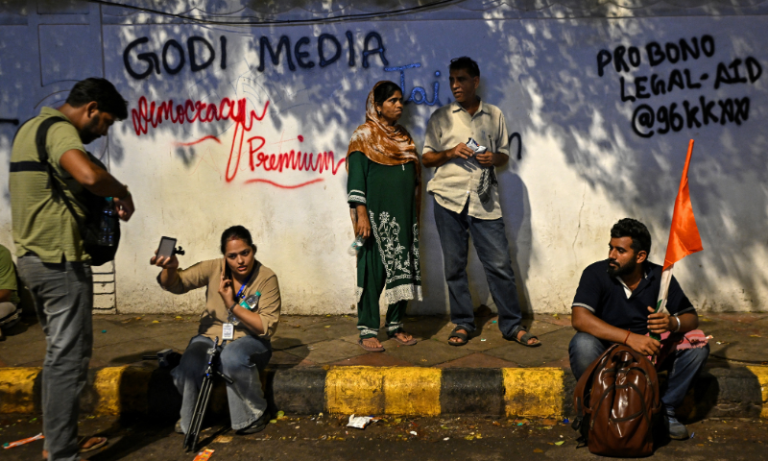
Delhi (GNP): Police in India detained 43 journalists over two days in October, according to the Committee to Protect Journalists (CPJ). Most were held in the capital, New Delhi, while covering recent protests. The detentions have sharpened concerns among Indian reporters about press freedom under Prime Minister Narendra Modi.
One of those detained was journalist Shoaib Daniyal. He was heading to cover a demonstration when he met a police checkpoint near his home. He said an officer became suspicious during a conversation about the protest, threatened to detain him and then took him away on a bus without explanation.
Journalists say such scenes were once hard to imagine in a city with a large media presence. Reporters interviewed about the detentions said they had never expected to see police push, pull and carry journalists onto buses in the capital. Their alarm reflects a longer decline. India has fallen in the Reporters Without Borders (RSF) World Press Freedom Index from 140th place in 2019 to 157th out of 180 countries.
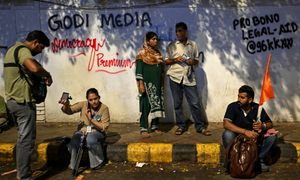
Veteran journalist Sreenivasan Jain, who spent three decades at NDTV, said the media has come under increasing pressure during the time the Bharatiya Janata Party (BJP) has been in power. He argued that much of India’s television news industry has become less willing to scrutinise the government. Manisha Pande, editor-in-chief of the digital outlet Newslaundry, said several prime-time broadcasters repeat government talking points, attack opposition figures and portray protesters as enemies of the country. Critics use the term “Godi media” for channels they see as too close to the government.
Journalists also point to ownership and money as factors in editorial decisions, citing corporate control and dependence on government advertising. Jain left NDTV in 2022 after it was taken over by the Adani Group, owned by billionaire Gautam Adani, who is described as close to Modi. He said the channel’s editorial direction became clear within weeks of the takeover.
The shift has pushed some audiences elsewhere. Pande said many young Indians are turning away from mainstream television news because they feel it pays too little attention to education, unemployment and infrastructure. They are moving to independent digital outlets and platforms such as YouTube, Instagram and X. Political satirist Ramit Verma, who was also detained while covering protests in Delhi, urged citizens to document events and hold those in power to account.
Those platforms are also under pressure. Media reports say the government ordered nearly 195,000 takedowns of posts on Instagram, Facebook and YouTube between March and July. Verma said several of his own posts were removed, often with no explanation.
Also Read: China Expels Record 33 Party Members as Xi Purges Deepen
Restrictions reach beyond social media. International media organisations have faced rules requiring them to set up Indian entities and employ local staff to keep operating. Foreign journalists need government permits to enter certain areas, including Indian-administered Jammu and Kashmir and Ladakh.
A legal fight is also under way over proposed data protection legislation. The Digital News Publishers Association, which represents 21 media organisations, has asked India’s Supreme Court to exempt journalists from provisions it says could force reporters to seek permission before using personal information in their coverage. The publishers say this could weaken investigative journalism and the protection of sources.
The Indian government rejects allegations of systematic pressure on the media. It maintains that its regulatory and law-enforcement actions are legitimate.
Shoaib Daniyal said, “For the last 12 years, the fear that journalists feel has really shot up.”
Ramit Verma said, “Everyone is a journalist, especially in India right now.”

Managing Editor at Global News Pakistan (GNP), with a Bachelor's degree in International Relations from Riphah International University, graduated with a Gold Medal. Reach out at sabahtareengnp@gmail.com