On 11 December 2018, a searchlight trap that researchers had set up in Yunnan, China’s south-western border province, caught a moth that had never been recorded in the country: the fall armyworm, a voracious maize pest native to the Americas.
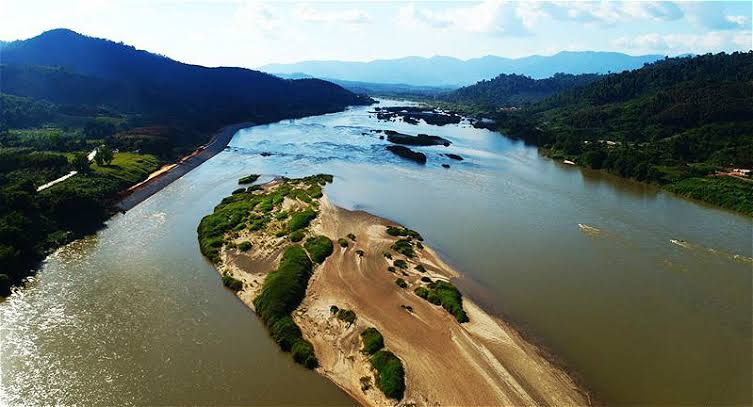
It had not arrived in a shipping container. Trajectory modelling showed the moths had been carried in on the wind from mainland Southeast Asia, across a land border that means nothing to an insect. Within nine months the pest had been found in 25 provinces.
Nearly eight years on, it has not left. Southern Yunnan’s mild winters allow it to breed all year round, and each spring new generations move north.
That story captures a kind of risk that climate change is making more common in the Mekong borderlands. Warmer winters decide which pests survive to the next season, whether they arrive on the wind or in a consignment of fruit. Shifting monsoon winds decide where migrating insects come down. Pests that cross the border are more likely to stay and to spread.
The region has invested heavily in early warning for storms and floods. It has invested far less in telling its neighbours, quickly and in usable form, when a pest or an animal disease is on the move. As the UN biodiversity talks in Yerevan close and climate negotiators head to Antalya for COP31, that gap deserves attention.
Pests that crossed the border and stayed
The evidence is clearest for the fall armyworm. A 2024 study in the Journal of Pest Science found that winter temperatures currently confine year-round breeding to the far south of China, mainly Yunnan and Guangdong. The overwintering zone shifts from year to year, and in exceptionally warm winters it can stretch to the Sichuan Basin and even southern Henan. In Hunan, Hubei and Anhui, the number of days suitable for the pest has been rising by about four a decade. Warmer winters, the authors conclude, will push breeding and overwintering further north.
Older migrants are changing their habits too. Brown plant hoppers, among Asia’s most damaging rice pests, fly into southern China from Indochina every spring and summer. Analysing 42 years of catches from 341 light traps, Chinese and British scientists found that shifts in the East Asian monsoon have shortened the insects’ migratory journeys and changed where outbreaks occur. A relationship that forecasters had long used to predict arrivals in the lower Yangtze valley has broken down.
Other risks travel with trade, and trade across Yunnan’s land ports is booming. Fruit imported on the China–Laos railway alone was worth 5.26 billion yuan in the first eight months of this year. Inspectors catch a great deal. Kunming Customs reported 4,850 interceptions of alien species in the three years to July 2026, and detections of quarantine pests by the customs office covering Mohan, the main road crossing into Laos, more than doubled year on year in the first half of 2026.
What slips through meets a warmer country. The oriental fruit fly, one of seven ‘emerging pests of global concern’ listed by the IPPC secretariat this year, is long established in southern China. A 2022 study found it moving into parts of central China once considered too cold, overwintering as far north as Jiangsu, Anhui and Hubei, and projected its suitable range to keep spreading north as the climate warms. Mile-a-minute weed, one of the world’s worst invasive vines, has so far gained only a foothold in Yunnan, in scattered patches in the border prefectures of Dehong, Xishuangbanna and Lincang. Modelling published last year projects that warming will enlarge the area of China highly suitable for it by about a fifth.
Some invaders arrived long ago. Crofton weed, a Mexican shrub, crossed Yunnan’s south-western land border in the 1940s and has since spread into Guangxi and Sichuan. Temperature is the strongest predictor of where it grows, and models suggest that warming will shift its most suitable range towards higher latitudes.
Disease-carrying insects, meanwhile, are climbing. In 2019 researchers found bluetongue virus, which sickens sheep and cattle, in biting midges trapped at 2,200 metres in north-western Yunnan, where minimum temperatures had risen by about 1°C on the 1971–2000 average.
Wind-borne pests need no port at all, and cargo-borne ones need only a few individuals to slip past inspectors. Either way, inspection at the border cannot be the whole answer. What matters as much is whether neighbours tell each other early what is coming, from an outbreak near a pack house to a moth flight building on the far side of the border, and whether they read the climate signals that make it more likely to take hold. The WMO warned in July that a strong El Niño is developing, likely to peak between November and February. The coming season will test both.
What already works
Some of this machinery exists. In August 2018, the Food and Agriculture Organization told China that the fall armyworm had reached Yemen and India; by December, China’s agriculture ministry had told Yunnan and Guangxi to start monitoring, so when the moth arrived, traps were waiting. But a global alert describes a continental trend. Which valleys to watch, and when, is something only plant protection services on both sides of the border can say.
For animal diseases, regional cooperation has grown quickly. Lumpy skin disease, a cattle disease spread by biting flies, mosquitoes and ticks, was first reported in South and East Asia in 2019 and within two years had been confirmed across much of the mainland, including Vietnam, Myanmar and Thailand. WOAH has convened Southeast Asian coordination meetings since June 2021, and ASEAN members, working with WOAH and FAO, have drawn up a control strategy for 2024–2030. There is no evidence that it infects people.
Rivers offer the clearest model. After severe floods and droughts in 2019 and 2020, China began sharing year-round hydrological data from two upstream stations, Yunjinghong and Man’an, with the five downstream countries through a Lancang–Mekong information-sharing platform. Once governments accepted that the risk ran all year, sharing moved from the flood season to the whole year. Pests and vectors whose seasons a warming climate is stretching deserve the same logic.
Where the warnings fall short
Early warning has come a long way. The WMO reported last year that 119 countries, a record 60 per cent, have multi-hazard early warning systems. Most of these systems, however, were built around weather and water. Biological hazards move through separate channels: WOAH for animal diseases and the International Plant Protection Convention (IPPC) for plant pests, whose secretariat reported this year that it is working to link its new pest outbreak alert system with FAO’s multi-hazard early warning initiatives.
Bilateral rules are thinner still. The border management agreements between China and its southern neighbours commit each side to inform the other of epidemics, and in most cases natural disasters, “as soon as possible” or “immediately”. They mostly leave open what triggers a notice, what it should contain and how any restrictions are later lifted.
Most notification is also triggered by detection. A notice goes out once a pest has been found, not when conditions start to favour its arrival. The plant hopper study shows the cost of that: when the climate shifts, yesterday’s forecasting rules can quietly stop working.
What would better notification look like?
The first is clear triggers with deadlines. Neighbours could agree that a first detection of a new pest or animal disease within a set distance of the border is reported within 24 hours, and a sharp rise in a known one within 72. Climate signals belong in the same framework. When seasonal outlooks point to an unusually warm winter or an El Niño drought, border provinces should exchange pre-season advisories on the pests and vectors those conditions favour.
The second is standing contact points and a shared risk calendar. Named offices in border provinces and districts, tested regularly, matter more than any platform. A joint calendar of high-risk windows, from the spring flights of armyworms and planthoppers to the peak midge season and the monsoon floods, would tell everyone when to be most alert.
Also Read: China’s New Long March: Why its Modernization is a Demanding Journey
The third is sharing enough to act, and no more. Governments are often wary of sharing surveillance data, sometimes with reason. A standard that can be called “limited observability” answers that concern: a notice should carry what a neighbour needs to understand and respond to a specific event, meaning what was found, where at district level, when, and what is being done. It need not include raw surveillance datasets, farm-level records or genetic material. Sharing on these terms is easier to square with national data rules, and it lowers the political cost of speaking early.
The fourth is building capacity together. A notice is only as good as the detection behind it. Shared light-trap networks, diagnostic laboratories, vaccine stocks for lumpy skin disease and joint training on both sides of a border make every other rule work better.
The fifth is to build on what exists: the Lancang–Mekong water platform, the ASEAN strategy on lumpy skin disease, the IPPC’s alert system and Target 6 of the Kunming–Montreal biodiversity framework, which calls for cutting the introduction and establishment of invasive alien species by at least half by 2030.
Warnings for all should mean all hazards.
“Forecasts in themselves do not prevent hazards, people do,” the WMO’s Secretary-General, Celeste Saulo, said in July. The same is true of pests and pathogens.
The UN’s Early Warnings for All initiative aims to put every person on Earth under an early warning system by the end of 2027. For the farmers and herders of the Mekong borderlands, “all” should include warnings about what the climate carries across the border, not only what it pours from the sky.