Hubei (GNP): A Chinese Gen Z creator has turned a science fiction dream into reality by building a rideable hoverboard that actually flies. The young inventor from Hubei province, known online as Amazing Ayu, has gone viral after his board took off, hovered and moved in a straight line.
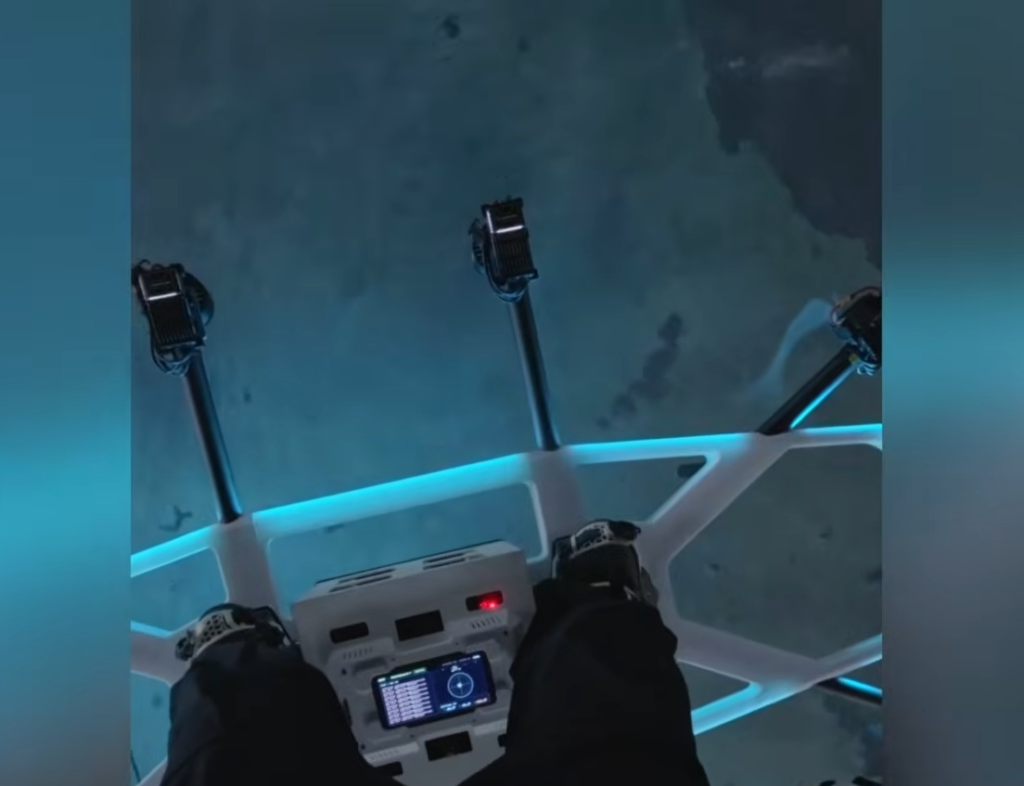
Inspired by the Green Goblin’s glider from Spider-Man, Ayu spent more than two months building the device. His first prototype used jet engines but caught fire during a test. He then switched to a safer design with 10 electric rotors that generate over 660 pounds of thrust.
The board is controlled by an artificial intelligence (AI) system that tracks flight data in real time and helps with balance. After many failed tests, Ayu successfully flew it in Shanghai on October 13 and later flew it across the Yangtze River.
The hoverboard closely resembles the one seen in films, with a flat platform for the feet and rotors underneath. The rider stands upright and steers with body movement and a small control stick. There is no seat or cockpit, only an open-air flying experience.
According to Ayu, the biggest challenge was not making the board fly but making it stable. The AI-based flight control system constantly adjusts the power of each rotor to keep the board balanced. It also warns the rider if anything goes wrong during flight.
Many people online raised safety concerns. Ayu said he tested the board repeatedly at low altitude, wearing a helmet and keeping early flights short and close to the ground. Only after confirming stability did he attempt longer flights over water.
The project was built using consumer-grade parts at a low cost compared with commercial flying machines. Ayu sourced most components from local markets and online stores, including carbon fibre sheets, drone motors and custom-made batteries designed to keep the weight down while maximising power.
His journey was far from smooth, as he documented every failure on social media. In one video the board wobbled and crashed, and in another smoke rose from the motors. He studied each setback and redesigned the frame and flight software several times.
The flight video has since gone viral on Chinese social media, and users have begun calling him the real-life Green Goblin. Many have asked whether he will mass-produce the board or release a tutorial.
Also Read: BingX Introduces BXUSD, a Yield-Bearing Savings Product
Ayu responded that flying a hoverboard is extremely dangerous and should not be attempted without proper engineering knowledge and safety measures.
For now, the hoverboard remains an experimental prototype and is not for sale. Ayu says he will keep improving its battery life, safety and control, with the next goal of flying higher, longer and more smoothly.
Observers note that cheap parts, 3D printing and open-source AI tools now allow individual creators to build machines once possible only for large companies. Firms such as CoolFly are already developing standing electric vertical take-off and landing (eVTOL) platforms, and a single creator building a working board shows how far personal flight experiments have come.