Geneva (GNP): The disruption of shipping through the Strait of Hormuz is creating economic pressures for vulnerable developing economies, with the impact extending beyond energy markets to food, transport and wider international trade.
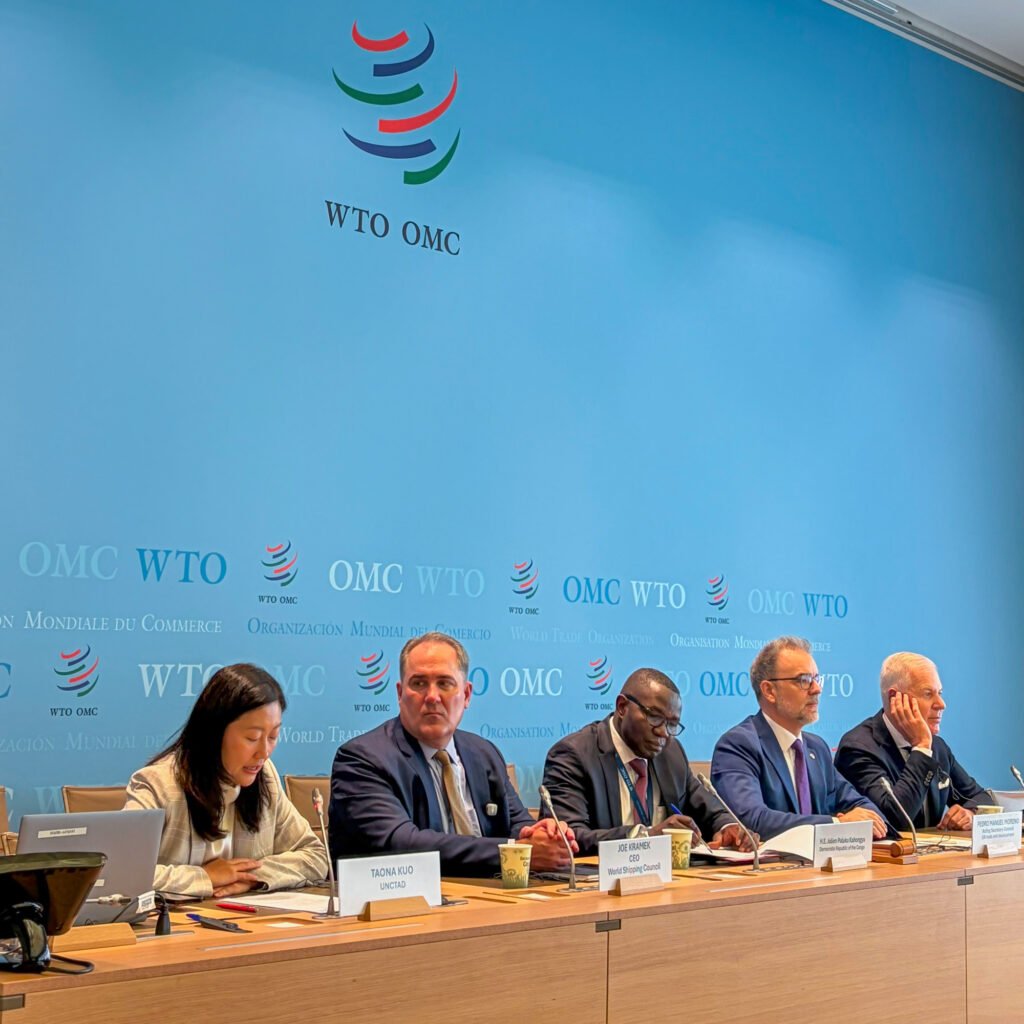
At the World Trade Organization (WTO) Public Forum, UN Trade and Development (UNCTAD) Acting Secretary-General Pedro Manuel Moreno highlighted the challenges faced by countries with limited capacity to absorb external economic shocks.
According to the information shared by UNCTAD, 61 vulnerable economies are exposed to both oil and cereal import shocks.
The Strait of Hormuz is one of the world’s most important maritime trade routes. Disruptions in the waterway can affect the movement and cost of energy supplies, while their consequences can spread through transportation networks, agricultural production, supply chains and household markets.
UNCTAD’s analysis identifies 61 vulnerable economies facing exposure to both oil and cereal import shocks. The group includes 35 least developed countries and 26 small island developing states, with seven countries belonging to both categories.
The dual dependence on imported energy and food makes these economies particularly sensitive to disruptions.
When oil prices rise, the effects can extend beyond fuel markets. Higher energy costs can increase transportation expenses, raise production costs and place additional pressure on public finances.
Food systems can also be affected because agriculture depends on energy, transportation and other imported inputs. Higher costs for fuel, fertilizer and shipping can eventually feed into food prices, placing additional pressure on households and businesses.
Also Read: Pakistan Must Use All Its Political Capital for De-escalation
UNCTAD has emphasized that the consequences of a major trade disruption do not necessarily disappear as soon as shipping conditions improve.
Its analysis of the Strait of Hormuz disruption notes that energy markets can adjust relatively quickly, while shipping networks, supply chains and food systems may take longer to recover.
For developing economies with limited fiscal space, the challenge can be particularly serious. High debt-service obligations and declining international assistance can reduce governments’ ability to provide financial support to households and businesses affected by higher import costs.
The issue also has implications for international trade. Higher freight, insurance, energy and financing costs can affect companies that depend on imported inputs or international markets.
UNCTAD has separately warned that smaller firms, which account for around 70% of global employment and 90% of businesses, can face disproportionate pressure during disruptions to energy and transport systems.
The Strait of Hormuz therefore represents more than an energy-security concern. Its disruption can create interconnected economic effects involving trade, food security, transportation, inflation and development.
UNCTAD’s analysis points to the importance of improving resilience in vulnerable economies. Diversifying sources of trade and energy, strengthening supply chains and improving the ability of governments to respond to external shocks are among the issues highlighted in its assessment.
The discussion at the WTO Public Forum places these concerns within the broader international trade debate. For countries with limited economic resources, maintaining stable access to essential imports can be critical to protecting economic activity and household welfare during periods of international disruption.
UNCTAD’s findings underline the uneven nature of global economic shocks. While major economies may have greater financial and institutional capacity to absorb temporary increases in energy and food costs, vulnerable developing economies can face much greater constraints.
The Strait of Hormuz situation consequently remains an important issue for global trade and development discussions, particularly for least developed countries and small island developing states that rely heavily on imported energy and food.