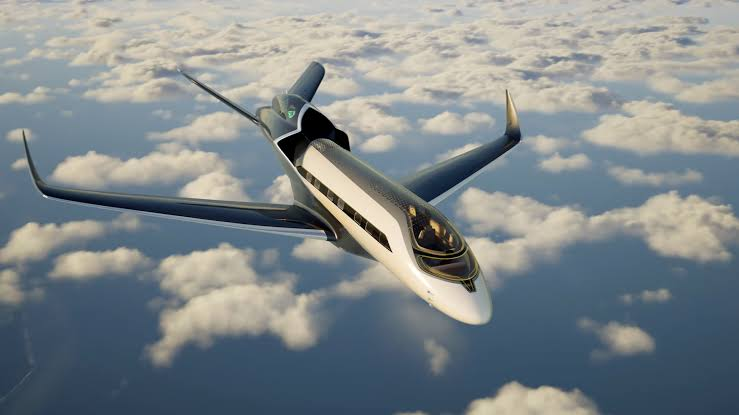
London (GNP): Self-Flying Planes could represent one of the most remarkable transformations in the future of aviation as autonomous technology continues to advance and companies explore whether aircraft can safely operate with significantly reduced human involvement.
For many years, pilots have played a crucial role in air transport, overseeing the aircraft systems and making decisions and dealing with accidents as they arise. The technology, however, has developed so much that today, the aircraft already have numerous automated features, including the ability to stabilize the flight and follow a predetermined route or assist in landing.
The creation of self-flying planes may take this technology to a new level. Engineers and developers are working on systems that can carry out more and more complicated procedures that have always been done by pilots themselves. The independent technology will enable flights to take off, fly, and land with little or no human interference.
Advocates of the technology recognize the benefits it will bring to the industry. Automated systems will respond faster to changing circumstances, process great amounts of information and keep tabs on the work of the plane.
Moreover, there are some vital questions regarding the self-flying planes with respect to safety and general public acceptance. The aviation industry is rather stringently regulated, and it is apparent that regulations must be changed in order to allow self-flying planes to operate. Regulators must be sure that the autonomous systems are reliable in case of emergencies, failures or unexpected climatic changes.
Also Read: Apple Renames Lake Ontario as Lake America for US Users
What is of utmost importance is the acceptance of self-flying planes by passengers. Although people are getting used to the idea of automated technologies in cars, trains, and so on, the matter of entrusting aircraft to completely automated technology is a bit more delicate.
To a certain extent, the aviation industry has always been rather careful in adopting innovations, especially those that are connected to passenger safety. Before self-flying planes can appear in the sky, the developers must prove that their technology meets the requirements of safety in a wider range of situations.
It is possible that the technology for autonomous planes will first become widely available in the area of transport. The emergence of these technologies could allow businesses to experiment with autonomous technologies, and civil aviation is very likely to benefit from their potential. Unmanned military aircraft and drones have already demonstrated that pilotless flying vessels can perform many tasks successfully, however, the requirements for passenger transport are much stricter.
The development of artificial intelligence may also affect the future of aviation technology. Advanced systems of artificial intelligence could help planes to process the information they receive from various sensors, weather services, etc.
It is also important to remember that the idea of Self-flying planes does not mean that pilots will stop being needed immediately. Aviation experts suppose that human involvement can remain crucial for a long time, especially in case of emergencies.
Aviation companies may gain direct monetary benefits if autonomous systems lower costs of operation or help to tackle shortage of experienced flight crew. The global aviation industry is characterized by big and qualified workforce, and companies in this area will require increasing number of qualified pilots as air transport is on the rise.
However, diminishing the crew members can raise serious alarm among those in the aviation industry and representatives of labor unions. It will be important to consider who bears responsibility for any negative events in the air. It would have to be determined who must be responsible for the mistake made by an autonomous system: it can be the air carrier, the manufacturer of the aircraft or its software.
Cyber security is another major issue. With the increased dependence on electronic systems of the aircraft, it is vital to protect advanced machines against technical problems and possible cyber attacks accordingly. Engineers need to ensure that autonomous machines will be able to resist interference and function properly in case of communication breakdowns.
However, there remains a belief that technology is developing quickly. Modern aviation relies on automated systems, and new aircraft may be even more automated. Yet, it is necessary to figure out if everyone involved is ready to welcome the innovations.
Self-flying airplanes will eventually change the way people travel and transport goods from one location to another. They will lead to an increase in efficiency, greater safety and the possibility to carry freight productively. However, in order for the innovation to become widespread and accepted by the public, it is necessary to test and regulate it effectively.
While advancing autonomous technology keeps providing the aviation sector with exciting challenges, there is hope for positive developments in the industry. Innovations may appear step by step, with autonomous systems supporting pilots rather than completely replacing them in everyday flights.