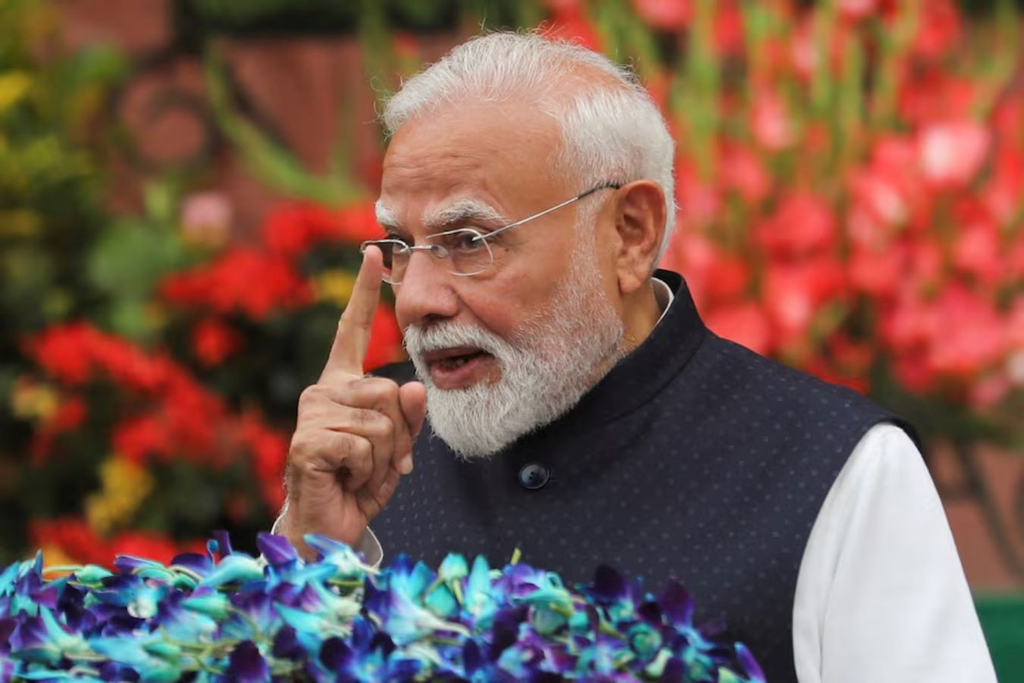
New Delhi (GNP): Indian Prime Minister Narendra Modi, long known for scripted speeches and formal broadcasts, has shifted to a noticeably more casual style on Instagram in recent weeks, adopting selfie-style videos and informal language aimed squarely at younger audiences.
The 75-year-old leader, who commands more than 106 million followers on the platform, now regularly addresses viewers as “friends” and has even used slang popular among Gen Z, telling graduating students in Delhi that they were “first in my bloodline to build a rocket, a chip and a drone.”
The change in tone did not emerge in isolation. It follows a wave of youth protests earlier this year led by the satirical Cockroach Janta Party, a movement that began online through memes and livestreams before growing into street mobilization strong enough to force the resignation of a federal minister.
According to author and commentator Anurag Minus Verma, the Bharatiya Janata Party had spent more than a decade building one of India’s most effective political machines online, relying heavily on WhatsApp groups and X accounts to amplify its messaging. That network-based strategy, however, struggled to translate to Instagram, where youth-driven, meme-based organizing caught the party off guard.
Demographics help explain why the BJP is recalibrating. More than 60 percent of India’s population is under 35, and Gen Z, born between 1997 and 2012, is expected to form one of the country’s largest voting blocs by the 2029 general election.
Reaching that audience means competing on a platform built around personal, unfiltered content rather than traditional political messaging, and Modi’s early attempts to make that shift did not go smoothly. His first selfie-style reel, in which he addressed the youth protests directly, drew sarcastic edits and mockery online, with particular attention paid to an extended pause after he said the word “friends.”
Rather than retreat, Modi’s team appeared to adjust, experimenting with different camera angles, lighting, and backdrops in subsequent posts. Ginni Malia, 22, says she understands the BJP’s motivation for reaching out to her generation but questions the timing of the sudden shift, arguing that the videos mimic Gen Z formats without addressing the concerns that fueled the protests in the first place. She notes that among her peers, the content is often treated as comedy rather than genuine political outreach.
The BJP’s broader social media presence has followed a similar pattern. A gym-themed reel discouraging young people from joining protests drew widespread criticism online, as did a video set to a well-known 90s sitcom theme song that carried little resonance with a Gen Z audience.
Internally, the party appears to be aware the strategy hasn’t landed as intended. Modi reportedly asked his cabinet ministers to boost their own social media engagement during the protests, and ministers were later given performance evaluations on their digital presence. The party has also replaced its longtime social media chief, a move some analysts link to criticism the BJP faced online during the unrest.
Also Read: Charles Melton in Talks for Naruto’s Kakashi Role
The BJP is not alone in adapting to this shift. Congress leader Rahul Gandhi has continued posting selfie-style videos and held an Instagram question-and-answer session following the protests, responding to fans with lighthearted answers about pop culture references.
Joyojeet Pal, who studies the political use of social media at the University of Michigan, says the challenge facing the BJP goes beyond content style. He notes that Instagram rewards engagement, such as watch time and shares, rather than the follower-network amplification the party has relied on for years, meaning a reel from a small account can outperform one from a page with a massive following.
Pal adds that once a video is posted, control over how it’s received and reshared is largely out of the party’s hands, a dynamic reflected in the sarcastic remixes that followed Modi’s own reels.
Despite the rocky rollout, experts caution against overstating the political stakes of the shift. Pal argues that winning an election and winning a social media narrative are separate challenges, and that the BJP’s electoral strength still rests primarily on its organizational base rather than its online reception.
Given the party’s track record of adapting to new communication formats, from early social media campaigning to podcasts and influencer interviews, Pal suggests it is likely to adjust its approach over time, even if that process takes a while to unfold.

Managing Editor at Global News Pakistan (GNP), with a Bachelor's degree in International Relations from Riphah International University, graduated with a Gold Medal. Reach out at sabahtareengnp@gmail.com