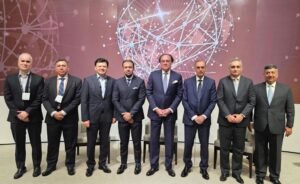
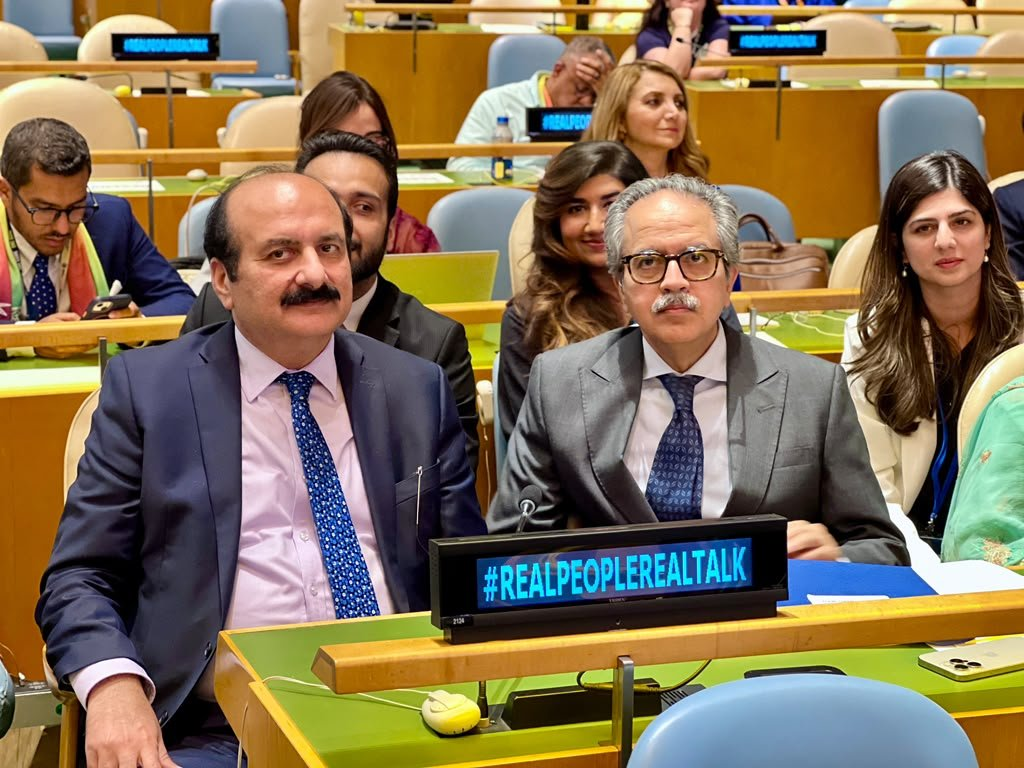
New York (GNP): Pakistan brought its footballing craftsmanship to the global stage this week as Rana Mashhood Ahmad Khan, Chairman of the Prime Minister’s Youth Programme, represented the country at a joint United Nations and FIFA event exploring football’s role in youth mental health and well-being.
The event, themed around using the sport as a catalyst for global unity and youth wellness, was organized by the United Nations Youth Office in partnership with FIFA. During the proceedings, Khan presented the Trionda, the official match ball of the FIFA World Cup 2026, drawing attention to its Pakistani origins.
Speaking at the occasion, Khan said the ball, crafted by Pakistani hands, stands as a symbol of the country’s craftsmanship and reflects sport’s capacity to unite people across borders and cultures. He framed Pakistan’s role as manufacturer of the tournament’s official ball as evidence of the country using sport as a tool for bringing nations closer together.
A Ball Built on Unity
The Trionda takes its name from the Spanish phrase for “three waves,” a reference to the historic nature of this year’s tournament, which for the first time is being co-hosted by three nations: Canada, Mexico and the United States. The design translates that theme visually, with a red, green and blue colour palette representing the three host countries and a four-panel construction whose fluid geometry evokes the waves referenced in the ball’s name. The panels converge to form a triangle at the ball’s centre, a deliberate design choice symbolizing the union of the three hosting nations.
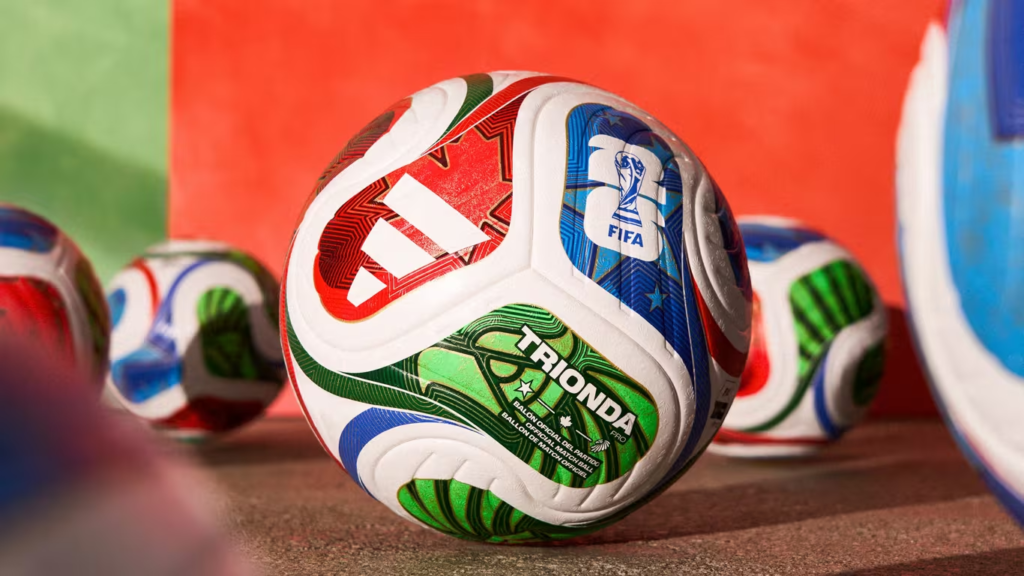
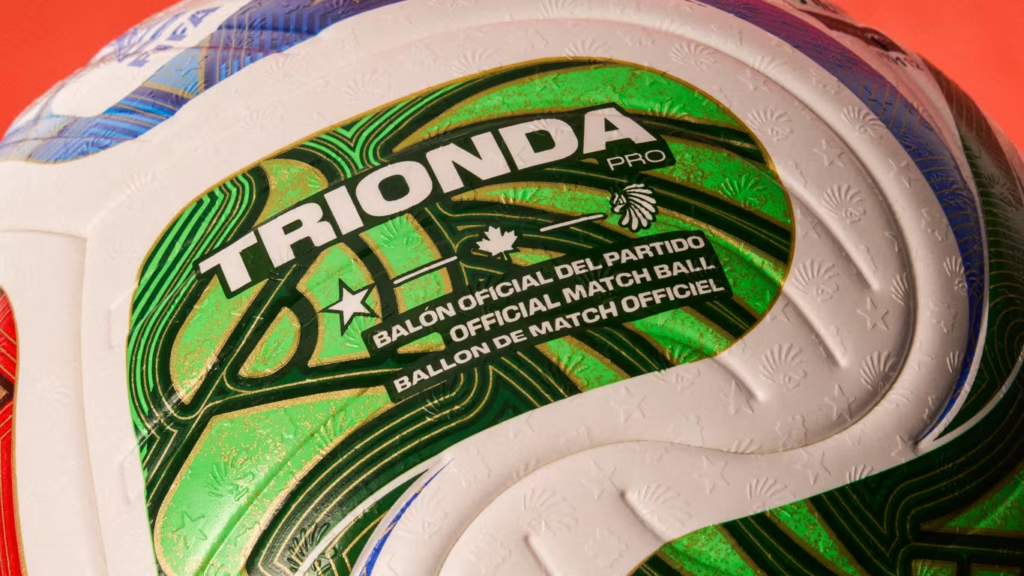
National iconography further reinforces this theme, with a maple leaf representing Canada, an eagle for Mexico and a star for the United States appearing on the ball’s surface, while gold detailing pays tribute to the FIFA World Cup Trophy itself.
Engineering Behind the Design
Beyond its symbolism, the Trionda incorporates a number of performance-driven innovations. Its four-panel construction features intentionally deep seams engineered to produce even, well-distributed drag as the ball moves through the air, contributing to more stable flight. Embossed icons on the surface, visible only at close range, are designed to improve grip during play in wet or humid conditions.
The ball also carries forward FIFA’s connected ball technology, integrating a 500Hz motion sensor chip that tracks the ball’s movement in real time. This data feeds directly into the video assistant referee system, giving match officials enhanced support for decisions, including those involving offside calls.
Sialkot’s Global Footprint
The Trionda was manufactured in Sialkot, a city that has long anchored Pakistan’s position in the global sporting goods industry. According to Prime Minister Shehbaz Sharif, Sialkot produces roughly 70 percent of the world’s footballs, a scale of production that makes the city’s role in this year’s World Cup less a singular achievement than the latest chapter in a decades-long industrial legacy.
Also Read: Harry Kane Reflects After England’s Painful Tournament Exit
That legacy carries particular weight against the backdrop of the tournament itself. The Trionda’s design deliberately foregrounds themes of unity between three host nations spanning North America, while the ball delivering that message to the world’s biggest football stage was built in a city far removed from any of them. For Pakistan’s diplomatic and economic messaging, the juxtaposition offers a ready-made narrative: a country not typically associated with football’s global spotlight is nonetheless the point of origin for the object every match, and every goal, will depend on.
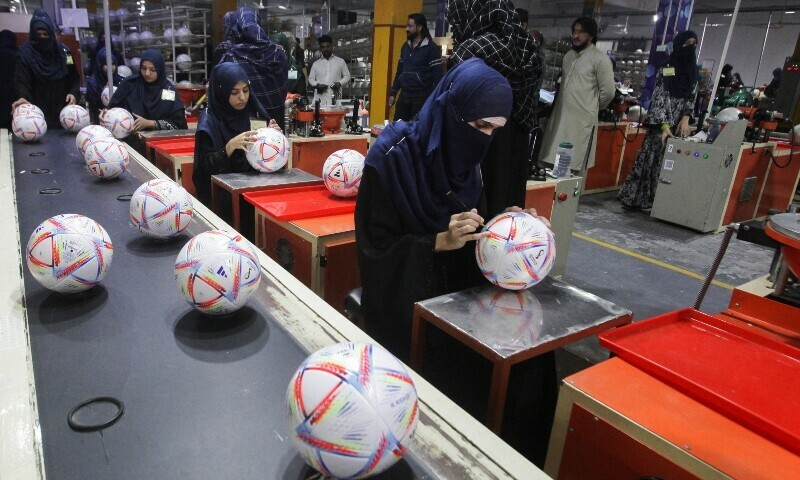
The UN-FIFA event’s own framing, centered on football as a catalyst for youth well-being, adds a further layer to Pakistan’s presence there. By pairing the Trionda’s unveiling with a platform focused on youth and mental health, Khan’s appearance positioned Pakistan’s manufacturing role within a broader conversation about sport’s social value, rather than presenting it purely as an industrial or trade accomplishment.

Managing Editor at Global News Pakistan (GNP), with a Bachelor's degree in International Relations from Riphah International University, graduated with a Gold Medal. Reach out at sabahtareengnp@gmail.com