
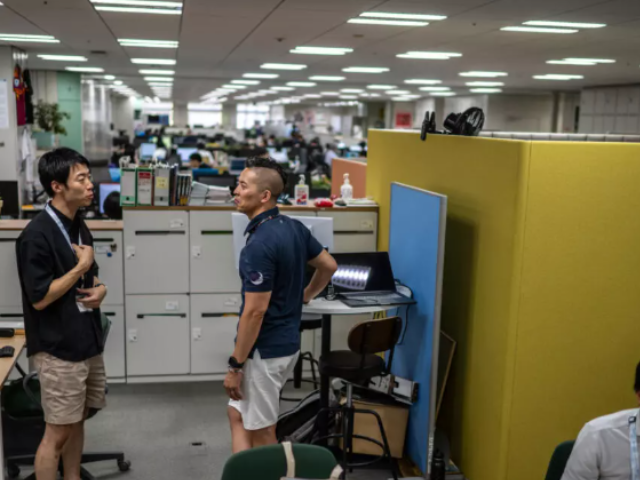
Tokyo (GNP): Tokyo’s metropolitan government has widened its long-running “Cool Biz” campaign to allow male employees to wear shorts to work, as offices across Japan scale back air conditioning use amid rising energy costs linked to the war in the Middle East.
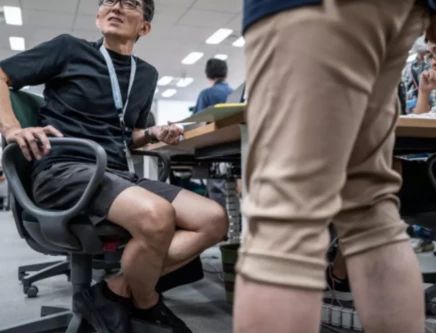
The relaxed dress code marks a notable shift in a country where formal business attire has traditionally been the norm, particularly for men. On a day when temperatures in the Japanese capital climbed to around 34 degrees Celsius, at least five employees at one metropolitan government office chose shorts over suit trousers.
Noboru Watanabe, a 50-year-old metropolitan government official, said he initially felt self-conscious about baring his legs at work but found the change worthwhile once he tried it, describing shorts as far more comfortable than his usual attire. He said he still wears a formal shirt when required, though he acknowledged it remains uncomfortably warm.
The shorts initiative was announced this spring by Tokyo Governor Yuriko Koike, who cited concerns over the capital’s electricity supply outlook. It builds on the original Cool Biz program, an energy-conservation campaign Koike launched in 2005 while serving as Japan’s environment minister, which encourages government workers to forgo jackets and ties during the summer months. In April, Koike told reporters the updated guidance promotes comfortable clothing such as polo shirts, t-shirts, sneakers and, depending on job responsibilities, shorts.
The policy has generated interest beyond city government. Takayuki Deguchi, a 30-year-old employee at a marketing firm that still requires suits, said he views the shorts option as a flexible way for workers to manage their comfort during extreme heat, expressing enthusiasm for the approach even though his own workplace has not adopted it.
Not everyone has embraced the change. Sachie Koike, a 52-year-old realtor, said she has no objection to men skipping ties or jackets in summer but considers shorts inappropriate for the workplace, associating them more with days off, and said she does not find them a neat look in a professional setting.
Also Read: Norway Gets Heroes’ Welcome In Oslo After World Cup Exit
The push to loosen workplace dress codes comes as Japan continues to grapple with extreme summer heat. The Japan Meteorological Agency recorded the country’s hottest summer since record-keeping began in 1898 last year. Temperatures reaching 40 degrees Celsius or higher have become frequent enough that the agency introduced an official term this April for such extreme conditions, describing them as “cruelly hot,” or kokusho, days. Scientists attribute the increasing frequency, duration and intensity of such extreme weather to human-driven climate change.
Takuya Ozawa, a 38-year-old Tokyo government employee, said his commute home is particularly uncomfortable in long trousers, but that shorts have made the trip noticeably cooler.