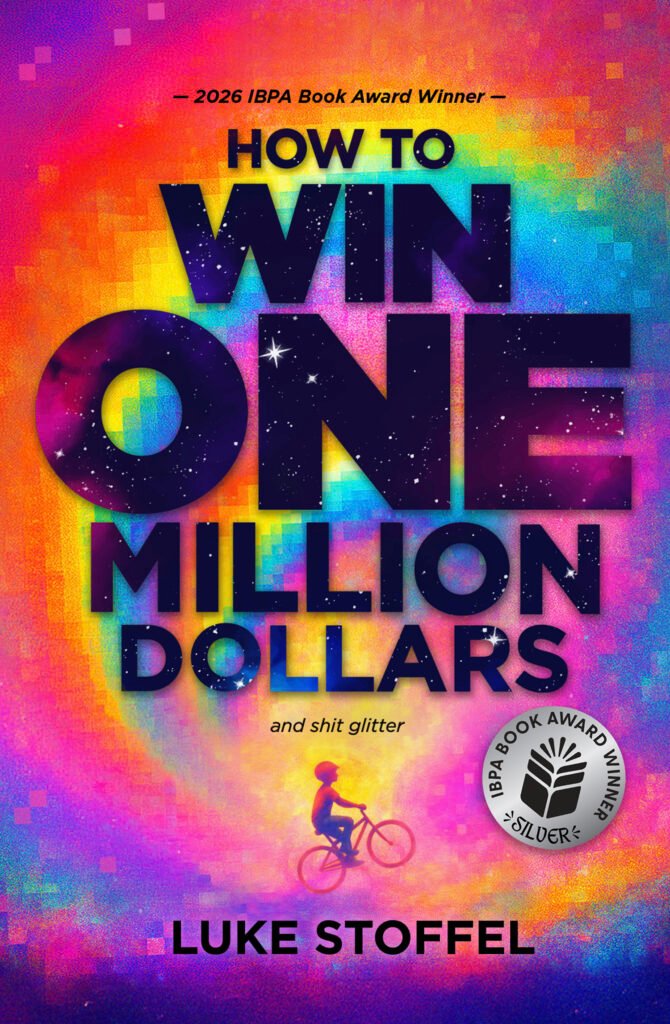
New York (GNP): Luke Stoffel AI Assisted Book 2026, continues to gain recognition across the publishing world, as the openly AI-assisted debut memoir “How to Win One Million Dollars and Shit Glitter” has been named a finalist for the 2026 National Indie Excellence Awards.
This latest recognition comes just weeks after Stoffel won the 2026 IBPA Benjamin Franklin Award for the same book, making him one of the most talked-about authors in the current debate over artificial intelligence and creative writing.
What makes Luke Stoffel AI Assisted Book 2026 stand out from the broader AI in publishing debate is the author’s complete transparency about how and why AI was used. Stoffel, who is dyslexic, used AI tools specifically for line editing and accessibility, giving him a way to get the stories out of his head intact after years of hiding from the page during his school years.
The disclosure is not hidden in a footnote or buried in an afterword. It is embedded in the book itself, from the very first page, making Stoffel’s case one of the clearest and most honest examples of AI assisted authorship in the current literary landscape.
Also read: Intel Unveils Future of Computing at Computex 2026
The recognition arrives at a charged moment for the publishing industry. The Commonwealth Prize and Granta have both been caught in AI disclosure controversies this year, and awards bodies around the world are scrambling to write policies on how to handle AI use. Detection tools are flagging authors and creating significant anxiety across the literary community.
The New Yorker captured the industry’s core question this month, asking whether it matters if a chatbot wrote a prize winning story. In Stoffel’s case, the answer was declared openly on page one, and the juries who actually read his work kept saying yes.
Stoffel himself has spoken directly about the paradox at the heart of the current debate. He said the publishing world is punishing people for looking like robots while rewarding robots for looking like humans. He took the disclosure, faced the public criticism that came with it, and continued to receive recognition from the literary community nonetheless.
The Luke Stoffel AI Assisted Book 2026 recognition also coincides with the release of his new two book series, “The Warboy Chronicles.” The series includes “Boy, Refracted,” a science fiction novel built from a memoir in which a man pours his break up into a machine and the machine wakes up, and “The Third Person,” the memoir underneath it, written in third person voice as a man travels across Southeast Asia with an AI recording his patterns.
Both books topped Amazon’s Hot New Releases upon launch. Boy, Refracted reached number one in multiple categories including LGBTQ+ Science Fiction, Buddhism, and Zen Philosophy. The Third Person reached number one in Southeast Asia Travel. Publishers Weekly BookLife described Boy, Refracted as a truly singular book, while Kirkus Reviews called The Third Person an absorbing real life portrait of self discovery, whether human or otherwise.
The series explores what it feels like to trust a mirror that flatters you until you stop thinking for yourself. It examines codependency, chatbot empathy, and the increasingly blurry line where artificial intelligence crosses into therapy, at a moment when more people are confiding in machines than in each other.
Luke Stoffel is also a GLAAD honored artist and creative director whose work has appeared in The New York Times and the Huffington Post, and has been commissioned by the Ralph Lauren family and the Hong Kong Ballet. His Pop Art Tarot will be published by Rockpool Publishing with worldwide distribution in 2027.