Geneva (GNP) : Pakistan underwent its second periodic review with the United Nations Committee Against Torture under the Convention against Torture and Other Cruel, Inhuman or Degrading Treatment or Punishment.
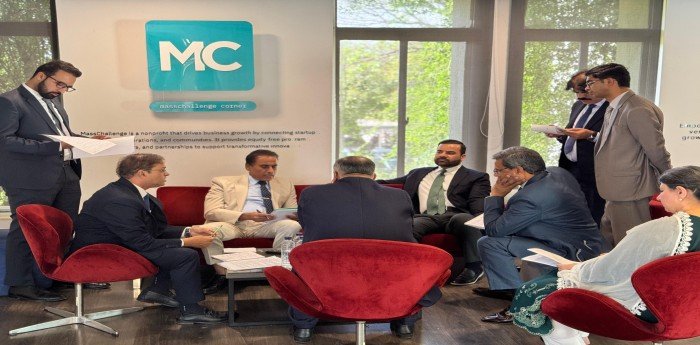
The delegation was led by Barrister Aqeel Malik, Minister of State for Law and Justice, alongside Abdul Khalique Shaikh, Secretary, Ministry of Human Rights; Muhammad Arshad, Director General; Rabbea Hadi, Director General, CPI; Mian Farooq Nazeer, Inspector General Prisons, Punjab. Dr Muhammad Arif, Director, Ministry of Human Rights, Zeeshan Munir, Deputy Director Ministry of Human Rights and Aziz Iqbal Deputy Director Ministry of Human Rights.
During the review, Pakistan reaffirmed its unequivocal commitment to the absolute prohibition of torture under international law and highlighted a range of legislative, institutional and procedural reforms undertaken to strengthen safeguards against torture and custodial abuse.
A central development presented was the enactment of the Torture and Custodial Death (Prevention and Punishment) Act, 2022. The legislation establishes, for the first time, a comprehensive definition of torture in domestic law, criminalizes acts committed by public officials and introduces strict penalties. It also renders inadmissible any evidence obtained through torture and provides victims with access to legal remedies, compensation and judicial recourse.
The delegation highlighted the establishment of an independent investigative mechanism under the Federal Investigation Agency (FIA), designated to conduct impartial inquiries into allegations of torture, including on a suo motu basis. Specialized units comprising forensic experts, medico-legal professionals, and prosecutors have been created to enhance investigative capacity and procedural integrity.
Pakistan also outlined improvements in oversight mechanisms, including regular inspections by judicial authorities, administrative monitoring, and expanded powers of the National Commission for Human Rights to conduct unannounced visits to places of detention. These efforts are complemented by strengthened complaint redress systems, allowing detainees to report grievances through multiple channels, with reported resolution rates exceeding 90 percent in several jurisdictions.
Reforms in detention conditions were also emphasized, including prison infrastructure upgrades, measures to reduce overcrowding and targeted protections for vulnerable groups. Women and juvenile detainees are housed separately, with increased focus on rehabilitation and reintegration. Additional measures have been introduced to address the needs of persons with disabilities.
The delegation further noted progress in healthcare provision within detention facilities, including routine medical examinations, improved referral systems, and integration with public health programmes. Efforts are ongoing to align medico-legal practices with internationally recognized standards.
Pakistan highlighted its transition towards modern, non-coercive investigative practices, including increased reliance on forensic science and digital evidence. Training programmes across law enforcement, prosecution, and prison administration are being aligned with international standards such as the Nelson Mandela Rules, Tokyo Rules, and Minnesota Principles.
While acknowledging progress, Pakistan recognized ongoing challenges, including prison overcrowding, resource constraints, and uneven institutional capacity. The delegation noted that reforms are being implemented within a complex environment shaped by security challenges, including terrorism, as well as climate-related pressures and resource demands.
TCommittee appreciated the efforts made by Pakistan in addressing custodial torture and improving prison conditions. At the same time, it highlighted areas requiring further attention, including the need to incorporate psychological pain within the definition of torture under domestic law, to review and narrow the definition of terrorism under the Anti-Terrorism Act, 1997, to further strengthen the role of the National Commission for Human Rights in investigating torture complaints, to ensure full observance of the Nelson Mandela Rules and Bangkok Rules, and to consider adoption of the Optional Protocol to the Convention against Torture.
In concluding remarks, Pakistan expressed appreciation for the constructive engagement with the Committee and reaffirmed its commitment to continued cooperation with international human rights mechanisms. The delegation noted that it would submit written responses to the Committee’s questions and carefully consider the forthcoming concluding observations as a roadmap for further reforms.

Sohail Majeed is a Special Correspondent at The Diplomatic Insight. He has twelve plus years of experience in journalism & reporting. He covers International Affairs, Diplomacy, UN, Sports, Climate Change, Economy, Technology, and Health.