E-Commerce, skills training, formalization to unlock Pakistan’s export potential
Islamabad (GNP) :- Federal Minister for Commerce Jam Kamal Khan said that Pakistan can significantly boost its exports by combining skills development, e-commerce integration, and gradual formalization of the economy, while ensuring a level playing field for compliant businesses.
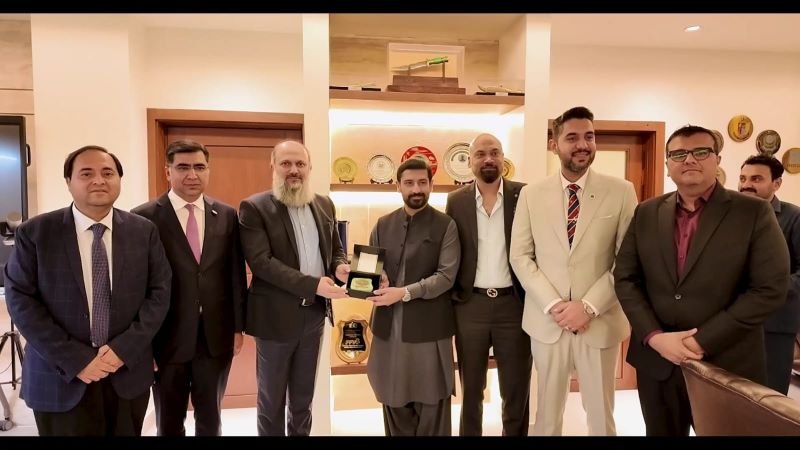
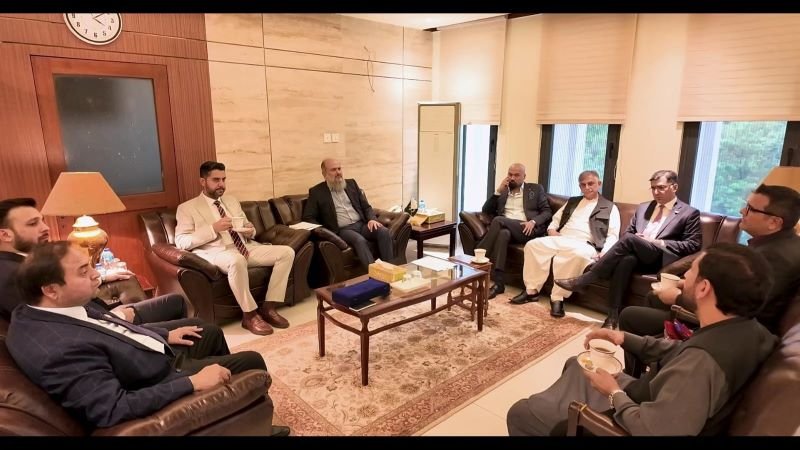
He expressed these views during a meeting with a delegation of business leaders and development practitioners led by Taimur Siddique, Director Shahi Group.
The meeting was also attended by Nawabzada Mir Muhammad Zarain Khan Magsi, Parliamentary Secretary for Tourism and Culture, Balochistan, along with representatives from textile, leather, and trade sectors.
The Minister emphasized that Pakistan has a strong foundation for export-led growth, particularly in sectors such as textiles, leather, and value-added recycled products.
He noted that hubs like Karachi offer natural advantages due to port connectivity, skilled labor, and an established industrial ecosystem.
“Pakistan has the talent, infrastructure, and entrepreneurial capacity. Our focus is to connect this potential with global markets through policy support and digital platforms,” he said.
During the discussion, participants highlighted successful grassroots initiatives, including stitching and vocational training centers in Balochistan where young women are being trained on modern equipment.
These centers are enabling local communities to produce export-quality goods, creating income opportunities at the grassroots level.
Jam Kamal Khan stressed that training alone is not sufficient without market access.
He underscored the importance of linking such initiatives with e-commerce platforms, allowing locally produced goods to reach international buyers. He noted that digital trade has opened new avenues, particularly for remote and underserved areas.
The meeting also explored innovative marketing approaches, including storytelling-based branding, where products are linked with social impact narratives such as community development and women empowerment. This model, participants noted, has proven successful globally and can enhance the value and visibility of Pakistani products.
The Minister said that Pakistan’s traditional industries such as carpet weaving and handicrafts can be revitalized by integrating them with modern digital platforms.
He noted that while such sectors faced decline in the past due to limited market access,
e-commerce now offers an opportunity to scale them sustainably.
On the policy side, Jam Kamal Khan reiterated the government’s commitment to improving the ease of doing business. He shared that steps are being taken to rationalize export-related charges, streamline regulatory frameworks, and address key concerns such as tax refunds and claims to improve liquidity for exporters.
He also emphasized the need to address challenges posed by the informal sector, stating that undocumented businesses create unfair competition for tax-compliant enterprises. Strengthening enforcement and promoting documentation, he noted, would enhance competitiveness and attract investment.
The Minister appreciated these proposals, noting that building self-sustaining local institutions can accelerate development and reduce dependency on external funding.
The meeting concluded with a shared commitment to promote public-private collaboration, strengthen digital trade ecosystems, and create an enabling environment for businesses and entrepreneurs.

Sohail Majeed is a Special Correspondent at The Diplomatic Insight. He has twelve plus years of experience in journalism & reporting. He covers International Affairs, Diplomacy, UN, Sports, Climate Change, Economy, Technology, and Health.