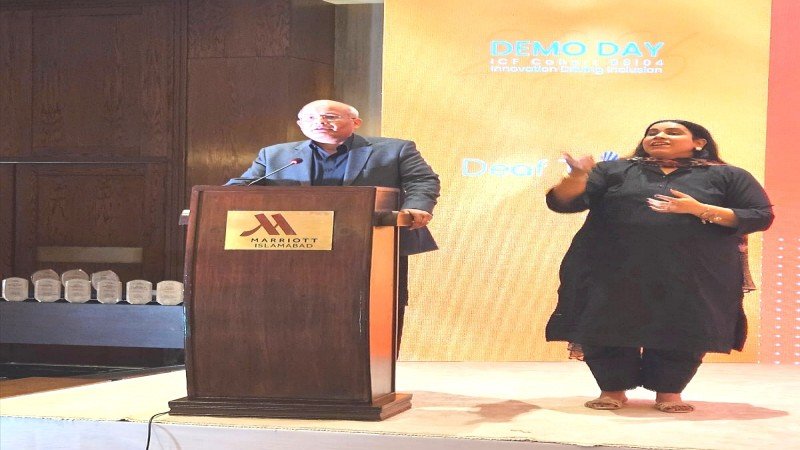
Innovation Challenge Futuremakers Demo Day Highlights Inclusive Innovation Addressing Systemic Barriers
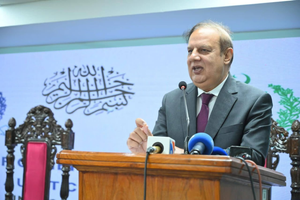
Islamabad : The Chief Guest of the ceremony, Zarrar Hasham Khan, Secretary IT & Telecommunication, emphasized the government’s role in enabling innovation that serves all citizens. “Inclusive innovation strengthens our digital future by ensuring that no segment of society is left behind,” he said.
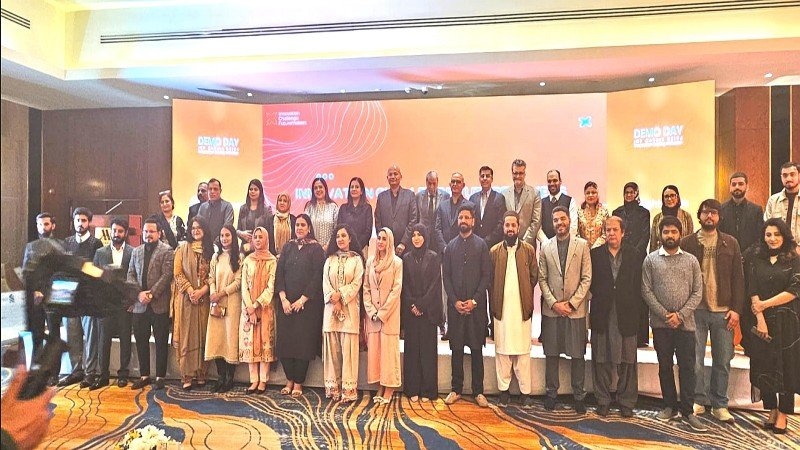
In a country where access to capital, technology, and opportunity remains uneven, Innovation Challenge Futuremakers (ICF) is working to shift the innovation narrative toward inclusion. The program’s Demo Day for Cohorts 3 and 4 showcased how purpose-driven startups are addressing social, economic, and accessibility gaps through innovation.
The event marked the culmination of an intensive incubation journey under the ICF program, implemented by DeafTawk in collaboration with Sightsavers and funded by Standard Chartered Foundation. Throughout the program, entrepreneurs with disabilities were supported to refine solutions that address real-world challenges and strengthen their business ideas.
Speaking on the importance of inclusive innovation, Munazza Gillani, Country Director at Sightsavers, noted that inclusion must be intentional. “Innovation only creates real impact when it is designed with those most often excluded in mind. Programs like ICF show that accessibility and innovation can, and must, go hand in hand.”
Highlighting the role of responsible finance and private sector engagement, Tasneem Mirza, Head Community Impact and Engagement at Standard Chartered, Pakistan, shared that “supporting inclusive entrepreneurship is not just about funding ideas, but about enabling ecosystems where innovation contributes to shared prosperity.”
A central focus of the Demo Day was the role of inclusive design and responsible innovation in creating long-term impact. Speakers emphasized that innovation cannot be considered successful if it excludes those most affected by systemic barriers. Discussions highlighted the need for accessible technologies, inclusive financing, and cross-sector collaboration to ensure that innovation contributes to equitable growth rather than widening existing gaps.
Startups from Cohorts 3 and 4 presented solutions targeting critical challenges such as accessibility, employment, and service delivery. Their pitches reflected a growing shift within Pakistan’s startup ecosystem, from profit-first models to impact-led ventures designed with inclusion at their core.
Demonstrating tangible outcomes of the program, a Memorandum of Understanding (MoU) was signed between NADRA Technologies Limited and Cohort 3 startup Reinn Raus, signaling increased institutional openness to working with inclusive startups and scaling their solutions within public systems.
Government and development sector representatives reiterated the importance of enabling policies, digital infrastructure, and partnerships that support inclusive entrepreneurship. The presence of senior officials underscored a shared recognition that innovation-led growth must also be people-centred and accessible.
Innovation Challenge Futuremakers continues to strengthen Pakistan’s inclusive entrepreneurship ecosystem by equipping startups with the tools, mentorship, and platforms needed to transform ideas into impact, contributing to a future where innovation works for everyone, not just a few.

Sohail Majeed is a Special Correspondent at The Diplomatic Insight. He has twelve plus years of experience in journalism & reporting. He covers International Affairs, Diplomacy, UN, Sports, Climate Change, Economy, Technology, and Health.