“Powering Vaccines, Securing Futures: Pakistan’s Solar Leap for Children’s Health”
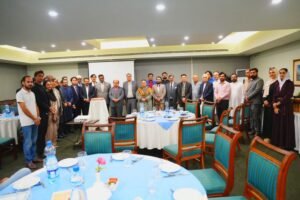
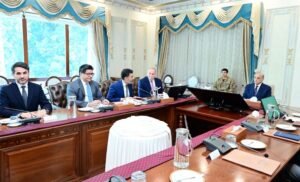
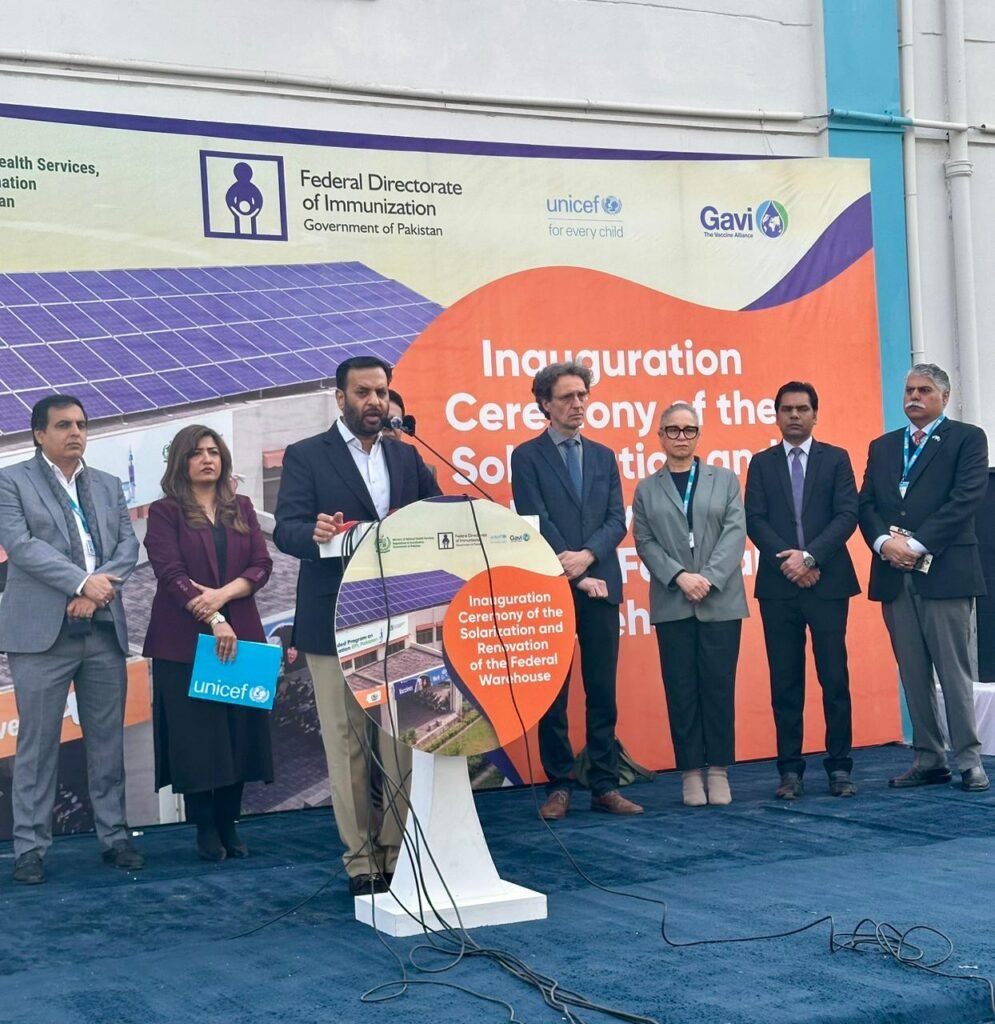
Federal Directorate of Immunization FDI in collaboration with UNICEF achieved a landmark milestone with the inauguration of a 1-megawatt solar power system at its vaccine warehouse in Islamabad. The ceremony, highlighting Pakistan’s commitment to sustainable and resilient health infrastructure, was graced by Federal Minister for Health, with his presence as the chief guest.
Also present at the event were key stakeholders from the health and development sector, including Dr. Musa Khan, DG FDI; Dr. Gunter Boussery, Chief of Health Section UNICEF Pakistan; and Dr. Yasmine Challoub, Senior Manager Immunization UNICEF Pakistan.
The newly installed solar power system ensures an uninterrupted electricity supply critical for maintaining the vaccine cold chain, safeguarding the potency and quality of vaccines for millions of children across Pakistan. By leveraging renewable energy, the facility reduces reliance on the national grid and diesel generators, achieving cost efficiency and contributing to lower carbon emissions, aligning with Pakistan’s national climate goals.
This initiative, implemented by UNICEF with support from Gavi, reflects the organization’s commitment to strengthening cold chain management in Pakistan. Through such innovative solutions, UNICEF continues to ensure safe and timely immunization services, securing a brighter and healthier future for the country’s children.
Speaking at the inauguration, Federal Minister Syed Mustafa Kamal said, “Today, we are not just inaugurating a solar system; we are powering the health and future of our children. This milestone demonstrates our dedication to sustainable, climate-resilient, and uninterrupted immunization services across Pakistan.” Mustafa Kamal reiterated that improving Pakistan’s health system remains a top priority of the government. “We aim to transform the system from sick care to true healthcare. Vaccination is the first and most effective step toward preventing future diseases,” he stated.
He noted that globally, up to 50 vaccine-preventable diseases are covered through immunization programmes, while Saudi Arabia provides protection against 47 diseases. In contrast, Pakistan currently vaccinates against 13 diseases under its national immunization programme, all of which are provided free of cost by the government. He also highlighted that the cervical cancer (HPV) vaccine has been included in the immunization schedule.
The Minister informed that currently 49 percent of vaccine financing is borne by Pakistan, while 51 percent is supported by global donors. However, global vaccine assistance is expected to end by 2030, which would increase Pakistan’s vaccine expenditure from USD 400 million to approximately USD 1.2 billion. He cautioned that the country’s economy may not be able to fully absorb this financial burden by 2030 without strategic planning and sustainable investment.
Dr. Musa Khan, DG FDI, added “The solarization and renovation of our vaccine warehouse is a transformative step in modernizing Pakistan’s immunization program. Continuous cold chain maintenance is vital for protecting millions of children, and this facility ensures that vaccines remain potent and effective, no matter the challenges.”
Dr. Gunter Boussery, Chief of Health Section UNICEF Pakistan stated that “UNICEF is proud to support Pakistan in strengthening its cold chain system. By introducing sustainable solar energy solutions, we are not only safeguarding vaccines but also investing in the long-term health and future of every child in the country. This project exemplifies effective collaboration between the government and development partners.”

Sohail Majeed is a Special Correspondent at The Diplomatic Insight. He has twelve plus years of experience in journalism & reporting. He covers International Affairs, Diplomacy, UN, Sports, Climate Change, Economy, Technology, and Health.