Chinese Ambassador lauds bond ‘cutting across all political parties
Islamabad : Federal Minister for Information and Broadcasting Attaullah Tarar expressed government’s commitment to further solidify the strong fraternal ties between Pakistan and China.
TobAddressing the 9th Pak-China Media Forum, he said Pakistan has great history and legacy that our elders have left behind regarding Pak-China relations.
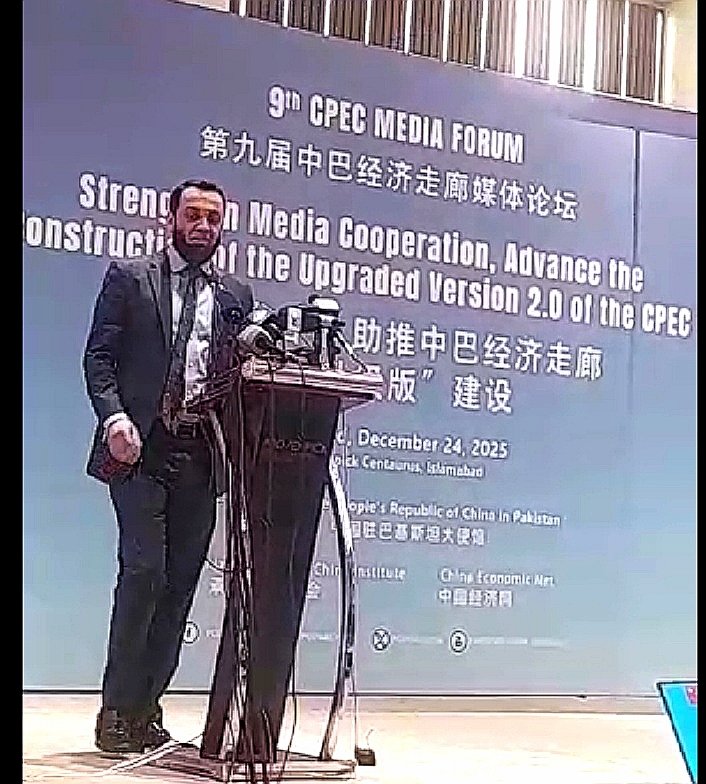
Attaullah Tarar, Federal Minister for Information and Broadcasting, traced his long engagement with Pakistan–China ties “as a student, as a bureaucrat, and now as a minister,” describing himself as “a product” of exchange programs between IDCPC and PMLN and portraying the relationship as a lived national story passed through families. He said Pakistan’s bond with China is unique, asserting that while others may claim strong ties, “no other country can claim that they are iron brothers or sisters.” He argued CPEC links development with cultural transformation, helping “break the barrier of language” and “the barriers of division,” and said it carries “only a positive connotation.” On modern communication, he highlighted reforms to build a digital footprint through platforms such as “Digital Pakistan TV” and expanded online outreach, emphasizing continuity so successors inherit “a robust system…as a strategic communication tool.”
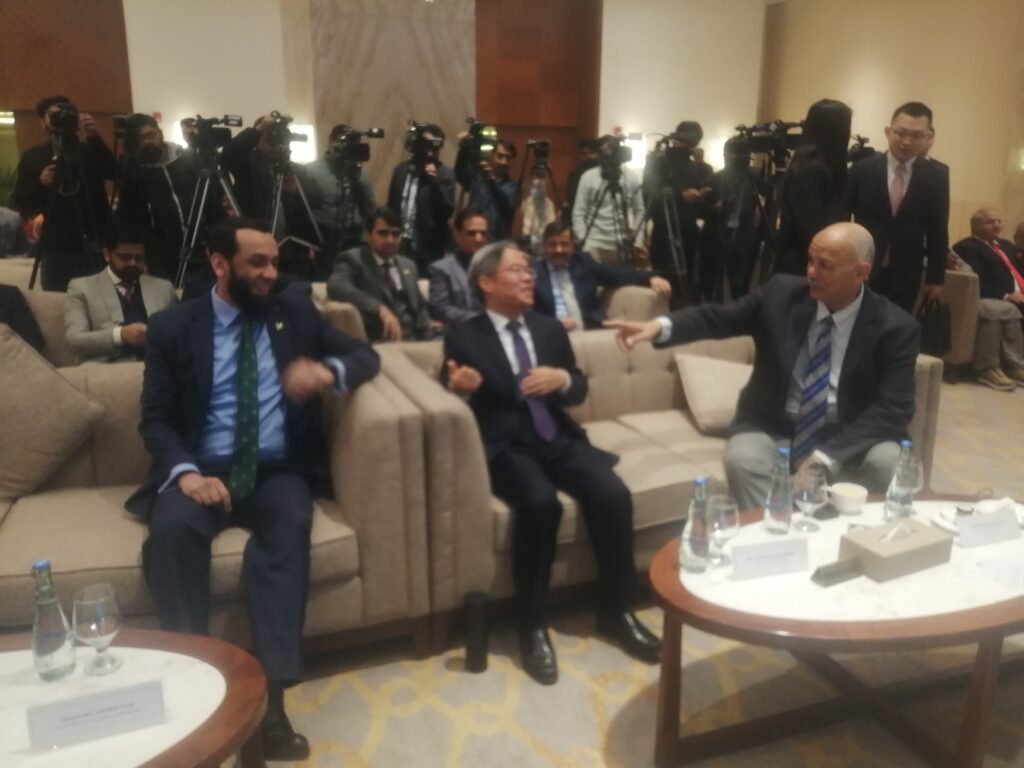
He said narrative-building must evolve, warning, “if you don’t change with time, time will change you,” and noted misinformation has been identified by global leaders as a top challenge of the age. He urged deeper media and influencer exchanges under CPEC 2.0, citing the “power that digital media has,” including a viral meme he said reached “billion plus views,” and called for engaging companies involved in B2B cooperation and storytelling. He recommended PCI host a dedicated fact-check forum or platform to label falsehoods around CPEC and provide correct facts, suggesting support from the government and the Chinese Embassy, and reaffirmed state commitment to “go the extra mile” to counter negative propaganda and strengthen media cooperation in the digital realm.
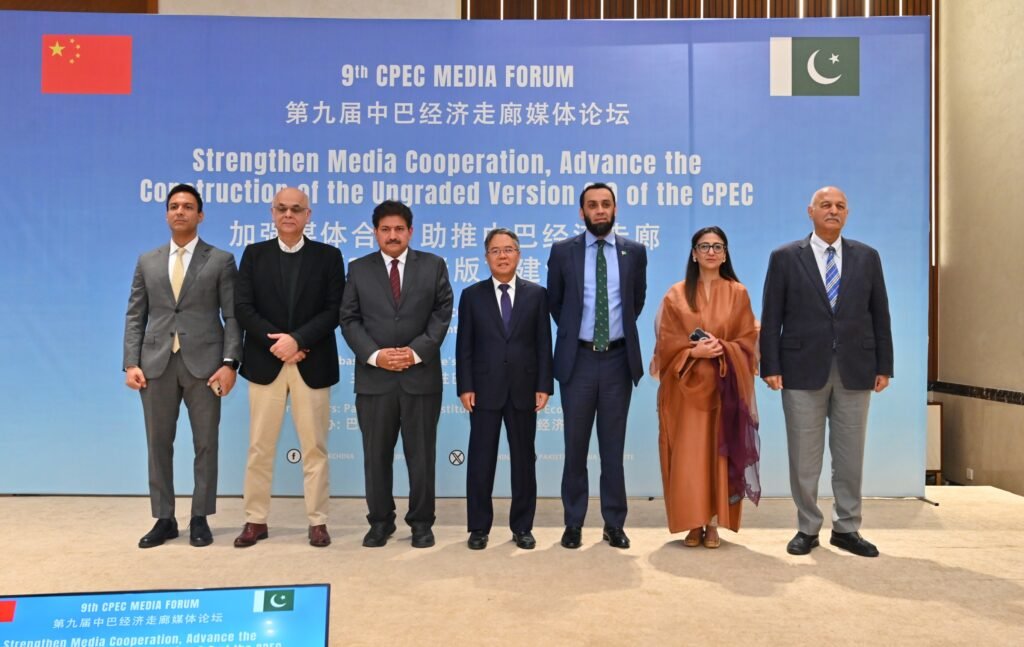
Pakistan-China Institute (PCI), in collaboration with China Economic Net and Embassy of Peoples Republic of China organized the 9th CPEC Media Forum, bringing together senior Pakistani and Chinese officials, diplomats, media leaders, and representatives of Chinese enterprises to reinforce media collaboration around CPEC 2.0, promote fact-based narrative building, and respond to rising challenges of misinformation, disinformation, and “fake news” targeting Pakistan–China cooperation.
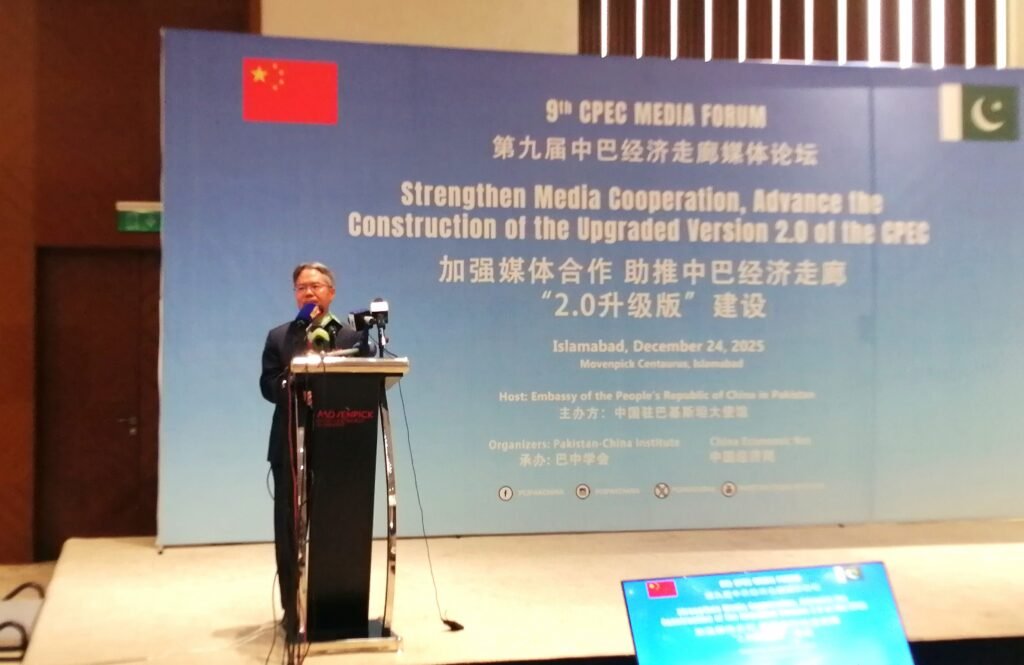
Ambassador Jiang Zaidong, Ambassador of China to Pakistan, thanked Pakistani participants and PCI, saying that whenever he hears Pakistani speeches he feels “moved,” and praising the way Pakistan–China friendship “could cross all political parties and all sectors.” He reiterated China’s position that it “cannot tolerate any person or any force who seek to split Taiwan from China,” and expressed appreciation for Pakistan’s “firm commitment” to the one-China principle and its support for safeguarding sovereignty, unity, and territorial integrity. Recalling that the forum was founded in 2015 alongside CPEC’s development after President Xi Jinping’s historic visit and a “one-plus-one” cooperation framework, he pointed to continued high-level exchanges and renewed consensus to advance the all-weather partnership and build CPEC into a “comprehensive multi-sectoral” flagship under the Belt and Road Initiative. He praised media’s role in countering distortions, referencing the idea that there are “two powers in the world…a sword and…a pen,” and commended journalists for turning “pen into swords” by addressing claims with facts. On CPEC 2.0, he outlined three focus areas, agriculture, mining, and industry, and cited industrial cooperation and livelihoods impacts, including manufacturing and textile-park investments he said would create large-scale employment, while emphasizing future emphasis on “export-oriented” and “people’s livelihood” projects. He also referenced cooperation in infrastructure, Gwadar-related connectivity, and practical social-sector support, including medical equipment and training components.
Mustafa Hyder Sayed, Executive Director, PCI, opened the forum by welcoming dignitaries and underscored that the CPEC Media Forum has been a flagship Pakistan–China media platform “every year since 2015,” initiated in the wake of President Xi Jinping’s April 2015 visit. Recalling that the first forum was held in Beijing in November 2015 with PCI’s partner China Economic Net, he highlighted continuity even during COVID-19 through virtual formats. He said the forum’s core purpose is to “shape the narrative,” regarding CPEC specifically one “rooted in facts” and grounded in “exemplary Pakistan–China cooperation,” adding that this edition carried “special significance” as it follows the announcement of CPEC 2.0 amid rapidly expanding cooperation, including on defense, especially during Pakistan’s victory over India in May this year, which he said had recently been “witnessed…by the whole world.”
Senator Mushahid Hussain Sayed, Chairman, Pakistan-China Institute, framed the forum within a broader strategic moment for Pakistan’s external relations, referencing his recent travel to Moscow. He said 2025 marks major anniversaries and congratulated China on “80 years of victory over fascism and World War II,” recalling immense sacrifices and stating, “your sacrifices were not in vain.” Linking Pakistan’s security narrative to the information domain, he argued Pakistan’s response to Indian aggression elevated the country’s regional and international profile, while warning that “fake news, disinformation, misinformation” now pose a strategic challenge. Citing the “India Chronicles” investigation by the Brussels-based NGO EU DisinfoLab, he pointed to what he described as a large-scale network of Indian disinformation outlets and urged faster response and stronger coordination against information warfare by forces “not happy with the progress of Pakistan-China relationship,” which he called the “pivot” of Pakistan’s foreign policy. He also highlighted the China–Pakistan joint action plan as a five-year framework spanning seven domains, including media and people-to-people cooperation, with “63 actionable points,” and said 2026, the 75th anniversary of diplomatic ties, should be a milestone for deepening an “all-encompassing” relationship.
Dr. Shezra Mansab Ali Kharal, Minister of State for Climate Change and Environmental Coordination, shared reflections from her recent visit to China as a Dong Feng Scholar, describing it as a period in which she “learned a lot” and gained deeper insight into “the people of China” and their growing focus on “building bridges.” She said the presence of 50+ scholars from 50 countries of the Global South reflected China’s approach to “cooperate…peace and development together,” contrasting it with what she described as a Western “concept of confrontation or rivalry.” Referring to a major commemorative parade, she highlighted China’s technological strides and said the release of “80,000 white doves” symbolized “peaceful intentions,” arguing China can defend itself but is “not hegemonic,” seeking “win-win” cooperation. She described Pakistan–China ties as a uniquely deep “all-weather strategic cooperative partnership,” built on “trust” despite differences of language, culture, and religion, and reaffirmed mutual support on core issues, including Kashmir and the One-China policy. Looking ahead to CPEC Phase 2, she praised China’s role in “global ecological governance,” called climate change an “existential issue,” and proposed a practical media step: Pakistan and China should create a joint media mechanism to respond “immediately” to disinformation, misinformation, and fake news.
Zheng Qingdong, President and Editor-in-Chief of Economic Daily, described the forum as a concrete step to implement leaders’ consensus following President Xi Jinping’s meeting with Prime Minister Shehbaz Sharif, urging accelerated construction of “an even closer community with a shared future in the new era.” He said CPEC has evolved “from a blueprint into a tangible reality” and entered an upgraded 2.0 phase, arguing that telling the corridor’s story “in a deeper, more compelling way” is “a mission entrusted to the media…a responsibility we cannot shirk.” He proposed three directions: promoting prosperity and development by presenting a “truthful, multidimensional, and comprehensive picture” of CPEC, translating strategic consensus into a “resonance of hearts and minds,” and clarifying false narratives while exposing “smears and attacks”; carrying the torch of friendship, noting Chinese call Pakistanis “iron brothers” while Pakistanis see China as a “low-key yet steadfast supporter,” and referencing a Pakistani civil award to an Economic Daily Group representative for media and cultural exchange; and partnering for global good governance by warning against hegemonism, unilateralism, and protectionism, endorsing multilateralism and rule of international law, and calling for stronger developing-country voice. He said 2026, the 75th anniversary of diplomatic ties, should be a new milestone toward “a bright prospect of peace, security, prosperity, and progress.”
Yang Chunyan, Deputy Editor-in-Chief of Foreign Languages Press, broadened the media discussion into publishing, arguing that book publishing exerts a “foundational, profound, and enduring influence” and carries responsibility for civilizational exchange and people-to-people closeness. She introduced Foreign Languages Press (founded 1952) as part of China International Communications Group (CICG), spanning publishing, media, translation, think tanks, and cultural exchange, and highlighted the global reach of Xi Jinping: The Governance of China (five volumes, 44 languages, distributed in 180+ countries and regions). She shared the story of Zafar Uddin Mahmood, a Pakistani former senior official and CPEC envoy, whose connection with China began through CICG publications and continued through study and professional life in China, noting he received CICG’s Orchid Awards “Friendship Envoy Award” for contributions to Pakistan–China friendship. She also referenced cooperation on translating and publishing the Urdu edition of Xi Jinping: The Governance of China, described CPEC as a “hearts and minds” project, and cited cultural publishing such as the Chinese edition of A Biography of Islamabad. Looking ahead, she proposed deeper cooperation through a China-themed editorial presence in Pakistan, a “China–Pakistan Classics Mutual Translation Program,” expanded new-media formats including e-books, audiobooks, and short videos, and more two-way cultural and intellectual exchanges to build a “new humanistic ecosystem for CPEC 2.0.”
Hu Pingping, Journalist & Associate Senior Translator, Asia-Africa Language Programs Center, China Media Group, speaking in Urdu, delivered a personal and strategic message on media responsibility in CPEC 2.0, greeting “Chinese and Pakistani media colleagues” and saying that even with “the veil of a digital screen,” affection and closeness remain unchanged. Recalling her time as former head of the Islamabad bureau, she evoked memories of the sunset over the Margalla Hills, the fragrance of “raat ki rani” (night-blooming jasmine) on monsoon nights, and the warmth of friendships, saying that “mountains and seas” cannot reduce closeness of hearts. Marking August 1, 1966 as the date the first Chinese Urdu broadcast voice “echoed through the Pamirs,” she said her team has long served as “custodian” and “narrator” of the Pakistan–China friendship story. She called for telling replicable “ground realities,” including poverty-alleviation “formulas,” technology and workforce training behind industrial success, and cited a recent video on Pakistan’s pink salt exports to China, emphasizing not trade alone but value addition through modern systems to multiply value when reaching Europe and the US.
Hamid Mir, Senior Journalist (Geo News), endorsed countering disinformation but urged the forum to confront structural constraints in narrative-building. He argued India is a major source of disinformation against CPEC because it opposes a project connecting China with Pakistan’s northern border, and said a critical missing element in Pakistan–China messaging is addressing India’s “Akhand Bharat” concept (Greater India), which he described as an expansionist map displayed in India’s parliament that he said violates international law and UN principles. He urged Pakistan and China to raise this more effectively at international forums, including the United Nations, warning that India’s disinformation campaign targets not only CPEC but “the survival” of Pakistan itself.
Mohammad Malick, Senior Journalist (ARY News), echoed calls for openness and fact-based storytelling while emphasizing public perceptions and the people-to-people gap. He noted the perception in Gwadar that locals were “cheated out,” claiming outside investors bought property cheaply and development did not “trickle down” to the local population, and argued such perceptions, whether accurate or not, must be addressed because they shape narrative vulnerability. He said even when governments tell the truth, citizens often distrust official claims, making credible verification essential, and cautioned misinformation dynamics are not “about India at all” alone, pointing to wider geopolitical and economic interests in Gwadar as a deep-sea port.
Liu Yonggang, Acting Chief Executive Officer, CSAIL (China Three Gorges South Asia Investment Limited, C-SAIL), highlighted enterprise-level contributions and the role of media in keeping CPEC 2.0 “people-centered.” He cited major clean-energy investments under CPEC 1.0, including the 720 MW Karot Hydropower Project, described as Pakistan’s first large-scale hydropower project completed under CPEC, delivering “clean and affordable electricity,” as well as wind power investments of about 150 MW supporting Pakistan’s renewable transition, jobs, and community development. He said CPEC 1.0 laid foundations in connectivity, energy, infrastructure, and industrial capacity, while CPEC 2.0 should deepen “quality, sustainability and people-centered development.” Emphasizing that CPEC 2.0 is not only about “physical” infrastructure but also “confidence, understanding, and shared narratives,” he said the media has an “irreplaceable role,” arguing that while infrastructure connects regions, media connects societies by telling real stories from communities and workers. He said misinformation cannot be defeated by short-term rebuttals alone, but through “facts, transparency, professionalism, and responsible journalism,” and reaffirmed his company’s commitment as a “long-term partner” in Pakistan, concluding that strong media cooperation will be as important as strong infrastructure in delivering “inclusive growth, shared prosperity, and lasting friendship.”
During the forum, PCI also launched a research report titled “An Analysis of the Practical Application of Chinese Technical Standards in Pakistan”
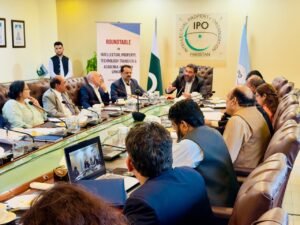
The forum lasted for 3 hours and was attended by over 200 delegates from different walks of life.

Sohail Majeed is a Special Correspondent at The Diplomatic Insight. He has twelve plus years of experience in journalism & reporting. He covers International Affairs, Diplomacy, UN, Sports, Climate Change, Economy, Technology, and Health.