New Study Calls for Urgent Education Reform to Counter Violent Extremism:
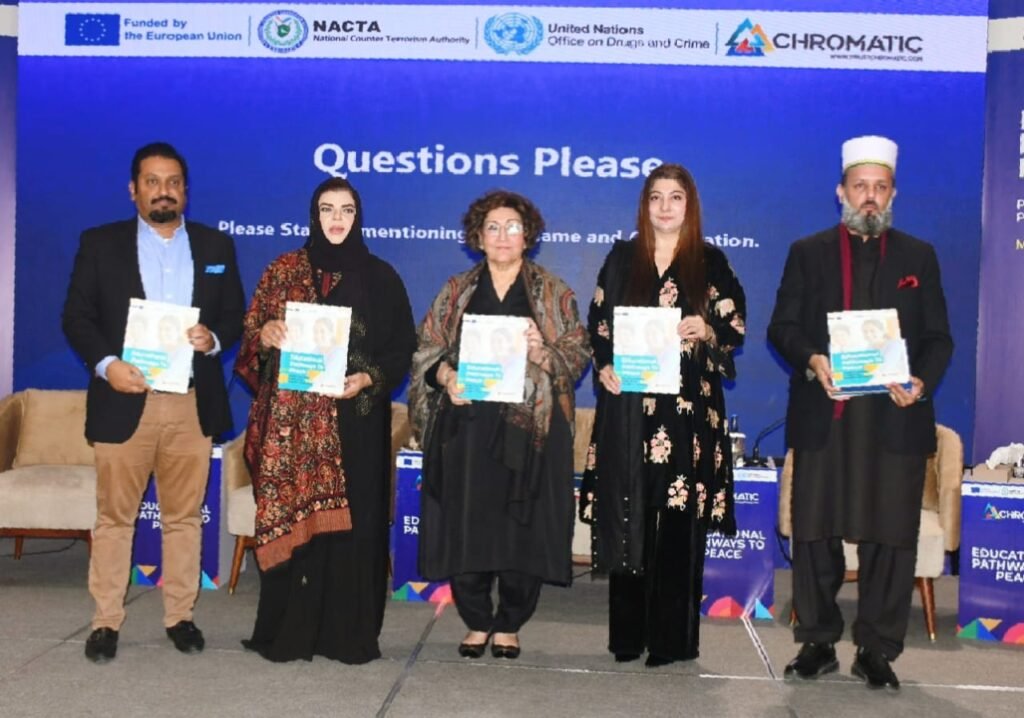
Islamabad : Chromatic successfully organized a Media Launch and Policy Dialogue to unveil its research report under the project “Educational Pathways to Peace”. The project was funded by the European Union (EU) , led by United Nations Office on Drugs and Crime (UNODC) Pakistan and implemented in partnership with the National Counter Terrorism Authority (NACTA).
The event brought together policymakers, education experts, civil society representatives, researchers, international development partners, youth, academia, and national media to deliberate on the role of education in promoting peace, social cohesion, and tolerance in Pakistan.
The research presented at the event examined school curricula and textbooks for Grades 9, 10, 11, 12, and O-Levels across all four provinces and the federal capital. It assessed curriculum content related to Countering Violent Extremism (CVE), Preventing Violent Extremism (PVE), interfaith harmony, national cohesion, and narratives shaping social tolerance. The findings highlighted both gaps and opportunities for strengthening inclusive and peace-oriented narratives within Pakistan’s education system.
The report warns that Pakistan’s current curriculum is unintentionally reinforcing violent extremism by remaining largely silent on the issue while deepening an identity crisis among young people. By sidelining the country’s 5,000-year indigenous history, including the Indus Valley Civilization, and portraying ethnic and sectarian diversity as a threat to national unity, textbooks fail to offer students an inclusive and grounded sense of identity. The research further cautions that the glorification of armed struggle against non-Muslim forces creates an ideological overlap with extremist narratives, blurring the line between national heroes and militant actors for impressionable minds. To address these risks, the report calls for urgent curriculum reforms that move beyond rote learning and instead promote critical thinking, pluralism, Pakistan’s multicultural heritage, and the peaceful, inclusive traditions of indigenous Sufi scholars.
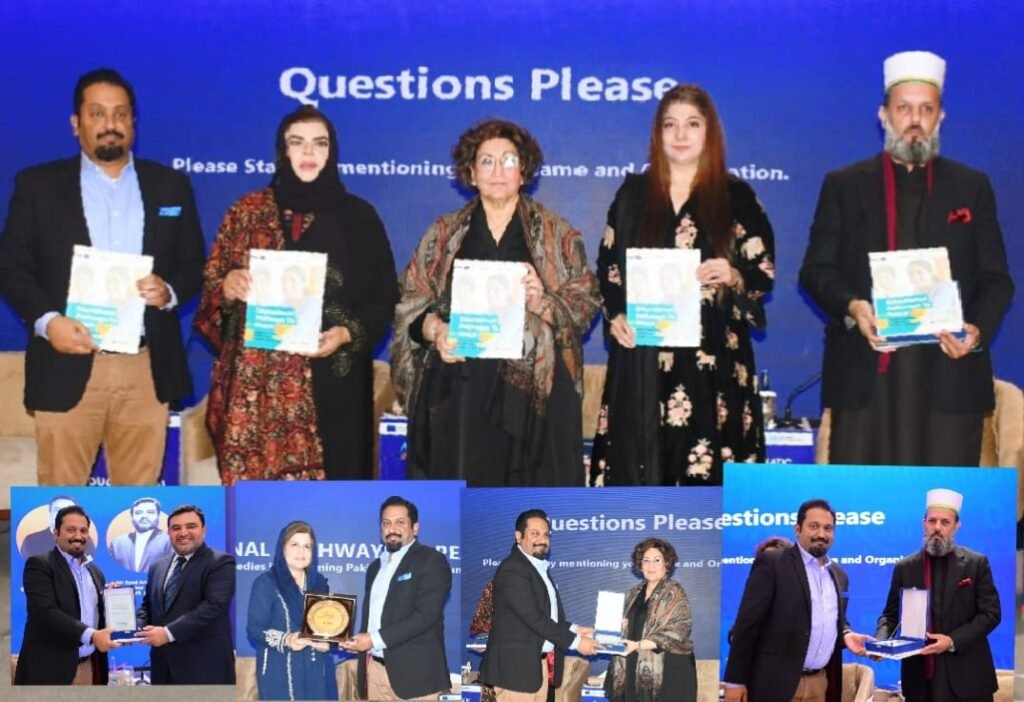
The event was graced by the Chief Guest Farah Naz Akbar, MNA and Parliamentary Secretary, Ministry of Federal Education and Professional Training. Her participation underscored the importance of aligning education policies with peacebuilding objectives and promoting national harmony. Discussions emphasized the need for curriculum reforms that foster critical thinking, inclusivity, and respect for diversity.
A policy dialogue and panel discussion featured education policymakers, curriculum developers, CVE and PVE experts, civil society representatives, media professionals, academics, and development sector specialists. Panelists shared insights on improving curricula to counter harmful narratives and promote values of peace, tolerance, and coexistence among youth.
The dialogue facilitated constructive engagement among stakeholders and generated actionable policy insights aimed at strengthening the role of education in preventing violent extremism and promoting social cohesion. The event also contributed to increased media awareness of peace-focused education reforms and encouraged continued collaboration among institutions working in the fields of education and peacebuilding.
This activity marks a significant milestone of the project- CPTP, Countering and Preventing Terrorism in Pakistan. Funded by EU, led by NACTA and executed by UNODC Pak with its 30 partner civil society organizations like Chromatic, the project aims at empowering community resilience against violent extremism and acts of violence via a three-pronged strategy. These 3 key components include: a. strengthen the capacity of criminal justice institutions; b. strengthen victim support through an effective legal system; c. foster community engagement via developing sustainable networks.
Syed Arslan, Advisor UNODC Pakistan, acknowledged the critical role of government institutions like NACTA, the European Union, and civil society partners in promoting education as a pathway to peace.
The launch of the research report marked an important step toward evidence-based policy advocacy and reaffirmed project’s commitment to advancing education as a pathway to peace in Pakistan.

Sohail Majeed is a Special Correspondent at The Diplomatic Insight. He has twelve plus years of experience in journalism & reporting. He covers International Affairs, Diplomacy, UN, Sports, Climate Change, Economy, Technology, and Health.