Pakistan Launches First National Roadmap for Enterprise & Worker Formalization
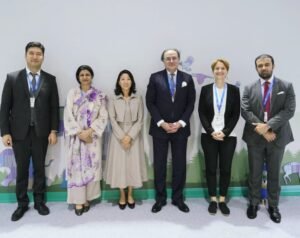
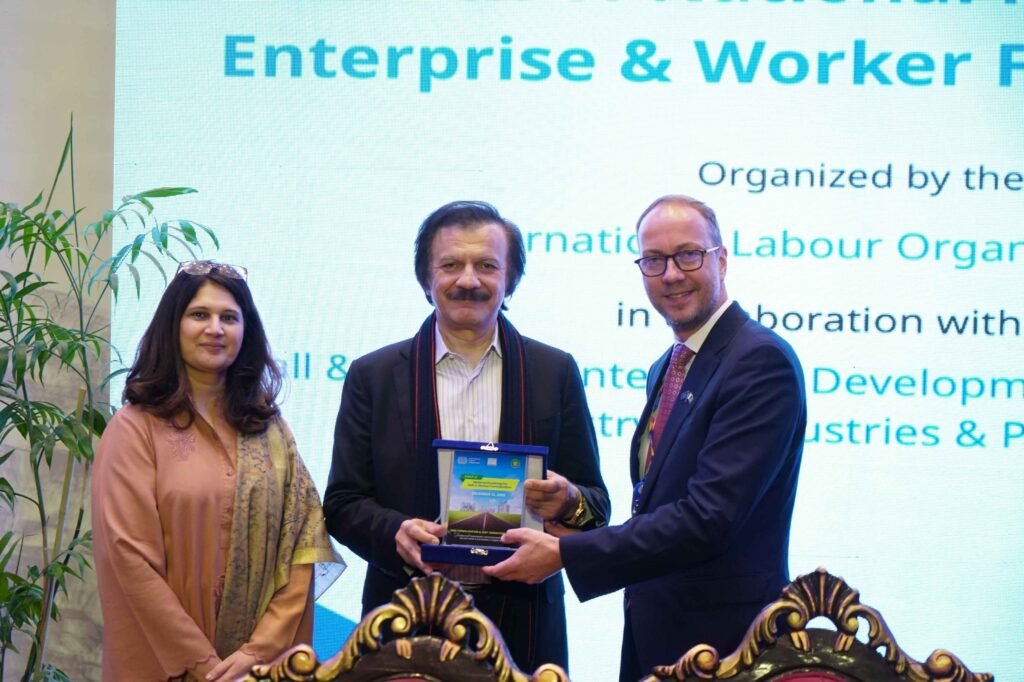
Islamabad – Geir Tonstol, Country Director for Pakistan, underscored the significance of this milestone for Pakistan’s economic and social development. He noted that “Formalization is the foundation for competitiveness, resilience, and decent work. This roadmap reflects a shared national effort grounded in evidence, consultation, and partnership to simplify compliance, strengthen supply chains, and extend protections to workers across Pakistan. The ILO remains committed to supporting Pakistan as it moves from planning to implementation—through practical reforms, enterprise support, and stronger coordination that benefit businesses and workers alike.”
Pakistan has taken a historic step towards strengthening decent work, business competitiveness, and inclusive economic growth with the launch of the country’s first-ever National Roadmap for Enterprise & Worker Formalization. Participants at the launch underscored that formalization is not only a compliance requirement — it is also a pathway to growth, productivity, innovation, and job security.
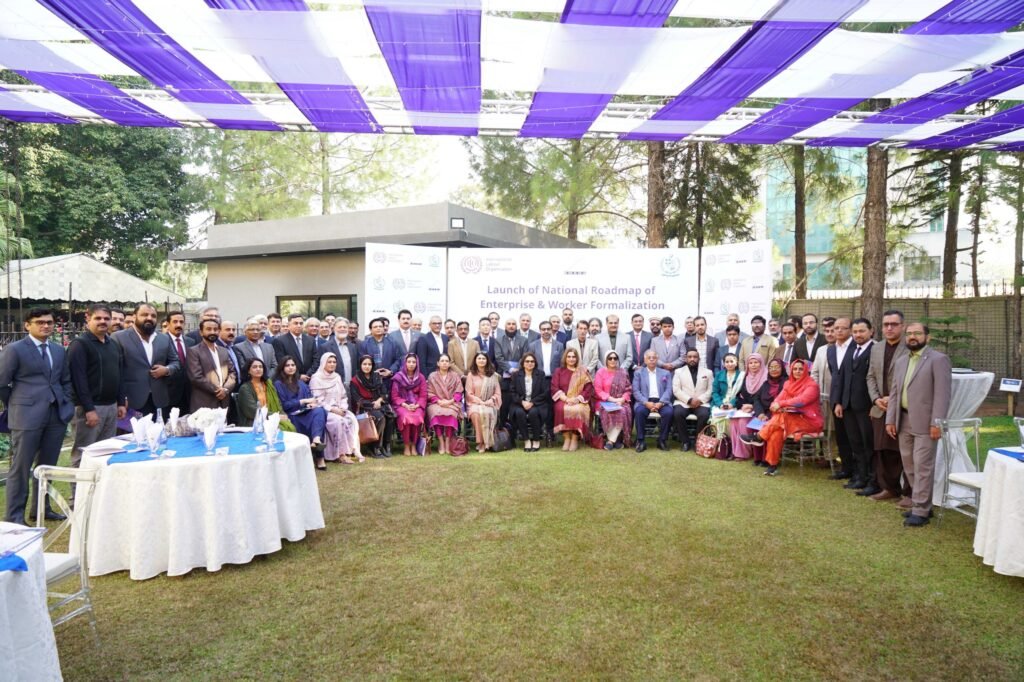
The landmark initiative was unveiled today at a high-level event hosted at the International Labour Organization (ILO) Country Office, bringing together representatives from government, employers’ and workers’ organizations, development partners and leaders from the textile and automotive sectors.
Developed through a year-long collaboration between the ILO, the Small and Medium Enterprises Development Authority (SMEDA), and a wide network of national institutions, the roadmap outlines a clear set of priorities to simplify enterprise registration, enhance supply chain transparency, strengthen labour compliance, and support Small and Medium Enterprises (SMEs) in adapting to rapidly evolving global and environmental requirements.
The launch builds on extensive national diagnostics, field missions, and more than a dozen consultations. The initiative also builds on ILO’s long-standing support to Pakistan on enterprise development, labour governance, due diligence, and transition to formality.
Delivering the keynote address, Haroon Akhtar Khan, Special Assistant to the Prime Minister on Industries & Production, commended the partnership between ILO, SMEDA, employers, and workers’ organizations. “Pakistan’s future competitiveness depends on strengthening responsible business practices, ensuring safe working conditions, and preparing SMEs for global market expectations. This roadmap sends a strong signal of our commitment to building a more transparent, sustainable, and equitable economy.”
Nadia Jahangir Seth, CEO of SMEDA, highlighted SMEDA’s central role in operationalizing the roadmap. She emphasized that “under the ILO–SMEDA partnership, the institution has led national and sector-specific consultations, hosted the Roadmap Secretariat, established enterprise helpdesks in Karachi and Lahore, facilitated advisory services and capacity building for SMEs, supported studies on subcontracting and incentive structures, and contributed to the digital compliance and traceability platform.” She further added that the implementation phase will focus on practical reforms, enterprise facilitation, and strengthening coordination among ministries, regulators, and industry associations.
The National Roadmap for Enterprise and Worker Formalization sets a unified vision to reduce informality, strengthen protections for workers, and enhance the productivity and competitiveness of SMEs and home-based Workers. It outlines practical steps to simplify registration, harmonize regulations, and enable enterprises to comply through digital tools that improve traceability, transparency, and supply chain accountability.
The roadmap supports Pakistan’s commitments under GSP+, international due diligence frameworks, and climate transition requirements, ensuring SMEs can access markets and meet global standards. It emphasizes targeted capacity building, stronger institutional coordination, and the role of large enterprises in formalizing their supplier networks.
ILO reaffirmed its continued support to operationalize formalization helpdesks, roll out the enterprise formalization toolkit, strengthen awareness across supply chains, advance the national digital compliance and traceability platform, and support climate-responsive and sector-specific formalization strategies.

Sohail Majeed is a Special Correspondent at The Diplomatic Insight. He has twelve plus years of experience in journalism & reporting. He covers International Affairs, Diplomacy, UN, Sports, Climate Change, Economy, Technology, and Health.