Regional Seminar on Plant-Based Approaches for Diabetes Management Opens at OIC-COMSTECH
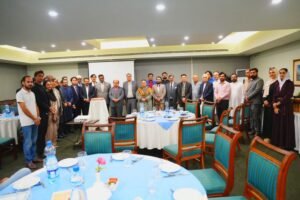
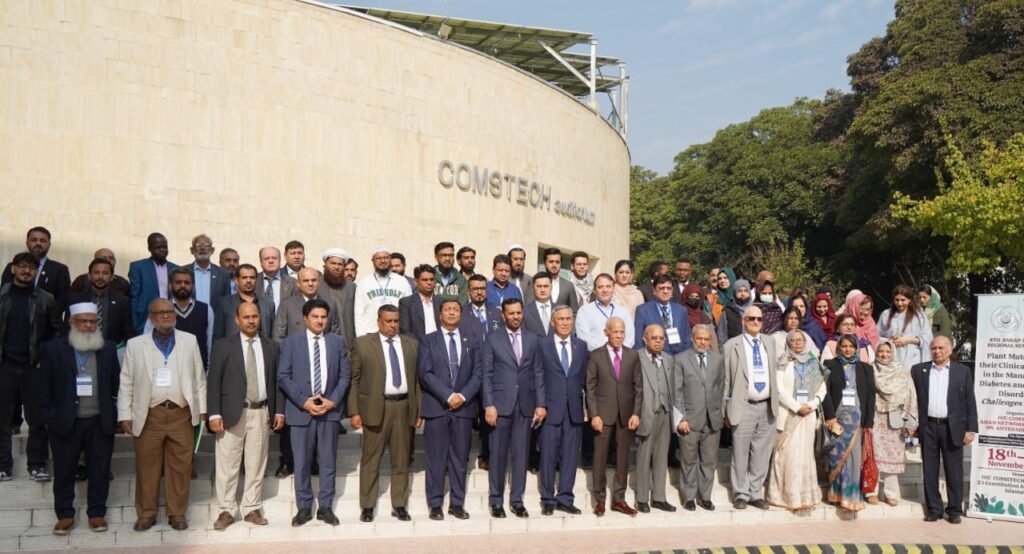
Islamabad : A two-day regional seminar on “Plant Materials and their Clinical Validation in the Management of Diabetes and Metabolic Disorders: Challenges and Scope” commenced on Tuesday at the Secretariat of the OIC Standing Committee on Scientific and Technological Cooperation (OIC-COMSTECH).
The event is jointly organised with the Asian Network of Research on Antidiabetic Plants (ANRAP) and brings together senior experts from Bangladesh, Sri Lanka, Pakistan, Australia, the United Kingdom, Egypt and several OIC member states. More than 150 participants joined the inaugural session in person and online.
While speaking in inaugural ceremony, Federal Minister for Health Syed Mustafa Kamal, the chief guest, described diabetes as “one of Pakistan’s most serious health and development challenges,” noting that one in four adults in the country is living with diabetes or pre-diabetes.
He said the country’s healthcare system is under immense pressure, adding that “no matter how many hospitals we build, it is impossible to treat every patient unless we prioritise prevention.”
The Minister said environmental and lifestyle factors were contributing heavily to rising disease burdens. He emphasised the need to integrate traditional and plant-based medicine into modern systems, stating that the subject was “close to his heart.”
He announced that the government intends to establish medical desks for traditional and plant-based medicine in every major government hospital.
He reaffirmed the government’s support for COMSTECH, ANRAP and national research institutions working on affordable, safe and evidence-based therapeutic options.
Addressing the seminar online Ambassador Aftab Ahmad Khokhar, Assistant Secretary General (S&T), said the event aligns with the OIC Science, Technology and Innovation Agenda 2026. He praised COMSTECH for its leadership in strengthening scientific cooperation, capacity building and South–South collaboration.
He underscored the need for harmonised regulatory frameworks and better quality control systems for herbal and plant-based therapeutics.
In his remarks, Prof. Dr. M. Iqbal Choudhary, Coordinator General OIC- COMSTECH, said the world is facing an enduring burden of diseases linked with weak healthcare systems, climate impacts and demographic pressures. He noted that developing countries face a “major scientific gap” in understanding diseases at the molecular and genetic levels.
He said most human diseases, including diabetes, dementia and cardiovascular disorders, are being “managed rather than cured,” emphasising the need for prevention-focused health policies.
He added that future healthcare must centre on epidemiological research, clean water, sanitation, healthy diet, safe environments and meaningful social support systems.
Prof. Choudhary said OIC-COMSTECH has launched major health initiatives, including the Africa health programme, capacity-building workshops, biomedical training, virology fellowships and humanitarian medical outreach.
He added that a return to nature — through lifestyle changes and validated medicinal plants — can play an important role in preventing and managing diabetes.
Prof. Dr. Begum Rokeya, Network Leader and Secretary General of ANRAP, outlined the objectives of the seminar and highlighted the importance of scientifically validating traditional medicinal plants widely used across Asia and OIC member countries. She stressed the value of collaborative research, shared laboratory resources and systematic clinical evaluation.
The inaugural session also featured remarks by H.E. Iqbal Hussain Khan, High Commissioner of Bangladesh to Pakistan, who said relations between Pakistan and Bangladesh have strengthened since 2024, with increased high-level exchanges. He noted that direct flights between the two countries are being restored, facilitating cooperation in health, education, tourism, trade and scientific research.
He appreciated the competence of Pakistani medical professionals and said enhanced cooperation in science and technology would benefit both countries and the wider Muslim world.
The seminar will continue on Wednesday with technical sessions on medicinal plant research, metabolic disorders, clinical validation, product development and regulatory challenges, featuring experts from Asia, the Middle East and Africa.

Sohail Majeed is a Special Correspondent at The Diplomatic Insight. He has twelve plus years of experience in journalism & reporting. He covers International Affairs, Diplomacy, UN, Sports, Climate Change, Economy, Technology, and Health.