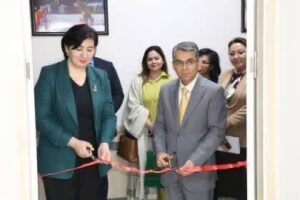
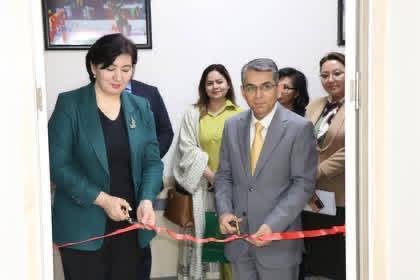
Tashkent (GNP) : A new state-of-the-art Urdu learning facility, named Gosha-e-Urdu Banam Allama Muhammad Iqbal, was inaugurated at Tashkent State University of Oriental Studies (TSUOS) in collaboration with the embassy of Pakistan in Uzbekistan.
The inauguration ceremony was attended by faculty members, students, scholars, and distinguished guests, highlighting the growing interest in Urdu language studies and cross-cultural academic collaboration.
Designed as a technologically advanced learning hub, the center is equipped with adaptive learning technology, interactive smart displays, and speech recognition software.
All the modern equipment provided has been provided by the Pakistani embassy. It also features live manuscript and writing tools, digital Urdu calligraphy applications, and side-by-side translation capabilities to facilitate language comprehension and practice.
In addition, the facility supports distance learning, lecture recording and smart quiz systems, enabling a more interactive and flexible educational experience.
According to organizers, these tools are intended to significantly enhance Urdu language instruction, support interpreter training and foster research collaboration between scholars in Pakistan and Uzbekistan.
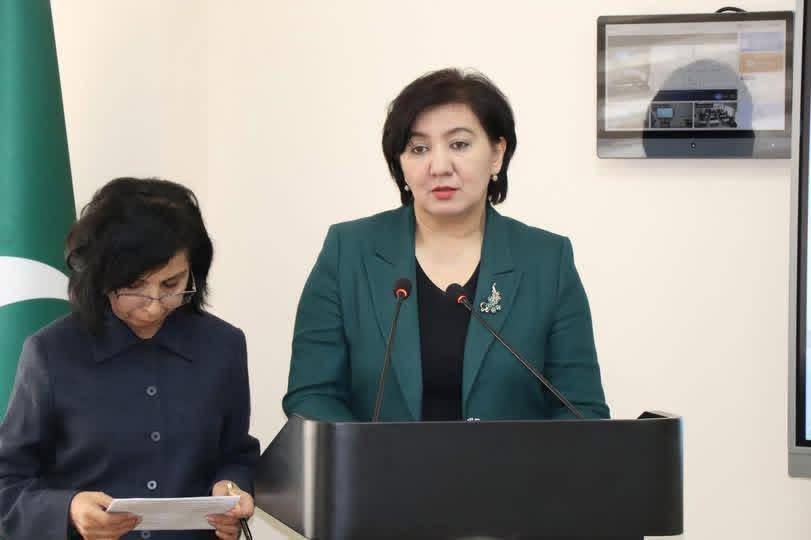
The ceremony began with opening remarks by Professor Gulchehra Rikhsieva, Rector of TSUOS, who thanked the embassy of Pakistan for its continued cooperation and generous support in establishing the center.
She noted that the facility would not only benefit students specializing in Urdu but would also serve the broader academic community interested in South Asian languages, literature and culture.
Pakistan’s Ambassador to Uzbekistan, Ahmed Farooq, said the initiative has been implemented as part of a bilateral roadmap agreed between the university and the embassy.
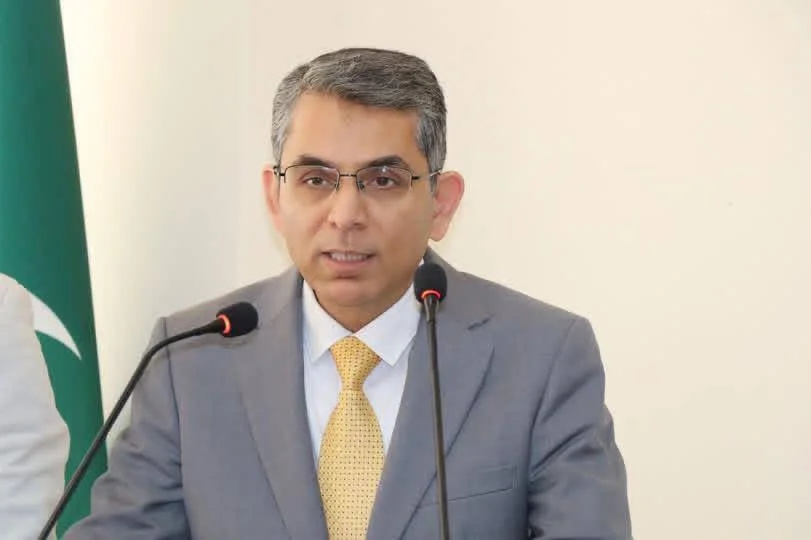
He emphasized the symbolic importance of naming the center after Muhammad Iqbal, widely regarded as one of the most influential thinkers and poets of South Asia.
Iqbal’s writings continue to illuminate minds and guide generations, the ambassador said, expressing confidence that the center would inspire students and researchers while promoting deeper understanding of Urdu language and literature.
The event also featured a live demonstration of the center’s smart technology through an interactive quiz on the life and thought of Allama Iqbal. Students actively participated, showcasing the center’s capacity to support engaging, technology-driven learning methods.
The ceremony concluded with a student presentation exploring the themes of effort and activism in Iqbal’s poetry, highlighting the enduring relevance of his philosophical ideas.