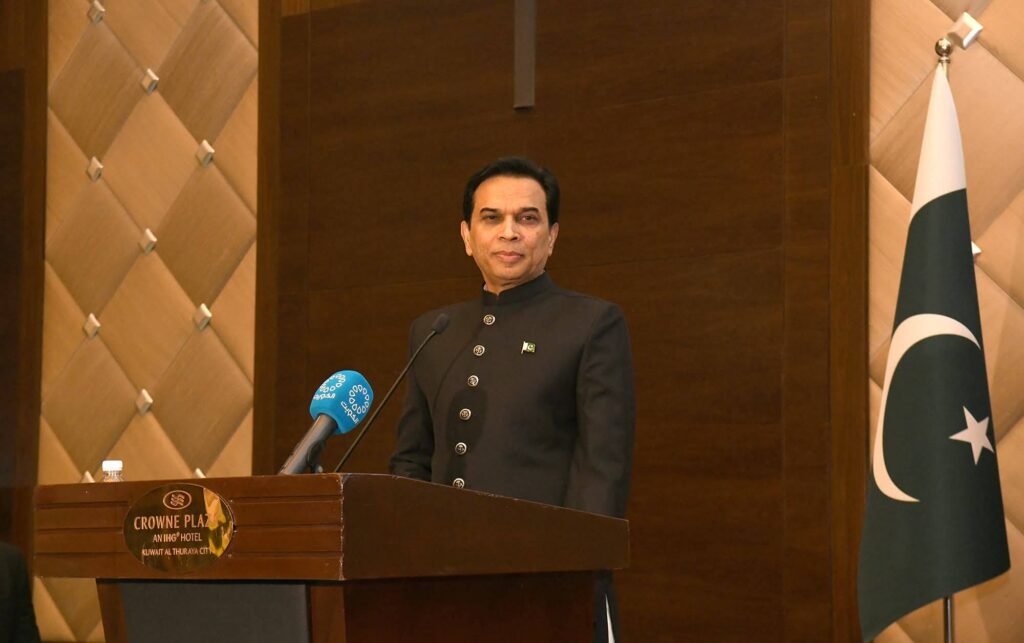
TDI/GNP, In this episode of “Conversation with a Diplomat,” Irsa Khalid sits with Dr. Zafar Iqbal, Ambassador of Pakistan to Kuwait.
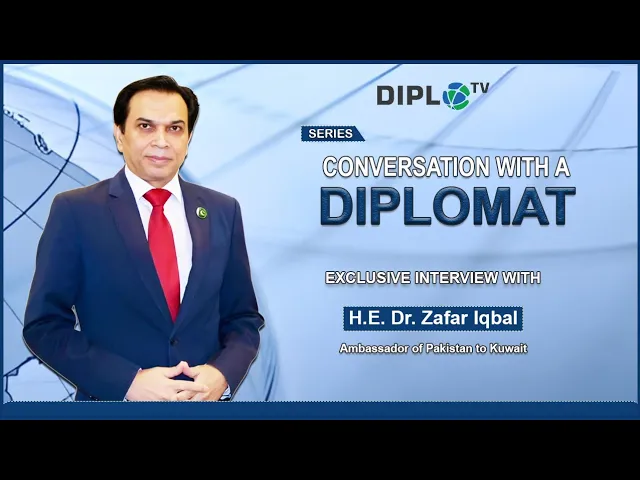
We explore the personal journey behind the title. Stepping away from political debates, Ambassador Iqbal shares candid insights about his transition from medical school to the Foreign Service, the realities of bureaucratic leadership, the sacrifices of a nomadic lifestyle, and his practical advice for the next generation of civil servants.
TDI: Your Excellency, diplomacy is an incredibly demanding career. Beyond the title, what truly drives you as a person to do this work day in and day out?
Dr. Zafar Iqbal: Asking what drives me presumes that maybe I am some kind of special or extraordinary person, but I am an ordinary human being like anyone else. I value reading, routine, and spending time with friends and family. However, when you represent your country, you are actually never off duty.
Diplomacy is fundamentally a representational position. While other aspects might have changed—with more focus now on economics, investment, and trade—the core function remains representational. So, even after office hours, you continue to represent your country. What drives me is the profound sense of responsibility placed on our shoulders. Representing a country is a big honor, and with it comes a big responsibility.
Modern thinking suggests motivation must come before action. But I believe that when you have a responsibility, you don’t think about motivation; you just do what needs to be done. I think our younger generation needs to learn that motivation actually comes from action. When you start taking action, it creates a feedback loop that drives you forward. Whether I am abroad trying to improve bilateral relations or at the ministry trying to strengthen the system, I just get to work.
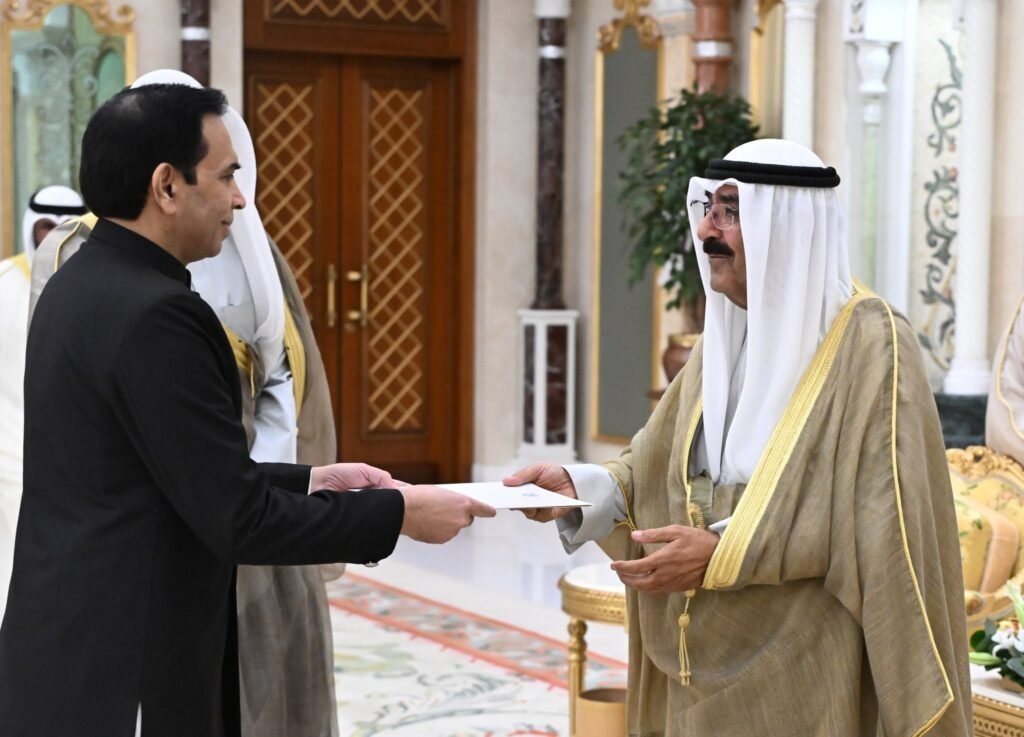
TDI: We often hear about a singular moment where a career path becomes clear. When did you realize your life’s work would be representing your country, and what called you to this lifestyle?
Dr. Zafar Iqbal: For me, there was no single, dramatic turning point. I was actually a student at King Edward Medical College. Every year, we would hear about our seniors appearing for the CSS (Central Superior Services) examination. When the results came out, some would be selected for the Pakistan Administrative Service, the Police, or other groups. Slowly, my friends and I got the idea to try as well.
I completed my BSc in 1992 but decided to finish my professional medical degree first. In hindsight, it was a good decision because the medical training added a lot to our resilience. After finishing my medical degree in 1995 and completing my house job in 1996, I decided to take the CSS exam. I promised myself I would only take one chance. If it didn’t work out, I would go back to my medical career. Luckily, it worked. I stood 13th in Pakistan, and the Foreign Service was my first choice.
TDI: Out of all the service groups available, why did you specifically choose the Foreign Service?
Dr. Zafar Iqbal: Sitting on the outside, diplomacy looks like a glamorous world. But at that time, my thought was that this service gave you an opportunity to travel, visit different countries, and meet people from diverse cultures—depending, of course, on your own capacity and desire to grow. Additionally, while it doesn’t make you rich, it takes good care of the financial aspect. Interestingly, three of us from my same medical college cohort ended up in the Foreign Service!
TDI: It is a long, often grueling road of exams, postings, and personal sacrifices. Looking back, what was a significant challenge that truly tested your resolve as a young diplomat?
Dr. Zafar Iqbal: Early in our careers, we naturally want to progress quickly and change everything. When we prepare for the exams, we think we will go in and fix the system, but in most cases, we are the ones who end up changing.
The biggest challenge in any civil service role is not letting the people around you change you in a negative way. You have to be mentally aware. Life doesn’t always treat you well; you have to take care of yourself. Because everyone else around you wants something from you, especially in countries where systems are not strong. You have to learn patience and consistency. Diplomacy rewards consistency far more than urgency.
TDI: Did the nomadic nature of the job require heavy personal sacrifices along the way?
Dr. Zafar Iqbal: Certainly. In the Foreign Service, you have to be away. Your first posting abroad is generally for three years, and subsequent stints are usually for six years across two different countries before you return to headquarters. You miss moments with your parents, siblings, and loved ones. You pay a social cost. However, there is a positive aspect too: when you are outside the country, you see your own country more clearly. There is an opportunity cost for everything in life.
TDI: Given those opportunity costs, are all these sacrifices worth it? If you could go back in time, would you choose the same path?
Dr. Zafar Iqbal: Yes, it is absolutely worth it. If I went back in time and had to opt for a civil service group, I would definitely choose the Foreign Service again. Though, if I had to choose a totally different profession outside of the civil service, perhaps I would choose education.
TDI: Many students reading this aspire to sit where you are today. Beyond academic degrees, what real-world advice would you give someone wanting to follow in your footsteps?
Dr. Zafar Iqbal: You must understand that this service demands patience. A diplomat is not an officer in the sense a Deputy Commissioner or a Police Officer is. In those roles, you have a lot of authority at the beginning of your career. In diplomacy, authority and influence unfold over decades. You are one part of a massive process influenced by government and non-government actors.
You also need to take care of your mental health. You will go through the stress of constantly moving, making friends, and leaving them behind. Your family and children will have to continuously adjust to different environments.
TDI: Having achieved so much on the global stage, how do you view leadership within the bureaucracy?
Dr. Zafar Iqbal: Bureaucratic leadership is not absolute; it is bound by rules. When you choose bureaucracy, you are choosing to perform routine. But you have to believe that this routine work makes a massive difference in the lives of citizens.
Sometimes, colleagues think they need to do something “big,” and when they can’t, they blame the system. I always say that when you choose the civil service, you forfeit “greatness.” You cannot be Alexander the Great as a civil servant. You have chosen to serve. We have institutional frameworks and rules for everything. The problem is we’ve stopped doing the routine work because we think it’s beneath our leadership capabilities. From my experience, if you simply follow the SOPs and do the routine work, the system starts improving within days.
In today’s open market economy, modern diplomacy is about two things: spreading awareness (marketing your country) and facilitation. When someone approaches an embassy, the embassy that responds first and facilitates them wins that space. So, if younger colleagues enter this service, they need to stay grounded and focus on that routine facilitation.
TDI: Finally, what practical advice do you have for CSS aspirants who are currently preparing for the exams, and for the younger generation at large?
Dr. Zafar Iqbal: The most difficult thing during CSS preparation is maintaining consistency while facing constant self-doubt. You will repeatedly ask yourself, “What if I fail?” I want to tell them that even if you don’t clear this exam, the rigorous preparation process prepares you incredibly well for life. You read a lot, you get disciplined, and that helps you succeed elsewhere. It is not the end of the world. Happiness is not dependent on a specific career.
More broadly, our younger generation needs mentoring. Although they might think everything can be learned from AI or the internet now, there is no substitute for human experience. Entering life is like standing in front of a dense jungle. Having a mentor who has already navigated that path shows you the shorter routes and the pitfalls. Mentorship makes the journey much easier.
Courtesy: The Diplomatic Insight / Global News Pakistan