Pakistan positions remittances as a strategic tool for financial inclusion at IFAD Governing Council special event
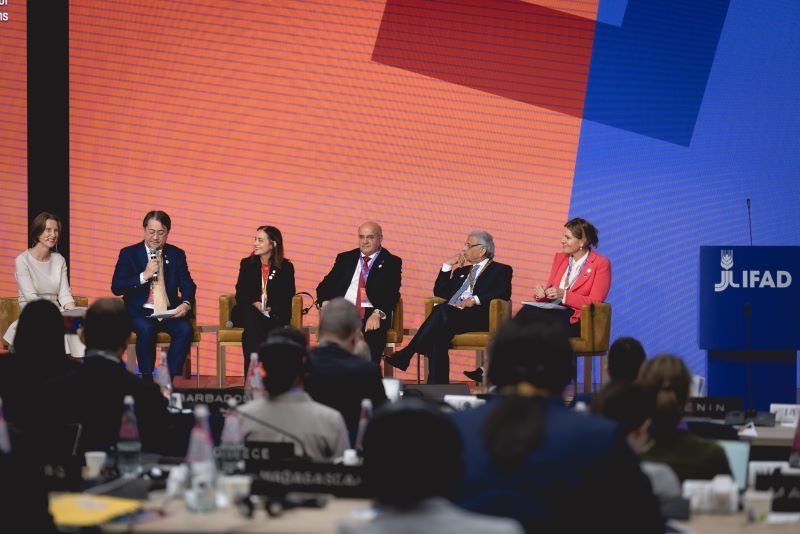
Islamabad : Pakistan highlighted how record levels of remittances are being leveraged to expand financial inclusion, strengthen economic stability, and support youth employment during IFAD’s special event marking the Decade of the International Day of Family Remittances (IDFR), held during the 49th session of the Governing Council of the International Fund for Agricultural Development (IFAD) on 10–11 February 2026 in Rome, Italy.
The high-level event brought together ministers, ambassadors, development partners, and civil society representatives to discuss how remittances can support inclusive rural transformation and resilient economies, particularly in countries with large overseas diasporas.
Addressing the panel, Rana Tanveer Hussain, Federal Minister for National Food Security and Research and Governor of IFAD for Pakistan, outlined how Pakistan is aligning remittance flows with broader economic and financial inclusion objectives. Responding to a discussion on leveraging remittances beyond consumption, the Minister noted that “the government has transitioned from viewing remittances as a simple cash inflow to using them as a tool for formalizing the economy.”
Placing remittances within Pakistan’s macroeconomic context, the Minister highlighted that they contribute around five to six percent of the country’s gross domestic product and play a stabilizing role by supporting foreign exchange reserves, helping manage the current account deficit, and enabling external debt servicing. He underlined that sustained remittance inflows have become an important buffer during periods of economic pressure.
On financial inclusion, the Minister highlighted key initiatives led by the State Bank of Pakistan, including the Roshan Digital Account, which enables non-resident Pakistanis to open bank accounts digitally and access a range of financial services, and the Asaan Mobile Account scheme, which allows citizens, including youth and low-income segments, to open bank accounts using simple feature phones without internet access.
He also linked remittances to Pakistan’s youth agenda, highlighting measures aimed at encouraging early engagement with digital financial services, supporting overseas employment, and investing in vocational training to promote skilled migration and increase the future value of remittance flows.
At the household level, the Minister emphasized the social importance of remittances, stating that “at the micro level, remittances function as a vital social safety net for millions of households.”
The discussion on remittances fed into the wider deliberations of IFAD’s 49th Governing Council, where Member States are reviewing development priorities and shaping collective action to reduce rural poverty. With remittances increasingly recognised as a driver of household resilience and financial inclusion, the exchange highlighted their growing relevance in efforts to build inclusive and resilient economies.