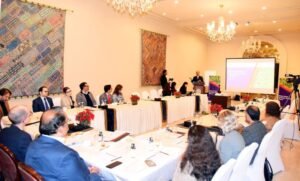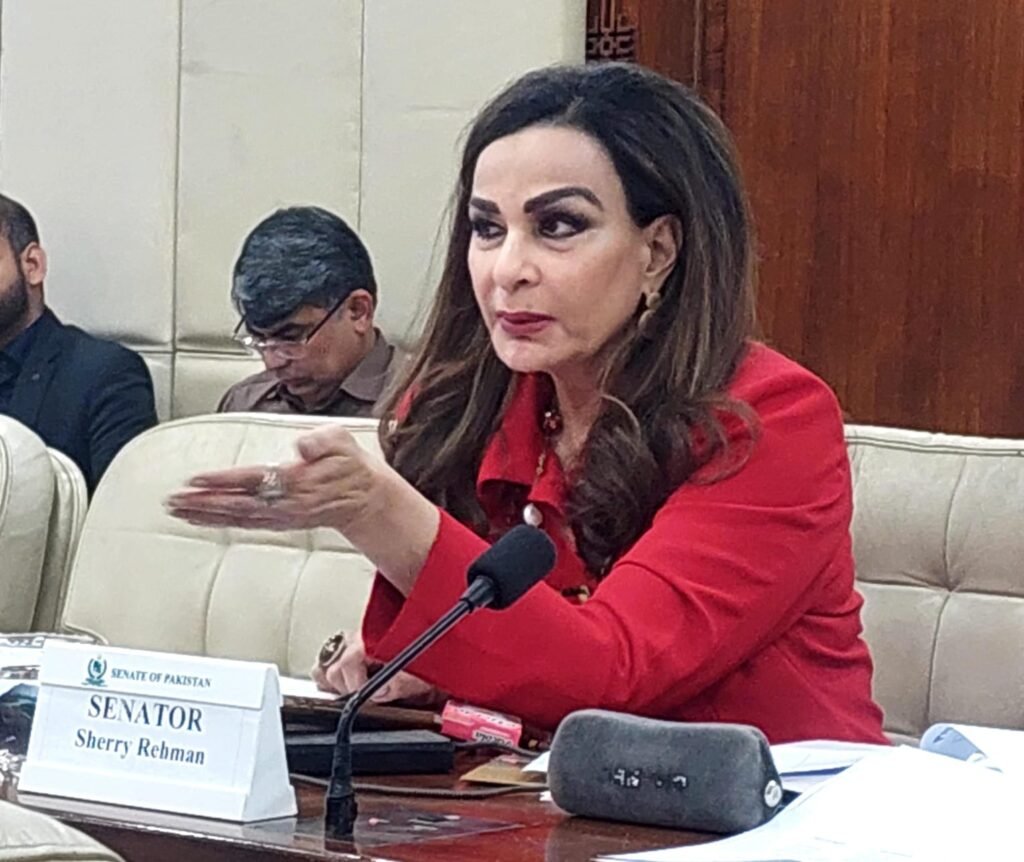
Islamabad, : Senator Sherry Rehman, voiced strong concerns over Pakistan’s taxation policies and their impact on the economy and citizens during the Senate Standing Committee on Finance.
She questioned “Who is growing jobs and the economy in the country? We should not rest on congratulating ourselves on macroeconomic stabilization. Moving ahead from that, what is happening to the thousands of people being laid off by the public sector because the manufacturing sector is being squeezed dry, like the corporate community. They are the ones to lead export growth, and they are the ones who will create jobs in a country that is fast urbanizing.”
She underscored that the super tax cannot be regularized as a normative revenue stream while businesses face some of the highest cumulative tax rates in the country. “Many manufacturers are leaving for better tax environments abroad. Why is that not worrying us? Who will create jobs in Pakistan? We have three million people entering the job market every year, but unemployment is growing unsustainably. In any other country, job rates are make or break for a government. Here, it is not even a policy discussion. Why?”
Senator Rehman emphasized that the super tax, which was initially introduced in the 2015 Finance Act as a one-time 4% levy on banks to fund the rehabilitation of temporarily displaced persons following Operation Zarb-i-Azb, was never meant to become a permanent revenue source. It was later expanded through the Finance Act 2022 to target high-earning individuals and industries with annual incomes above Rs150 million to Rs500 million, at rates of up to 10%.
“The super tax is not meant to become a permanent source of revenue. Nor should people be expected to pay two to three years’ worth of taxes at the same time. The same people are being taxed over and over again. The same tired cow is being milked dry. “
Senator Rehman also criticized repeated taxation measures that undermine public trust. “The working class is suffering while tax evaders remain safe. There is a limit to how much tax burden people can bear. Repeated taxation does not improve the economy; it breaks public trust,” she said.
She further questioned the feasibility of exiting the IMF program under the current revenue model, cautioning that without reform, the promise of economic stabilization may remain out of reach.
On the inclusive finance program for women, Senator Rehman sought clarity on how funds would be transferred. Officials confirmed that the program would utilize microfinance banks to directly transfer funds to women, with agreements being finalized. A detailed presentation will be made in the next committee meeting by the Governor of the State Bank.
Senator Rehman’s remarks underscored the urgent need for a fair and sustainable taxation system, protection for working citizens, and a supportive environment for businesses to generate jobs and drive economic growth in Pakistan.