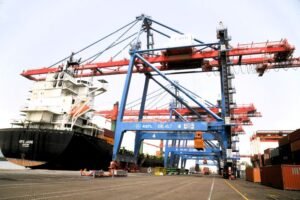
ISLAMABAD : Against the backdrop of rising regional trade, mounting climate pressures on coastal ecosystems and growing demand for modern port infrastructure, the Ministry of Maritime Affairs (MoMA) outlined a wide-ranging set of policy initiatives, development projects and regulatory reforms undertaken during 2025, marking a renewed push towards a sustainable blue economy.
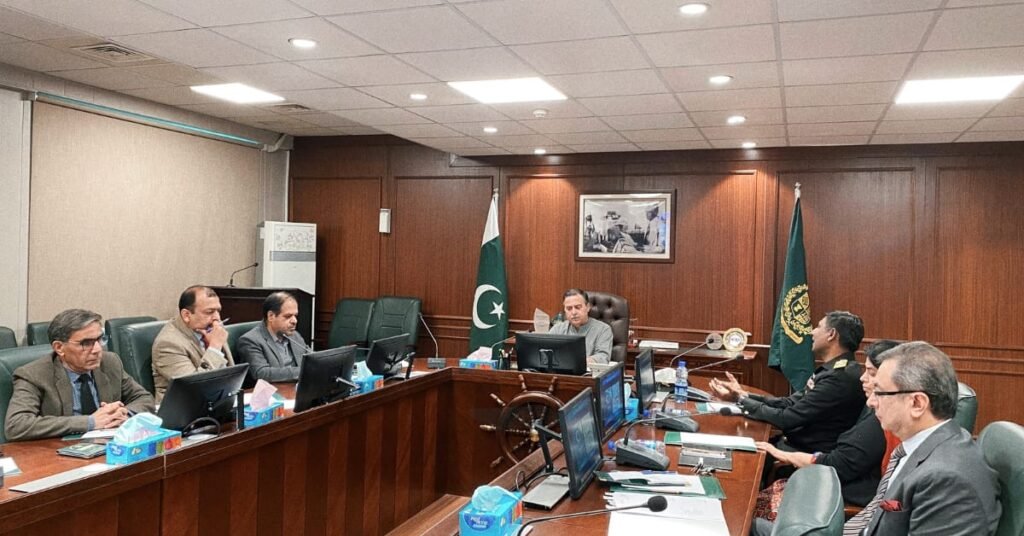
Sharing year-end details, the ministry’s media focal person Muhammad Arshad said that strengthening port infrastructure, improving governance and ensuring environmentally responsible maritime development remained central to policy planning throughout the year under the leadership of Federal Minister for Maritime Affairs Muhammad Junaid Anwar Chaudhry.
He said significant progress was made on land reforms and digitalisation at Karachi Port Trust (KPT) and Port Qasim, aimed at improving transparency, operational efficiency and investor confidence. These reforms are being supported by the integration of digital systems, including the Pakistan Single Window (PSW) and the Port Community System (PCS), alongside updates to the National Maritime Policy and broader governance reforms.
A major focus during 2025 was the planning and feasibility assessment of new deep-sea ports along Pakistan’s coastline. Mr Arshad said a high-level committee was formed to identify suitable sites and conduct feasibility studies for at least three new deep-sea ports under the ministry’s long-term coastal expansion strategy. A new multi-agency framework has been introduced to ensure that future port development meets standards of economic viability, climate resilience and environmental protection, with environmental impact assessments and climate risk screening made mandatory for all new proposals.
At Port Qasim, the ministry advanced a long-term transformation plan to develop the port into a modern maritime-industrial hub. The plan includes major infrastructure upgrades, new container and multipurpose terminals, establishment of the Port Qasim Special Economic Zone (PQSEZ), and integration with industrial corridors, including the proposed Sea-to-Steel Green Maritime Industrial Complex.
Progress was also reported at Gwadar Port, where improved coordination among stakeholders helped address logistical bottlenecks, enhance connectivity and better align port development with regional transit trade. Ferry services from Gwadar to Gulf countries also moved closer to operation during the year, with licences issued to improve passenger and trade connectivity.
In the fisheries sector, the ministry prioritised governance reforms and infrastructure modernisation. Work progressed on the modernisation of Korangi Fish Harbour in Karachi, involving a major overhaul to expand capacity, upgrade infrastructure and improve seafood processing efficiency. In parallel, development of a state-of-the-art Aquaculture Park at Korangi Harbour was initiated under the blue economy initiative to promote sustainable fish farming and generate new revenue streams.
Mr Arshad said the National Fisheries and Aquaculture Policy (2025–2035) was finalised during the year, providing a long-term framework for sustainable fisheries management. Consultations were also launched to modernise fisheries laws, improve vessel registration systems and combat illegal, unreported and unregulated (IUU) fishing, which undermines fish stocks, coastal livelihoods and seafood exports.
Reforms in the ship recycling sector remained a key priority. The focal person said the ministry continued working to transform the Gadani ship-breaking industry in line with international environmental and labour standards under the Hong Kong Convention, through regulatory improvements and capacity-building initiatives aimed at reducing pollution and improving worker safety.
Climate-related challenges featured prominently in policy discussions during 2025. The ministry stepped up coordination with relevant agencies to address coastal erosion, seawater intrusion and mangrove degradation. Mangrove conservation and restoration projects continued along the Sindh and Balochistan coasts, recognising their role in shoreline protection, fisheries support and carbon absorption.
On the shipping side, the ministry supported plans for the expansion of the Pakistan National Shipping Corporation (PNSC) fleet to reduce reliance on foreign carriers and strengthen national maritime capacity.
Human resource development was another focus area. The ministry initiated steps towards the establishment of a dedicated maritime university and announced work on setting up an education endowment fund for children of coastal communities, alongside efforts to improve maritime education and training standards to enhance employment opportunities for Pakistani seafarers in international shipping markets.
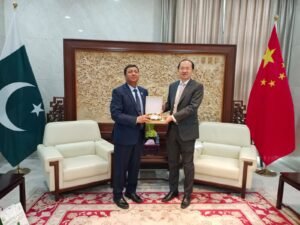
At the international level, Pakistan actively participated in regional and global maritime forums during the year, highlighting challenges faced by developing coastal states, including climate impacts and the need for greater investment and technology transfer.
“Pakistan’s coastline and maritime sector are strategic national assets,” Mr Arshad said, adding that the ministry would continue working with provincial governments, port authorities and the private sector to develop a coherent and sustainable strategy that supports trade, creates jobs and protects marine ecosystems for future generations.