PIDE, UNICEF Call for Evidence-Based Policies to Strengthen Systems for Children
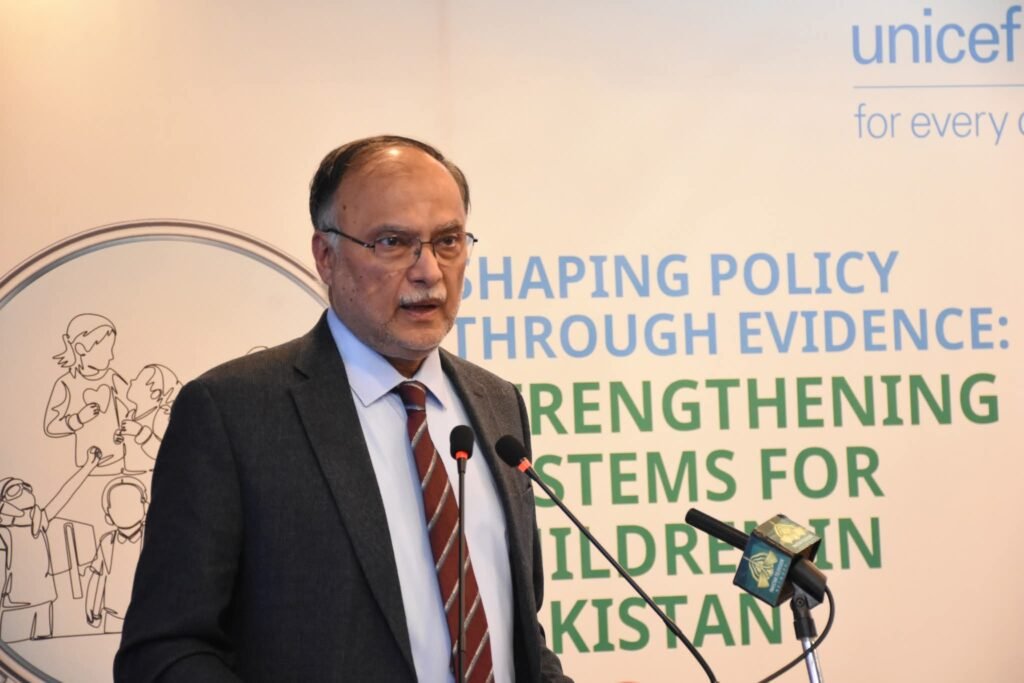
Islamabad: – Professor Ahsan Iqbal, Federal Minister for Planning, Development, and Special Initiatives, stressed that a nation’s true measure of development lies not in physical infrastructure but in the quality of its human capital. He observed that Pakistan’s long-standing focus on physical projects has come at the expense of investment in education, health, and nutrition, resulting in poor human development outcomes despite significant infrastructure spending. Highlighting alarming indicators such as high stunting rates, millions of out-of-school children, and Pakistan’s continued struggle with polio, he called for urgent, evidence-driven investments in early childhood development and population management. He urged policymakers, civil society, and the media to close the “knowing–doing gap” by translating research into action and proposed the development of a Child Welfare Index of Pakistan to track child wellbeing and promote accountability at national and sub-national levels.
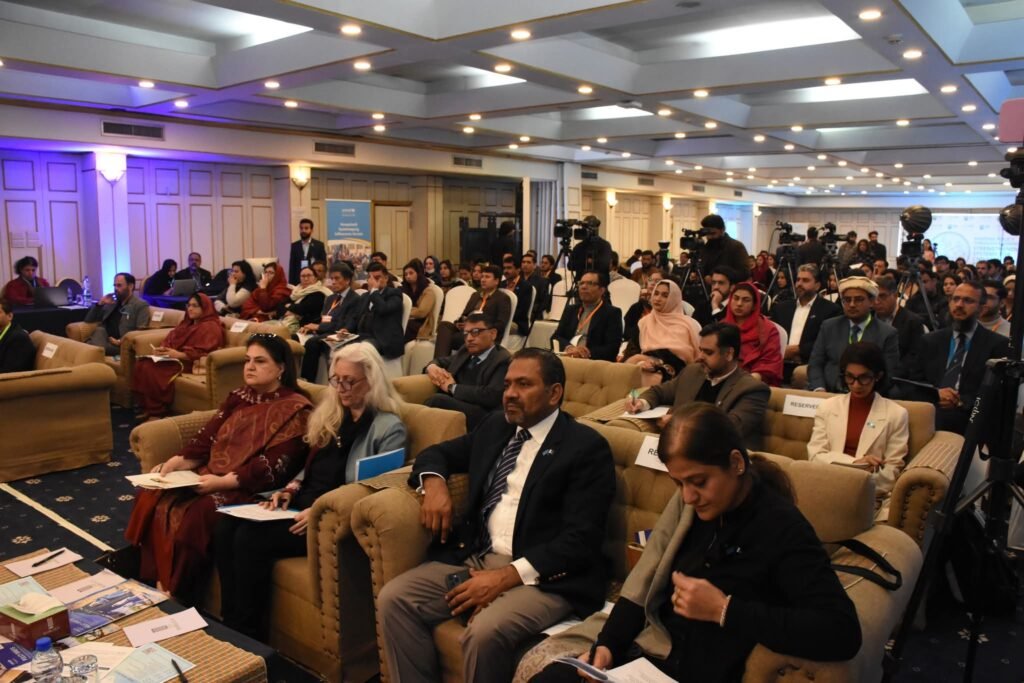
Pakistan Institute of Development Economics (PIDE), in collaboration with UNICEF Pakistan, convened a high-level conference titled “Shaping Policy through Evidence: Strengthening Systems for Children in Pakistan,” bringing together senior policymakers, development practitioners, researchers, and civil society representatives to advance evidence-based policymaking for children’s wellbeing in the country. The event underscored the urgent need to translate credible research and data into sustained policy action to address Pakistan’s persistent challenges in education, health, nutrition, and social protection.
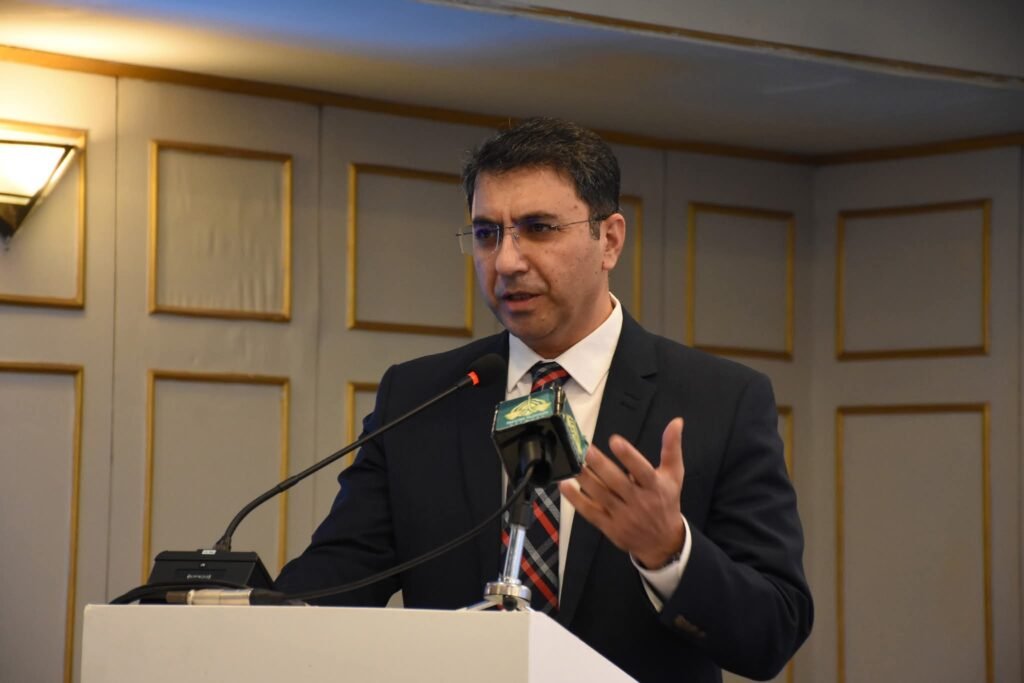
Earlier, In his welcome remarks, Dr. Muhammad Nadeem Javaid, Vice Chancellor, PIDE, highlighted the gravity of Pakistan’s human development crisis, noting that nearly 26 million children are out of school while almost 40 percent suffer from stunting, with long-term consequences for health, learning, and productivity. He emphasized that Pakistan does not lack policies or data, but rather suffers from a disconnect between evidence and implementation. Stressing that evidence uptake is an institutional challenge rather than a purely technical one, he called for stronger systems that embed research into policy design, budgeting, and delivery mechanisms, particularly for child-focused interventions.
Setting the global and national context, Pernille Ironside Country Representative UNICEF Pakistan reaffirmed that evidence is the foundation of equitable and inclusive development, especially in a country where children’s outcomes are shaped by climate change, demographic pressures, urbanization, and economic volatility. She shared that between 2018 and 2025, UNICEF Pakistan produced more than 134 evidence products across key child-related sectors, identifying effective multi-sectoral approaches while also revealing persistent gaps in financing, coordination, and equitable service delivery. She emphasized that while evidence exists, it must be better institutionalized to influence policy, budgeting, and large-scale implementation, reiterating UNICEF’s commitment to partnering with PIDE and government institutions to ensure research informs action for measurable improvements in children’s lives.
Adding a social protection perspective, Rubina Khalid, Chairperson of the Benazir Income Support Programme (BISP), emphasized the centrality of data and evidence in designing effective, inclusive, and gender-responsive policies. She highlighted BISP’s National Socio-Economic Registry as one of the largest data-driven social protection platforms in Asia, covering nearly 90 percent of the country and enabling cash transfers to millions of women-headed households. She shared key initiatives including nutrition-sensitive conditional cash transfers, the Benazir Taleemi Wazaif program supporting millions of school-going children, and the introduction of digital wallets for women beneficiaries to advance financial inclusion. She stressed that adaptive, climate-aware, and evidence-led social protection systems are critical for protecting vulnerable children and households, calling for stronger collaboration between government, researchers, and development partners to move from evidence to action.
Following the inaugural plenary, the conference featured a high-level panel discussion titled “From Evidence to Action — Embedding Research in Policy and Practice,” chaired by the Vice Chancellor of PIDE and moderated by UNICEF Pakistan. The panel brought together senior experts from the Pakistan Bureau of Statistics, Population Council, UNDP, IBA Karachi, UN Women, Gavi, and the World Bank to reflect on how research and evaluation are currently used in shaping public policy and programmes in Pakistan. Panelists examined institutional and political barriers to evidence uptake, discussed successful sectoral models, and explored emerging innovations including digital systems and artificial intelligence for data-driven policymaking. The session emphasized the need to move from fragmented pilot initiatives toward institutionalized research use, improved accountability for results, and stronger linkages between evidence, budgeting, and implementation, followed by an interactive question-and-answer session with participants.
The remainder of the programme comprised two rounds of parallel breakout sessions addressing critical thematic priorities for children and youth in Pakistan. The first round focused on integrated systems for early childhood development, highlighting the importance of linking care, learning, health, nutrition, and protection, alongside a parallel session on strengthening public finance for children through expenditure evidence and innovative financing solutions such as blended and impact financing. After a mid-day break, the second round examined climate-resilient, gender-responsive, and adaptive social protection systems capable of responding to shocks, as well as evidence-based approaches to youth skills development and employability aligned with future labour market needs.
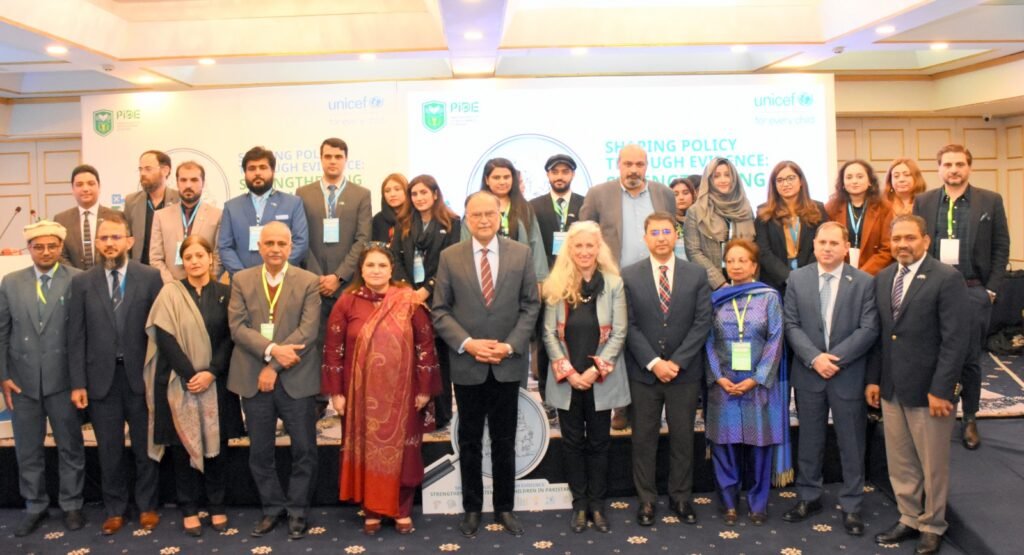
Each session featured presentations by national and international experts, followed by structured commentary and audience engagement. The conference concluded with a plenary session synthesizing key insights from the breakout discussions, reflections by UNICEF Pakistan, closing remarks by the Minister of State for Federal Education and Professional Training, and a networking segment showcasing youth participation, reinforcing the shared commitment to strengthening systems for children through sustained, evidence-informed policy action