Pakistan @2050: Aligning Demographic Change with Sustainable Development
Islamabad — Laura Sheridan, International Programme Coordinator, United Nations Population Fund (UNFPA), emphasized that “Pakistan’s development future hinges on investing in people—particularly youth and women. By 2050 more than half of Pakistan’s population will live in urban areas, placing a greater responsibility on provincial governments, as key sectors such as health, education, and population welfare are devolved. We need to prioritize youth development, women’s empowerment, and climate risk preparedness. Sustained investment in human development can help Pakistan convert its demographic challenge into a demographic dividend.”
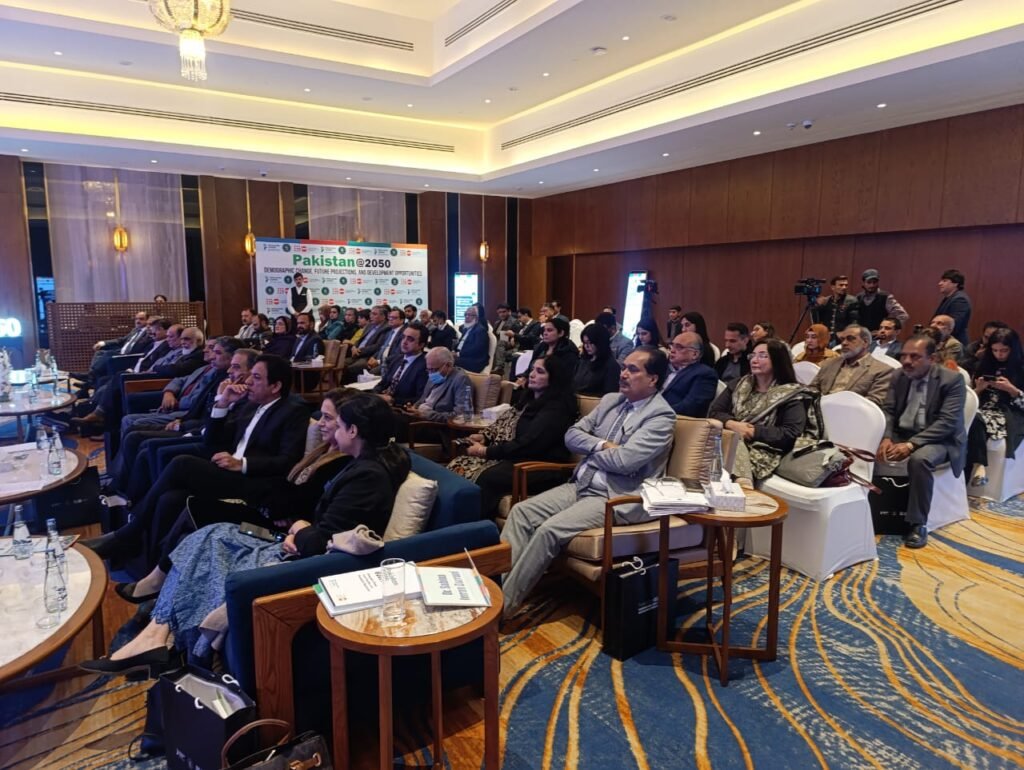
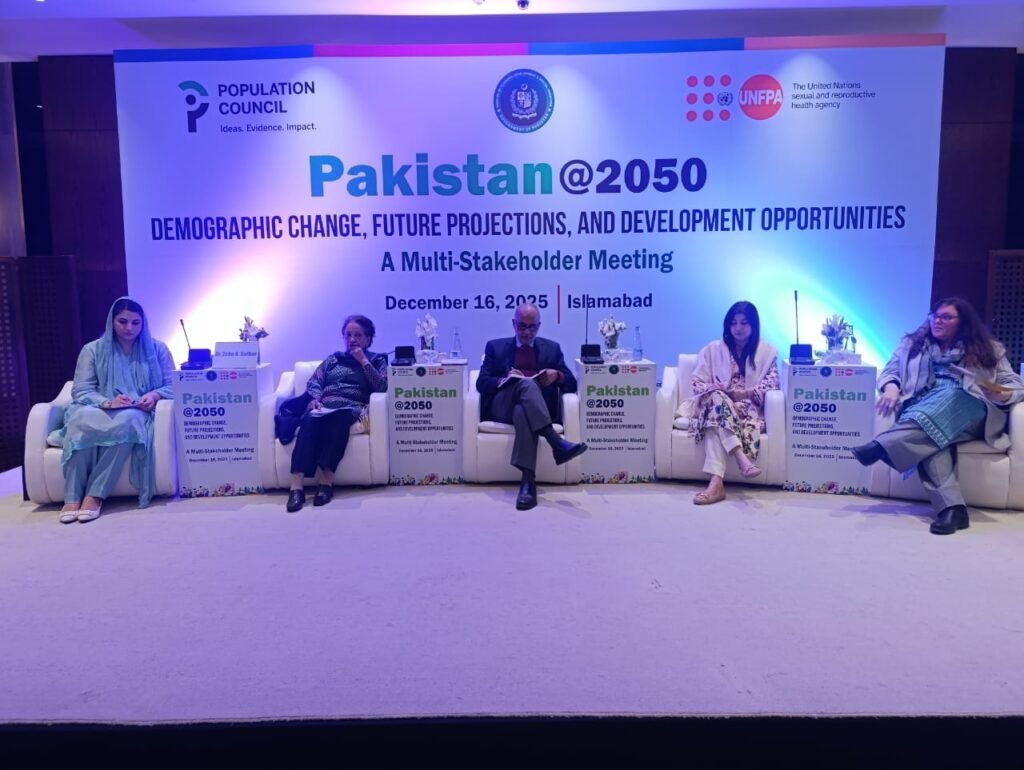
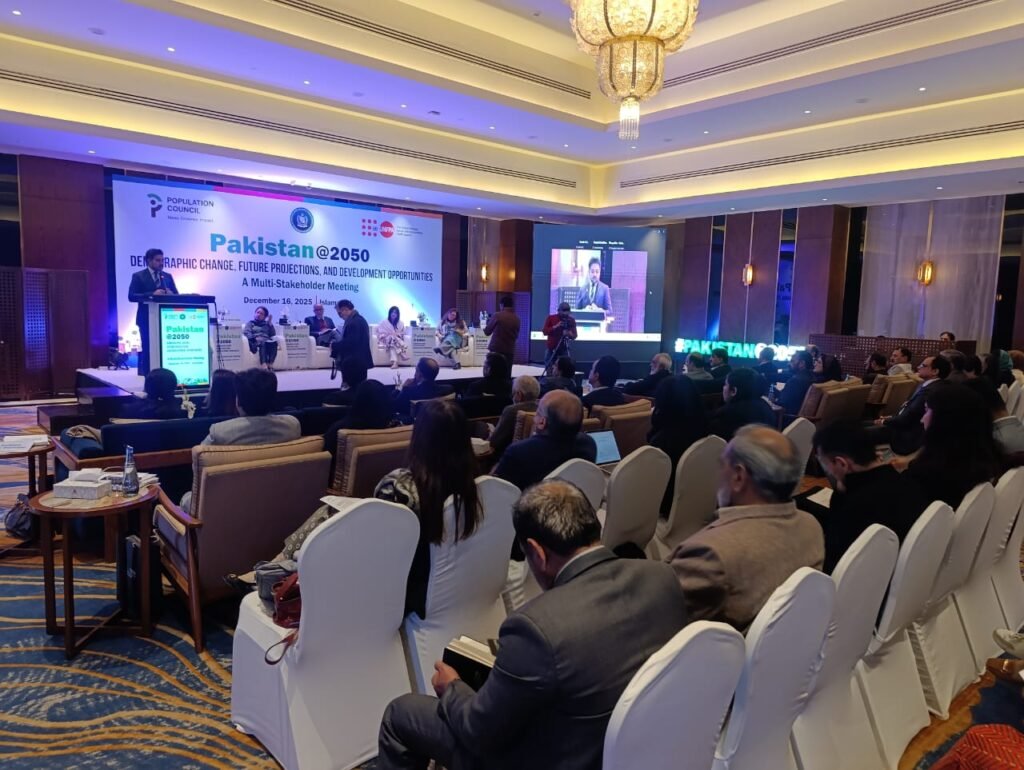
The Ministry of Planning and Development and Special Initiatives, in collaboration with the Population Council and UNFPA, convened a high-level multi-stakeholder meeting titled “Pakistan @2050: Demographic Change, Future Projections and Development Opportunities.” The forum brought together senior federal and provincial officials, researchers, civil society representatives, and media to examine Pakistan’s population trajectory up to 2050 and its implications for human development, economic growth, urbanization, and climate resilience.
The meeting opened with welcome remarks by Dr. Sabina Durrani, Chief Population, Ministry of Planning and Development, who emphasized the urgency of integrating demographic evidence into national and provincial planning in line with the Council of Common Interests (CCI) recommendations. She stated, “We should address population growth rate more broadly through a multisectoral lens, rather than focusing solely on family planning.”
Presenting key findings from the Pakistan @2050 study, Dr. Zeba A. Sathar (T.I.), Country Director, Population Council, highlighted the serious consequences of continued fertility stagnation. She warned that “failure to accelerate fertility decline in line with the Council of Common Interests (CCI) targets could result in nearly 48 million additional people by 2050, placing immense pressure on education systems, health services, labour markets, and natural resources. Rights-based family planning, sustained investments in girls’ education, and women’s economic participation are therefore central to achieving sustainable development and the Sustainable Development Goals.” She emphasized that research must inform policy action, noting that evidence only matters when it reaches decision-makers and translates into tangible change.
Joining virtually, Dr. Samir K.C., Senior Research Scholar at the International Institute for Applied Systems Analysis (IIASA), presented evidence on the strong link between population dynamics and educational attainment. He demonstrated that higher levels of education, particularly for girls, are closely associated with lower fertility, delayed childbearing, and improved human capital outcomes. He stressed that universal primary education, improved retention at secondary levels, and greater female labour force participation are essential to realizing a demographic dividend.
Addressing the population–economy nexus, Dr. Hanid Mukhtar, Chief Executive Officer, Population Center Pakistan and former Senior Economist at the World Bank, explained that rapid population growth has intensified Pakistan’s structural economic challenges by lowering savings, investment, and productivity. He noted that while population can be an economic asset, its benefits remain limited without parallel investments in human capital and productivity and emphasized that achieving CCI population targets remains critical for long-term economic sustainability.
Speaking on migration, urbanization, and structural transformation, Dr. G. M. Arif, Technical Advisor, Population Council, highlighted that Pakistan’s urbanization is advancing faster than its economic transformation. He noted that much internal migration is driven by demographic pressure rather than opportunity and stressed the need for agricultural modernization, industrial growth, empowered local governments, and improved human capital to ensure that urbanization contributes positively to development outcomes.
The policy session reflected strong provincial engagement:
Mr. Sajjad Hussain Abbasi, Secretary Planning and Development, Sindh, noted that rapid population growth, urbanization, and climate vulnerability require urgent action. Sindh is investing in rights-based family planning, maternal and child health, education, employment, and data-driven governance. These efforts will yield positive outcomes in line with CCI endorsed National Action Plan.
Dr. Farooq Manzoor, Director General M&E, Punjab, emphasized that Punjab prioritizes fertility reduction, youth employment, managed urbanization, preventive health, enrolling out-of-school children, and gender mainstreaming to ensure sustainable development.
Muhammad Taufique, Additional Secretary Planning and Development, Khyber Pakhtunkhwa, said that population projections are a wake-up call. Skills development, youth entrepreneurship, and adherence to CCI commitments are critical to stabilizing growth.
Mr. Zeeshan Javaid, Secretary Planning and Development, Balochistan, stated that extremely low female labour force participation and literacy rates must be addressed. Investments in women’s employability and education are crucial for the future of the province.
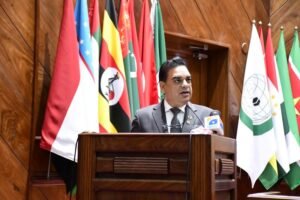
As Chief Guest, Mr. Naeem Zafar, Chief Statistician, Pakistan Bureau of Statistics, highlighted structural distortions in Pakistan’s fiscal and governance framework. He stated, “82 percent of the NFC formula is linked to population and only 10 percent to poverty, creating a 92 percent perverse incentive.” He further emphasized, “Unless we bring transparency and accountability into monitoring and evaluation and reverse these perverse incentives, Pakistan’s social and economic targets will remain out of reach.
The meeting also featured Dr. Raghib Naeemi, Chairman of the Council of Islamic Ideology; Syed Bazil Ali Naqvi, Minister of Health, Azad Jammu & Kashmir (AJK); Ms. Asma Naz, Parliamentary Secretary for Health and Population, Punjab; and Ms. Humaira Zia Mufti, Secretary of the National Commission on the Status of Women, along with senior officials from AJK and Gilgit-Baltistan.
The event concluded with a shared consensus that Pakistan’s demographic future is not predetermined. With coordinated, evidence-based, and people-centered policies—particularly those advancing family planning, education, women’s empowerment, employment, and climate resilience—Pakistan can steer its population trajectory toward a more sustainable, inclusive, and prosperous future by 2050.