South–South Exchange at COP30 Opens with Strong Calls for Climate Finance, Equity & Fossil Fuel pledges
BELÉM : Parliamentarians, policy experts, civil society leaders and private-sector representatives from Asia % voiced deep concern over weak texts, slow negotiations and inadequate climate finance commitments at the South–South Exchange held on the margins of COP30.
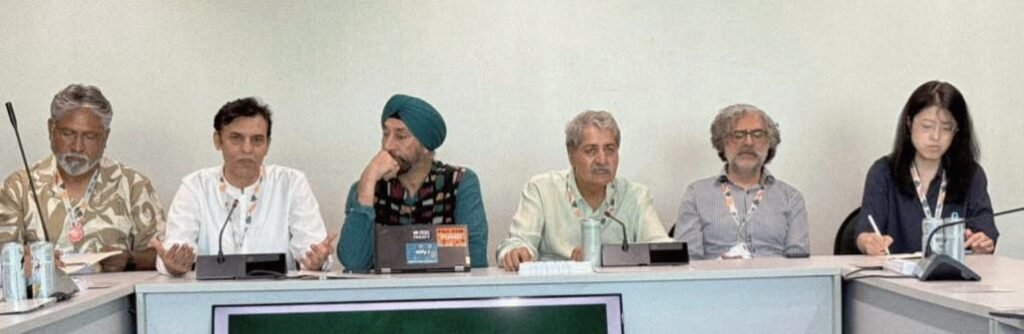
Opening the session, Syed Naveed Qamar, Chair of the National Assembly Standing Committee on Finance and former Federal Minister for Finance, warned that Pakistan and other climate-vulnerable countries are facing existential threats due to recurring floods, droughts and rapid glacial melt.
He said that after attending more than 10 COPs, the negotiations continued to deliver the same debate and the same disappointing outcomes. He noted that while Pakistan received pledges after the 2022 floods, actual disbursements remained low, and the country is refrained from launching another appeal after the 2025 floods due to concerns over accumulating debt.
Qamar said Pakistan’s rapid solarization demonstrated people’s willingness to transition to clean energy without external financing. “With proper climate finance, the pace would be far stronger,” he added.
Dr Abid Qaiyum Suleri, Executive Director of Sustainable Development Policy Institute (SDPI), said President Lula’s declaration of COP30 as the “COP of truth” had highlighted the widening gap between ambition and delivery. He observed that the summit still lacked clarity on climate finance, fossil fuel phase-out and just transition, adding that many Asian communities “cannot wait while finance stalls and key emitters delay their NDCs.”
He said unresolved issues now placed additional pressure on the Brazilian presidency, which had positioned COP30 as the “COP of Action.”
Ma Jun, Environmental Policy Researcher based in Beijing, China called for retaining earlier transition commitments and strengthening renewable-energy cooperation with developing countries. She cited Pakistan’s distributed solar expansion as a successful model and emphasized improving financial risk assessments and green-bond mobilisation.
Representing Germanwatch, Giovani said multilateralism within the UNFCCC system continued to weaken, urging developing countries to strengthen cooperation and pursue practical, trust-building steps.
Private-sector concerns were highlighted by Dr Ayaz, Chairperson of the Pakistan Readymade Garment Manufacturers and Exporters Association (PRGMEA), who said EU Green Deal regulations were placing increasing pressure on local industries. He outlined PRGMEA’s initiatives on biochar, renewable energy, biodiesel and partnerships with universities and international agencies.
From Bangladesh, Sharif Jamil, Coordinator, Waterkeepers Bangladesh, said fossil fuel phase-out commitments without parallel finance risked becoming a trap for developing economies. He said that unpredictable monsoons and cloudbursts could not be addressed through private-sector interventions alone.
Providing a regional perspective, Harjeet Singh, Global Expert at the Fossil Fuel Non-Proliferation Treaty Initiative, said the latest draft text released early morning contained no reference to fossil fuels, and its finance section remained extremely weak. He termed the Colombia-led coalition of 80 governments supporting a fossil fuel phase-out roadmap a positive development outside the Paris Agreement.
A representative of the Alliance for Climate Justice and Clean Energy (ACJCE) read a statement urging structural reforms in the UNFCCC process, including transparent negotiations, curbs on fossil-fuel lobbyists and enhanced support for vulnerable groups.