CVF-V20 and SDPI, in collaboration with Denmark, hold policy dialogue on aligning economic and fiscal planning for climate prosperity
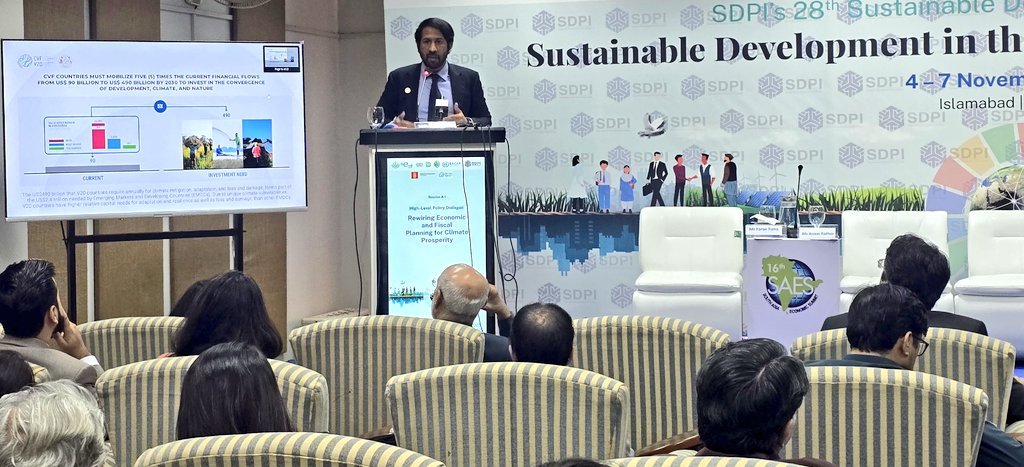
Islamabad : Climate Vulnerable Forum and V20 Finance Ministers (CVF-V20), in collaboration with the Sustainable Development Policy Institute (SDPI) and the Embassy of Denmark, convened a high-level policy dialogue titled “Rewiring Economic and Fiscal Planning for Climate Prosperity”. The event was held at the 28th Sustainable Development Conference.
The dialogue highlighted the need for the Climate Prosperity Plan (CPP) and a delivery unit, “Country Platform,” as the primary instruments for unlocking sustainable economic transformation, reducing climate vulnerability, and attracting large-scale international climate finance. Senior government leaders, climate finance experts, and international partners emphasized that macroeconomic policies must be restructured and that fiscal reforms and innovative financing are key drivers of climate resilience and inclusive growth.
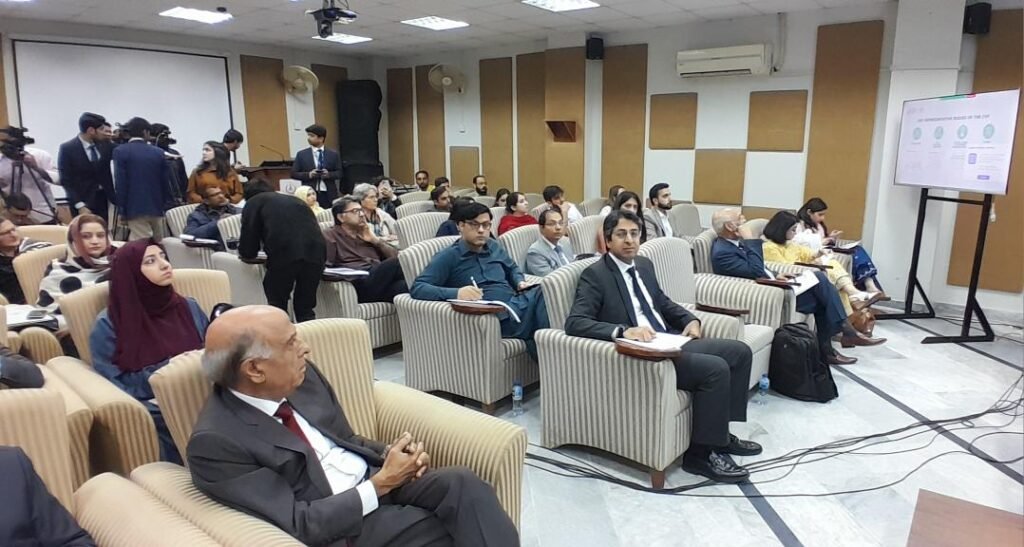
Rana Ihsaan Afzal, Coordinator to the Prime Minister on Commerce, termed climate change a “national economic emergency,” stating that the current financial architecture needs an overhaul and must represent critical pathways for integrating sustainability within economic and export planning. He urged all ministries to maintain climate resilience in national decision-making.
Representing CVF-V20, Hamza Haroon, Regional Director South Asia, emphasized that 74 climate-vulnerable economies collectively lose hundreds of billions of dollars every year to climate shocks, yet remain trapped in a climate debt trap, with high borrowing costs, debt stress, and limited fiscal space. He stressed that this economic injustice must be corrected through fair climate finance, lower cost of capital, debt pauses, and access to grant and concessional funding. He said the CVF-V20 is supporting Pakistan in strengthening fiscal reform and advancing climate-responsive economic planning.
“Climate vulnerable economies must take a leadership role in advancing the Climate Prosperity agenda,” he noted, adding that climate prosperity plans are a fully-costed, low-carbon, investment, technology, and resource strategy that unlocks long-term competitiveness, climate resilience, and sustainable growth.
Dr. Pierre Horna (UNESCAP) called for innovative financing and energy efficiency measures, highlighting the importance of climate-aligned public financial management to support CPP implementation.
Dr. Fahmida Khatun (Centre for Policy Dialogue, Bangladesh) shared experiences of advancing national prosperity strategies across the Global South, emphasizing that international commitments must translate into real, accessible finance for resilience and growth.
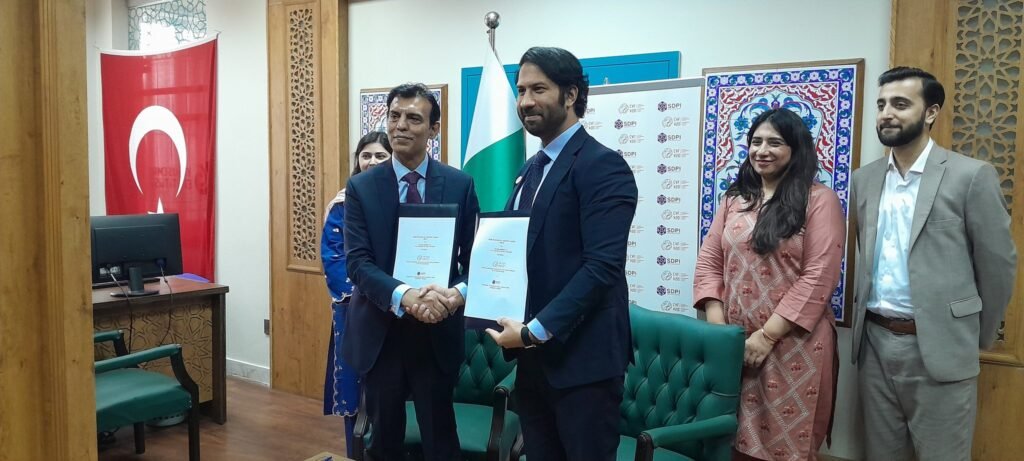
A Memorandum of Understanding (MoU) was signed between SDPI and CVF-V20, reaffirming joint efforts to scale sustainable finance, strengthen national financing architecture, and accelerate delivery of the CPP and Pakistan’s Country Platform.
The event concluded with a collective call to restructure fiscal governance and enable Pakistan to move decisively toward climate prosperity, ensuring a resilient and competitive economic future for the nation and its people.